
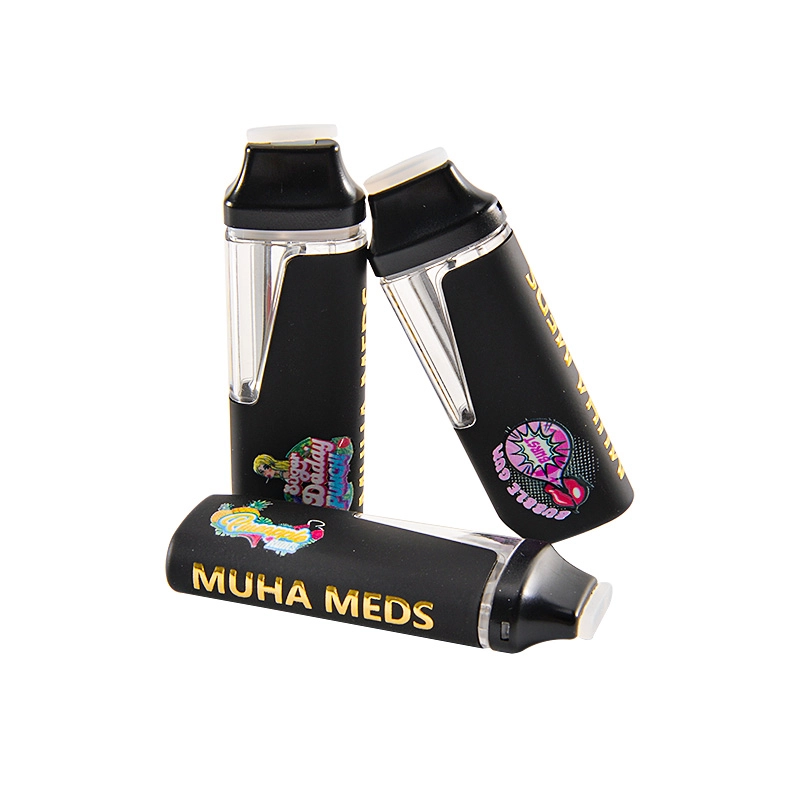
Scope: This playbook focuses on packaging, seals, and scan-to-verify workflows used by U.S. sellers to reduce returns and payment disputes. It does not include any guidance that would enable bypassing, forging, or defeating verification systems.
Prevent Returns & Chargebacks: The Muha Meds Packaging, Seals, and Scan-to-Verify Playbook
When a buyer says “this looks fake,” you don’t just risk a refund—you risk returns that spread (because inventory gets mixed), chargebacks (because proof is weak), and account trust (because your process looks improvised). The fix is not a longer argument. It’s a tighter workflow: packaging + seal checks, a safe scan-to-verify SOP, and a Proof Pack that makes disputes easy to resolve.
Why Returns & Chargebacks Spike in “Authenticity” Disputes
Most sellers treat “real vs fake” as a debate. Buyers treat it as a risk decision. The moment a customer or downstream retailer questions authenticity, three things happen fast: (1) units are returned, (2) inventory gets mixed and “contaminated” across lots, and (3) disputes become harder to win because the evidence chain breaks.
Your goal is not perfection—it’s defensibility. You want a process that answers:
- What arrived? (photos + case IDs)
- What did we check? (a repeatable receiving SOP)
- What did verification show? (screenshots + logs)
- What did we do when something looked off? (hold/quarantine trail)
Packaging Map: What to Inspect (Fast) Before You Stock
The best packaging check is not “spot the perfect box.” It’s case-level consistency. Real inventory should usually look like it came from one controlled run: similar print sharpness, similar layout, and predictable placement of labels/stickers.
Outer carton checks (case-level)
- Carton configuration: units per inner/master should match the PO and packing list.
- Label sanity: the shipping label and identifiers should be complete and readable.
- Seal state: if cartons arrive sealed, photograph seals before opening.
Unit packaging checks (90 seconds per sampled unit)
- Print discipline: consistent sharpness and alignment across multiple units in the same case.
- Layout consistency: sticker placement and insert/tray orientation should repeat.
- Obvious damage: crushed corners, torn wrap, or signs of re-opening trigger a HOLD.
Tip: Keep a “known-good photo set” from trusted inventory (front/back/sides + seal closeups). Train staff to compare consistency, not chase rumors.
Seals & Tamper Evidence: Receiving Checks That Matter
Seals are not just aesthetics—they’re your easiest “first gate” for returns prevention. If a seal looks compromised, the dispute is no longer “is it real?”; it becomes “was it opened or altered?” That’s a faster path to chargebacks.
Non-destructive seal integrity checklist
- Uniform adhesion: edges shouldn’t lift easily during normal handling.
- Consistent placement: seals should be in the same location across multiple units.
- No obvious re-open signs: tears, wrinkles, or partial detachments should trigger an exception log.
Photo angles that settle disputes
- Sealed carton (label + seal visible in one frame)
- Close-up of seal (sharp focus)
- First-open layout photo (shows how units were packed)
- Exception photo set (any anomaly gets its own photo group + case ID)
Rule: do not commingle inventory until the case passes your checks. Mixing “maybe” units into sellable stock is how small issues become expensive returns.
Scan-to-Verify Workflow (Safe + Repeatable)
“Scan-to-verify” only protects you if it’s performed at receiving, on multiple units per case, and documented with case IDs. Also: treat verification codes like serial numbers—don’t post them publicly.
What “official verification” looks like (high-level)
Muha Meds publicly describes different verification flows depending on the generation: a scratch-off code entry flow for certain products, and an app-based scan flow for newer products. Your checklist should handle both without guesswork.
Safe scanning SOP (avoid scams and look-alike pages)
- Scan first, then pause. Before entering anything, confirm you’re on the expected official domain.
- Document the destination. Screenshot the URL and the result page (pass/fail/not found/redirect).
- Verify multiple units per master case. Increase sampling for new suppliers or packaging changes.
- Log outcomes. Record: PO, case ID, unit sample count, date/time, staff initials, outcome summary.
- Fail = quarantine. If verification fails or behaves inconsistently, isolate first and escalate with evidence.
Optional best practice (not brand-specific): standardizing product identity into predictable, controlled URLs is exactly what GS1 Digital Link is designed to support, by encoding identifiers into web-enabled links (often carried in 2D codes). Use it as a framework when planning your own “scan-to-verify” infrastructure.
Table: Failure Mode → Symptom → Check → Evidence → Resolution
Use this as your returns-prevention core. It turns “opinions” into actions and makes training easier.
| Failure mode | Buyer symptom / complaint | Receiving check (non-destructive) | Evidence required | Quarantine threshold | Resolution path |
|---|---|---|---|---|---|
| Seal looks compromised | “Opened,” “tampered,” “not as described” | Visual + handling check; compare multiple units for consistency | Seal closeups + carton label + case ID | Any unit with clear compromise | Hold case → quarantine affected units → claim with evidence |
| Packaging layout inconsistent within the case | “Mixed batch,” “different version,” “doesn’t match listing” | Compare sampled units (placement, print discipline, inserts) | First-open layout photo + side-by-side unit photos + log | Multiple inconsistencies in one master case | Quarantine case → expand sampling → supplier escalation |
| Scan redirects to unexpected domain | “QR took me to a weird site” | Scan and confirm domain before entering codes | URL screenshot + redirect chain (if visible) + case ID | Any redirect anomaly | Quarantine immediately → verify with official route → escalate |
| Verification result = fail / not found | “Code invalid,” “not verified,” “doesn’t exist” | Verify multiple units; confirm you used the official portal | Result screenshot + sample log + unit photos | Any fail; escalate if repeated | Quarantine → claim / replace / credit per policy |
| Inconsistent results across units in same case | “Some verify, some don’t” | Increase sampling; isolate by inner boxes if possible | Batch screenshots + case map + exception log | 2+ failures in a single case | Quarantine case → investigate source → prevent commingling |
The Proof Pack: Documentation That Wins Disputes
A Proof Pack is a single folder per PO that lets you answer disputes in minutes. It protects your team from “he said / she said” and reduces chargebacks by replacing arguments with evidence.
Proof Pack checklist (minimum viable)
| Item | Purpose | Owner | Format | Stored as |
|---|---|---|---|---|
| Invoice + packing list | Proves what was ordered and shipped | Ops | PO-####_Docs.pdf | |
| Carton configuration sheet | Prevents “wrong quantity/format” disputes | Warehouse | PO-####_CartonConfig.pdf | |
| Case-ID roster | Enables isolation without mixing inventory | Warehouse | CSV/PDF | PO-####_CaseIDs.csv |
| Receiving photo set | Shows sealed arrival + first-open layout + anomalies | Warehouse | JPG/ZIP | PO-####_ReceivingPhotos.zip |
| Scan-to-verify screenshots | Documents official verification outcomes | QA/Receiving | PNG/PDF | PO-####_VerifyScreens.pdf |
| QC sampling log | Proves checks were performed consistently | QA | PO-####_QCLog.pdf | |
| Exception/quarantine log | Shows containment actions and resolution | QA + CS | PO-####_Exceptions.pdf |
Naming matters. If your team can’t find the evidence quickly, you’ll lose time—and time is what chargebacks punish.
Receiving QC SOP: 10–15 Minutes per Master Case
Tools
- Case-ID labels (e.g.,
PO-#### / Supplier / Date / Case-##) - Photo station (consistent lighting + background)
- Verification log (sheet or ERP fields)
- Quarantine shelf/bin (physically separated)
Steps
- Assign case ID before opening, then photograph sealed carton label + seals.
- Open and photograph the inner layout (orientation, inserts, trays).
- Sample 3–5 units (increase sampling for new suppliers or packaging changes).
- Run packaging + seal checks on sampled units and log pass/hold notes.
- Run scan-to-verify and save screenshots + outcomes mapped to the case ID.
- Decision: Pass → stock. Hold → expand sampling. Quarantine → isolate + claim with evidence.
One line your team should repeat: “If it’s not documented, it didn’t happen.” That mindset prevents disputes from turning into expensive guesswork.
Chargeback Response Kit: Build a Defensible Timeline
Chargebacks are won with clarity. Your response should read like a timeline, not a debate. Build a standard packet that you can assemble in under 10 minutes from the Proof Pack.
Dispute packet structure (simple and consistent)
- Timeline summary: order date → ship date → delivery → receiving checks performed.
- What arrived: sealed carton photos + first-open layout photo.
- What you verified: scan-to-verify screenshots + verification log excerpt.
- Containment actions: hold/quarantine records (if any issues were detected).
- Resolution offer: replace/credit per policy (keep it consistent across cases).
Common mistakes that weaken your case
- Posting codes publicly (creates confusion and invites copy/paste disputes).
- Mixing cases before verification checks are complete.
- Relying on “trust me” language instead of dated, labeled evidence.
SEO + Schema Notes (Optional)
This article is a “playbook” style guide. To help Google and users understand it, use descriptive link text, keep your heading structure clean, and only add structured data that matches visible on-page content.
Quick rules
- Descriptive anchors: avoid “click here;” use link text that explains the destination.
- FAQ markup: only mark up FAQs that are fully visible and identical to what’s on-page.
- Don’t abuse schema: hidden or misleading markup can make rich results ineligible.
Related Vapetech420 Resources
FAQ
How many units should we scan-to-verify per case?
Start with 3–5 units per master case as a baseline. Increase sampling for new suppliers, packaging changes, or any anomaly. The goal is early detection before inventory is mixed.
What if the QR scan takes us to an unexpected domain?
Treat it as a high-risk exception: quarantine the case, capture screenshots, and escalate using your Proof Pack. Don’t enter codes on look-alike pages.
Should we rely on packaging alone?
No. Packaging checks are a fast filter, but disputes are prevented by a layered system: packaging + official verification + documentation. The Proof Pack is what turns checks into defensible outcomes.
Can we use this playbook for other brands?
Yes—keep the same structure. Swap in the official verification portal/app for the brand, and keep your case-ID + evidence rules consistent.
0 Comments