
Adults 21+. Educational content only (not legal advice). Always follow federal, state, and local laws for sourcing, testing, labeling, and shipping. If you’re handling nicotine products, ensure your delivery-sales workflow meets applicable PACT Act requirements.
Muha Meds Authenticity Guide (2025): Real vs Fake Packaging, Codes, and Proof Buyers Expect
U.S. sellers don’t lose money on “fakes” only because of refunds. The real cost is downstream: chargebacks, marketplace account holds, reputational damage, and—depending on what you sell—regulatory and shipping exposure. The solution is a repeatable authenticity workflow you can run at receiving, the moment a case arrives.
Key Takeaways
- Never rely on one signal. Packaging alone can be copied; codes alone can be spoofed. Use a layered system.
- Verify at receiving, not after a complaint. Authenticity must be a process, not a vibe.
- Documentation reduces disputes. A simple “proof pack” can prevent chargebacks and “you sold me a fake” scenarios.
- Quarantine is a feature. Anything questionable gets isolated before it contaminates your sellable inventory.
What “Authentic” Means in 2025 (For U.S. Sellers)
In 2025, “authentic” is not just a claim on a listing—it’s a verifiable chain: (1) the unit looks consistent with known-good packaging quality, (2) the brand’s official verification flow confirms the code is valid, and (3) your paperwork + intake records prove where the inventory came from and what you checked.
Muha Meds actively promotes official product authentication via scanning/verification as part of its consumer-facing verification program. For sellers, that means your job is to make verification repeatable and auditable.
The 3-Layer Verification System (Fast + Defensible)
U.S. resale teams that handle authenticity disputes well usually follow a three-layer model:
- Packaging QC: quick visual red flags + consistency checks across units in the same case.
- Official verification: use the brand’s intended scan/code flow—then log the result.
- Proof pack: store the evidence buyers (and payment processors) ask for when things escalate.
If any layer fails, you don’t “argue with the customer later.” You quarantine now.
Layer 1: Packaging & Print QC (Real vs Fake Signals)
Most counterfeits fail at packaging discipline. You’re not trying to memorize every version. You’re building a simple, staff-friendly method to catch clearly inconsistent inventory.
Fast packaging checklist (90 seconds per unit)
- Print clarity: crisp edges; no fuzzy micro-text; no washed-out gradients.
- Alignment: labels and artwork line up consistently across multiple units in the case.
- Spelling/grammar: repeated errors are high-signal.
- Seal integrity: no re-glue lines, tears, rewrap marks, or “lifted” corners.
- Consistency within the case: real inventory generally looks like it came from one controlled run, not five different factories.
Real vs Fake: common patterns (practical view)
| What you see | What it often means | What to do |
|---|---|---|
| Multiple units with different print sharpness or color tone | Mixed sources, repacks, or inconsistent production | Increase sampling + require stronger proof pack |
| Seal looks resealed / glue residue | Possible tampering or repack | Quarantine the case and escalate |
| Codes/stickers appear poorly placed or inconsistent across units | Potential non-standard packaging flow | Verify codes immediately; log outcomes |
| Obvious typos / “cheap” box feel | High counterfeit likelihood | Stop intake, quarantine, request supplier resolution |
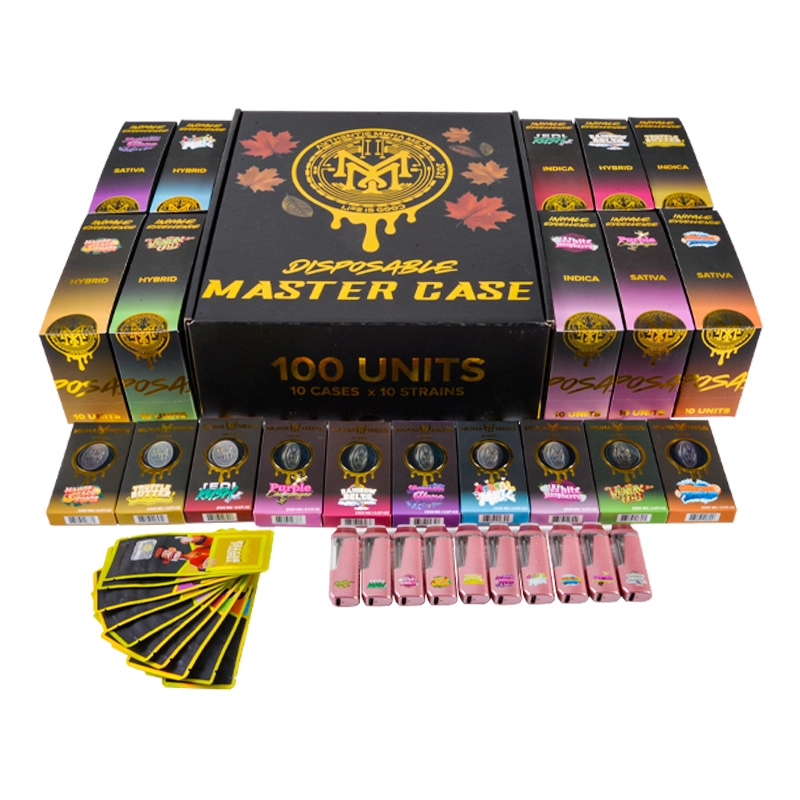
Seller tip: Keep a “known-good” photo set (front/back/sides, seal close-ups, code close-up) from trusted inventory. Train staff to compare case-to-case consistency more than memorizing one “perfect” box.
Layer 2: Codes & Official Verification (Scan, Don’t Guess)
If Muha Meds provides an official verification path on the product packaging, use it as your default layer-two check. The goal isn’t just to get a “verified” message—it's to capture a repeatable result per case and keep the record.
Safe verification rules (to avoid scams and disputes)
- Confirm the domain before entering any code (avoid look-alike sites).
- Do not post codes publicly (screenshots, listings, social media). Treat them like serial numbers.
- Verify multiple units per master case, especially with new suppliers.
- Log every result (pass/fail + date/time + staff initials + case ID).
Official verification reference: Muha Meds Verification
Important: A “pass” result should be treated as necessary but not always sufficient. That’s why you still need packaging consistency checks and a proof pack. A “fail” result is simple: quarantine, document, escalate.
Layer 3: Proof Buyers Expect (Your “Proof Pack”)
In 2025, serious buyers don’t just ask “is it real?” They ask, “can you prove it if there’s a dispute?” Build a proof pack per purchase order (PO). Store it in one folder with a predictable naming format.
The Proof Pack (minimum viable)
- Commercial docs: invoice, packing list, PO confirmation, and supplier identity record.
- Intake photos: outer case labels + seals + inner layout + code close-ups (sample units).
- Verification log: who verified, when, which case ID, outcomes, notes.
- Exception report: anything quarantined, why, and supplier resolution trail.
Testing / COA notes (when applicable)
If your inventory requires lab documentation in your market, buyers will often ask whether testing is credible and reproducible. A common credibility signal is lab accreditation to ISO/IEC 17025, the international standard used to demonstrate testing competence. If you use COAs, ensure they are batch-linked (not generic PDFs reused across “different” lots).
Outcome: When a buyer claims “fake,” you don’t debate. You share your proof pack.
Receiving SOP: 10–15 Minutes per Master Case
Tools
- Phone camera + fixed lighting (consistent photo station)
- Case-ID labels (date + supplier + PO + case number)
- Verification log (sheet or ERP intake module)
- Quarantine shelf/bin (physically separated, clearly labeled)
Steps
- Assign case IDs before opening (example: PO-1128-SUP1-CASE03).
- Photo the sealed case, then photo the inner layout after opening.
- Sample plan: verify 3–5 units per case (more for new suppliers or new packaging versions).
- Run packaging QC on sampled units.
- Run official verification and log results.
- Decision: pass → receive; fail → quarantine + escalate with evidence.
One rule: If it’s not documented, it didn’t happen.
Shipping & Compliance Notes (Important for U.S. Sellers)
Authenticity is only half the risk story. If you handle nicotine ENDS products and ship them in the U.S., your fulfillment process may be subject to federal delivery-sales rules, including restrictions around USPS mailing and requirements around age verification and delivery controls. Make sure your shipping SOP and carrier selection match current rules for your product category.
- ATF: Vapes and E-Cigarettes (ENDS & PACT Act overview)
- Federal Register: Treatment of E-Cigarettes in the Mail (USPS rule)
- FDA: ENDS Authorized by the FDA
If you sell liquid nicotine containers, child-resistant packaging requirements can apply under U.S. law—confirm your packaging meets the relevant CPSC guidance. CPSC: Liquid Nicotine Packaging
FAQ
Is packaging enough to confirm authenticity?
No. Packaging is a fast filter, but it can be copied. Use a layered system: packaging QC + official verification + proof pack.
What if verification says “pass” but the packaging looks wrong?
Treat that as a risk signal. Increase sampling, double-check domain legitimacy, and require stronger documentation from the supplier. If doubt remains, quarantine.
How many units should I verify per case?
Many sellers start with 3–5 sampled units per master case and increase sampling for new suppliers, new packaging versions, or any QC inconsistency.
What does a buyer usually want to see if they suspect “fake”?
Your proof pack: intake photos, verification logs, invoice/packing list, case/lot mapping, and any applicable lab documentation.
0 Comments