
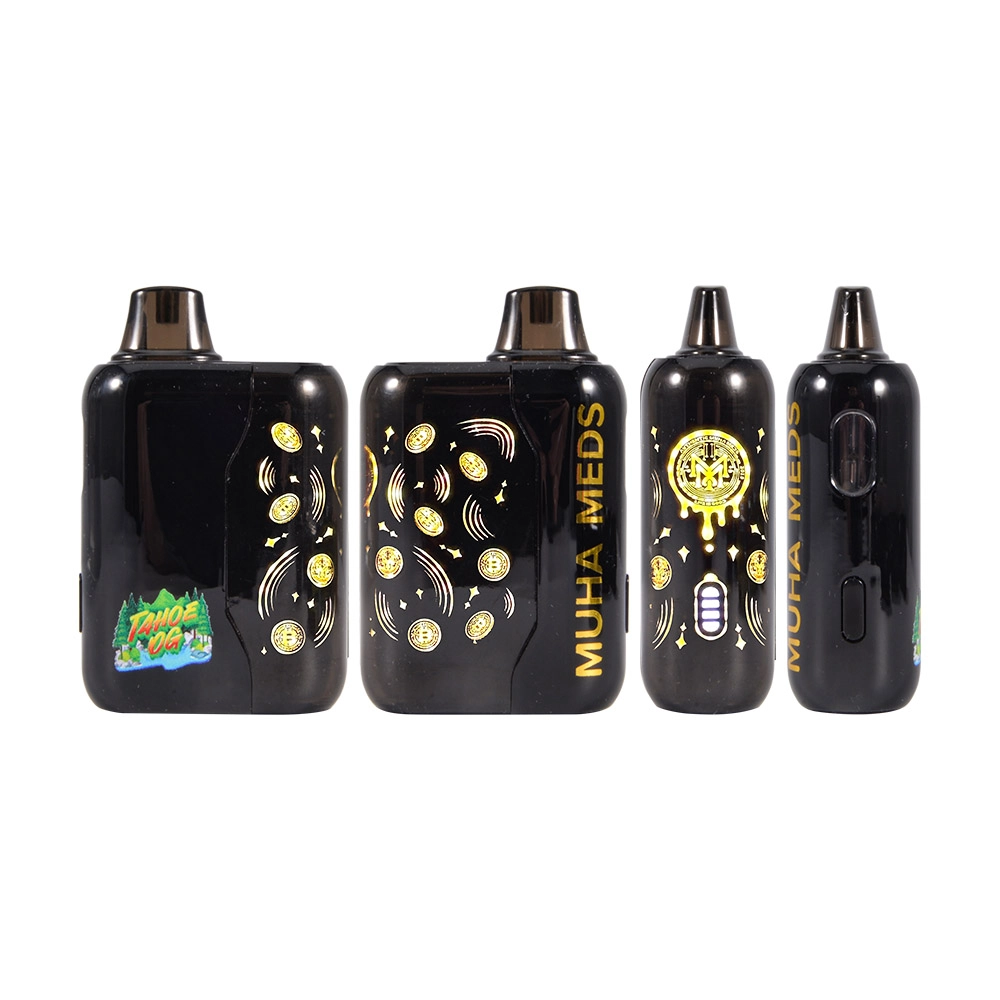
Adults 21+ | Hardware-Only: This article is written for B2B wholesalers, distributors, and OEM/ODM sourcing teams evaluating empty hardware (device shell, battery, heating structure, airflow, packaging, QC, logistics). It does not cover filled products, potency, effects, or any filling instructions. Always follow local laws, licensing rules, and platform policies. Brand names are used for identification and buyer intent only and do not imply affiliation.
Muha Meds & BTC (LED Screen) Disposable Vape — B2B Buyer Guide (Empty Hardware)
“Popular” hardware formats usually stay popular for operational reasons: they are easier to list, easier to receive, easier to QC, and easier to support at scale. This guide translates the Muha Meds & BTC (LED Screen) search intent into a practical B2B checklist: SKU clarity, spec discipline, traceability, QC gates, logistics readiness, and after-sales risk control.
Related internal reading (hardware-only): Muha Meds Empty Disposable Vape: Wholesale Sourcing Checklist · Muha Med With Screen: Why Buyers Prefer the LED Display (2025) · Hardware-Only Bulk Buying Guide (Version Control, QC, Docs)
Buyer takeaway: Treat “BTC (LED Screen)” as a versioned hardware program. If you can’t lock the version, you can’t lock the risk.
What “Muha Meds & BTC (LED Screen)” refers to (SKU / version clarity)
What it means for B2B buyers
“BTC” is ambiguous in general language, so your sourcing team must define it as a hardware edition (e.g., “BTC (LED Screen) / Screen Edition”) and enforce that wording across quotes, POs, carton marks, and your SKU master. Version ambiguity is a top cause of receiving mix-ups and post-sale disputes.
What to verify (specs / docs / QC)
- Lock a single official string: BTC (LED Screen) (do not allow supplier-side name drift).
- Require a photo pack tied to the SKU: front/back/side + port close-up + mouthpiece close-up + any visible edition marker.
- Require printed identifiers: batch/lot + packaging version (Rev) on unit/box, and carton marks on master cartons.
What to ask your supplier (3 bullets)
- In your BOM/work order, what internal code corresponds to BTC (LED Screen)?
- How do you publish change notices (Rev/ECN) for screen/PCB/finish updates?
- Can you print edition + batch/lot + packaging Rev consistently on every shipment?
Buyer takeaway: SKU governance is the cheapest “insurance” you can buy before deposit.
Evidence slot: Attach your SKU dictionary table + “notifiable change” policy (Rev rules) used in POs.
Quick spec snapshot buyers should confirm (before paying)
What it means for B2B buyers
A spec snapshot is not a long datasheet. It’s a short, auditable reference that prevents “sample was X, mass production was Y” disputes. It should be signed/acknowledged by the supplier and referenced in the PO.
What to verify (specs / docs / QC)
| Field | Target / Value | Notes (for ops/QC) |
|---|---|---|
| Edition | BTC (LED Screen) | Must match packaging Rev + carton marks |
| Battery (mAh) | ______ | Confirm supplier spec sheet version/date |
| Charging port | ______ | QC check: port alignment + charge indicator behavior |
| Activation | ______ | QC check: consistent trigger response (hardware-only) |
| Heating structure ID | ______ | Internal identifier for change control |
| Airflow design | ______ | QC check: no blocked paths / consistent draw |
| Materials | ______ | As applicable to your market’s documentation |
| Packaging config | ______ | Units per inner/master carton + carton marks |
| Spec sheet Rev/date | ______ | Reference this in the PO |
What to ask your supplier (3 bullets)
- Can you provide a one-page spec sheet with a Rev + date and confirm “same-as-golden-sample” for bulk shipments?
- Will you retain a matching golden sample (sealed set) to resolve disputes objectively?
- What changes are considered “notifiable” (battery source, seals, PCB, screen, finish, packaging counts)?
Buyer takeaway: If it’s not written (Rev + date + PO reference), it’s not controlled.
Evidence slot: Upload your signed spec snapshot + golden sample clause template.
Typical LED screen specs (what to look for)
What it means for B2B buyers
Screen-equipped formats can reduce receiving confusion and improve device-level status visibility, but they also introduce additional QC points (screen behavior, indicator logic, firmware consistency). Your goal is not “more features,” but repeatable behavior.
What to verify (specs / docs / QC)
| Screen item | Typical purpose | QC acceptance example (hardware-only) |
|---|---|---|
| Battery icon / % | Runtime visibility | Consistent indicator behavior; no dead pixels; readable angle |
| Status / alerts | Basic fault signaling | Consistent alert triggers; no random flashing or stuck states |
| Puff counter (if present) | Usage counting | Counts consistently; resets behavior documented (if any) |
What to ask your supplier (3 bullets)
- Do you have a written description of screen logic (what each icon means and when it appears)?
- Is the screen/PCB tied to an internal version code that can be tracked by lot?
- What are your factory tests for screen-equipped units (activation, charging indicator, display consistency)?
Buyer takeaway: Screen features should be treated like a versioned subsystem: document it, test it, track it by lot.
Evidence slot: Add your “LED screen receiving test” mini-SOP (30–60 seconds per sampled unit).
Supplier vetting (reduce bulk order risk)
What it means for B2B buyers
Vetting is less about marketing claims and more about whether the supplier can deliver verifiable consistency: documented specs, documented QC, traceable packaging, and written after-sales rules.
What to verify (specs / docs / QC)
- Identity: company registration matches bank beneficiary name; named QA contact; consistent addresses.
- Capability: can provide spec sheet Rev, packaging field standard, QC checkpoints, and sample evidence pack.
- Process: clear change-control policy (what triggers a Rev update, how you’re notified, and how it’s approved).
What to ask your supplier (3 bullets)
- Can you share a sanitized example of a pre-shipment QC evidence pack (photos + sampling record)?
- How do you handle corrective actions for repeated defect patterns at the batch level?
- Will you put warranty/DOA terms in writing (no vague chat promises)?
Buyer takeaway: The supplier you can audit on paper is usually the supplier you can scale with.
Evidence slot: Vendor scorecard template (0–5 for Rev control, QC evidence, traceability, DOA policy, lead time reliability).
RFQ & sampling plan (make quotes comparable)
What it means for B2B buyers
If your RFQ is vague, quotes can’t be compared. If your sampling plan is weak, mass production risk is unknowable. You need a standardized RFQ and a staged sampling plan that reveals variation.
What to verify (specs / docs / QC)
- RFQ must include: SKU identifiers (photo pack + dimensions), edition string, packaging config, required printed fields, target lead time, and QC gates.
- Sampling stages: pre-production samples → pilot lot → mass production, with acceptance criteria defined at each stage.
- Comparability rule: quotes must specify MOQ + tier pricing + lead time per tier, and any customization adders separately.
What to ask your supplier (3 bullets)
- What is your MOQ and tier pricing for BTC (LED Screen) under the exact packaging configuration?
- Can you support a pilot lot with a documented QC report before full-scale production?
- What is your rework/replacement rule if pilot units fail agreed checkpoints?
Buyer takeaway: RFQ structure controls quote quality; sampling structure controls delivery quality.
Evidence slot: Your RFQ template + sampling checklist (tests, pass/fail rules, evidence required).
QC gates: sample → pilot → mass production
What it means for B2B buyers
QC gates aren’t about finding perfection—they’re about catching the costly failure modes early (DOA, inconsistent charging, inconsistent display behavior, packaging damage) before you scale inventory and customer complaints.
What to verify (specs / docs / QC)
- Visual: scratches, gaps, misalignment, print offsets, loose parts.
- Functional (hardware-only): activation response, charging indicator behavior, screen display consistency.
- Packaging: label fields present, barcode readable, seals consistent, carton marks correct.
- Sampling: define AQL/sample size and reject criteria in the PO.
What to ask your supplier (3 bullets)
- What is tested at the factory, when, and how are results recorded by lot?
- Can you provide pre-shipment photos/videos that show key checkpoints (screen + charging + carton marks)?
- If a defect pattern is found, how do you isolate affected cartons and execute corrective action?
Buyer takeaway: Written QC gates turn quality into a contractable process instead of a debate.
Evidence slot: AQL table + “QC gate” one-pager (sample/pilot/bulk acceptance) used for this SKU.
Packaging, label space & traceability checks
What it means for B2B buyers
Traceability reduces the true cost of after-sales. The goal is simple: when something goes wrong, you can map it to a lot/carton quickly and stop it from spreading across your inventory.
What to verify (specs / docs / QC)
- Unit/box fields: batch/lot, date code, packaging Rev, barcode/QR (if used).
- Master carton marks: PO reference, lot, carton ID, qty, gross weight, dimensions.
- Scan test: barcode readability test in receiving (spot-check).
What to ask your supplier (3 bullets)
- Can you share your label field standard and sample photos for this edition?
- Do you perform barcode scan verification before packing?
- Can carton IDs be mapped to lot + PO on the packing list?
Buyer takeaway: If you can’t trace it, you can’t control it.
Evidence slot: Label field spec + carton mark spec + receiving log template (carton ID → shelf location mapping).
Shipping & warehouse strategy (lane + inventory ops)
What it means for B2B buyers
Many delays come from paperwork and packing, not manufacturing. “Warehouse-ready” shipments include predictable carton marks, lot separation, and a document pack that can be provided quickly for your shipping lane.
What to verify (specs / docs / QC)
- Lane readiness: confirm what documentation can be provided for your forwarder/carrier requirements (lane-dependent).
- Packaging resilience: inner tray prevents rattle; seals remain intact; cartons resist compression in parcel environments.
- Receiving SOP: store by lot/carton ID; quarantine exceptions; log evidence for any anomalies.
What to ask your supplier (3 bullets)
- What docs do you provide for my lane, and how fast can you send them after booking?
- Can you share pack-out photos (inner tray + master carton) and carton dimension/weight specs?
- Do you track transit damage rates and what improvements reduced damage for similar shipments?
Buyer takeaway: Docs + carton marks + receiving SOP prevent “inventory chaos” more than any marketing claim.
Evidence slot: Lane-by-lane doc checklist + basic packaging integrity checklist (rattle/seal/carton mark verification).
Pricing, MOQ & landed cost math (buyer framework)
What it means for B2B buyers
The number that matters is not unit price—it’s landed cost and risk cost. Screen editions can add QC time and higher consistency requirements, so build that into your buying math.
What to verify (specs / docs / QC)
Landed cost framework (simple):
- Landed cost/unit = unit price + packaging + customization adders + freight + duty/fees + QC cost + (damage allowance)
- Quote must separate: base unit price, packaging config, customization, tier breaks, lead time per tier.
- MOQ should be defined per customization type (finish/logo/box), not only a single global MOQ.
What to ask your supplier (3 bullets)
- Are MOQs and price breaks calculated per customization item (finish/logo/box) or only as a total?
- Can you provide a small pilot tier and a bulk tier with the same spec snapshot and Rev control?
- What sampling/QC level do you recommend for screen editions (based on your past shipments)?
Buyer takeaway: Structured pricing beats “cheap pricing” when you scale.
Evidence slot: Landed cost calculator sheet template + pricing tier table placeholder.
Red flags & common failure patterns (avoid scams)
What it means for B2B buyers
The fastest way to lose money is to skip governance. Most high-cost failures show early as refusals to document, version, or trace the product you’re buying.
What to verify (specs / docs / QC)
- Supplier won’t provide a spec sheet Rev/date or refuses to tie photos/dimensions to the SKU.
- Same name used for multiple hardware versions, but no change list / no packaging Rev.
- No willingness to provide any evidence pack (QC checkpoints, packing config, carton marks).
- Warranty/DOA terms remain vague and “chat-based,” not written.
What to ask your supplier (3 bullets)
- Will you put revision control + printed traceability fields into the PO/contract?
- Can you provide a sample of pre-shipment QC evidence for a recent lot?
- What happens (step-by-step) if a lot shows systematic defects after delivery?
Buyer takeaway: If documentation is hard before deposit, resolution will be harder after delivery.
Evidence slot: Your anti-scam due diligence checklist and bank beneficiary verification steps.
Responsible use & handling (hardware-only)
What it means for B2B buyers
Even as empty hardware, these devices contain batteries and electronics. You need a minimal handling SOP for storage, inspection, and disposal consistent with your local requirements and your logistics partner’s expectations.
What to verify (specs / docs / QC)
- Storage: dry, temperature-stable conditions; avoid compression/impact; separate lots to prevent mixing.
- Inspection: functional checks should remain hardware-only (activation/charging/screen behavior); avoid any content-related testing.
- Disposal: follow local rules for battery/e-waste handling and recycling.
What to ask your supplier (3 bullets)
- Do you provide a hardware-only handling note for warehouses (charging/indicator expectations, storage warnings)?
- What screen-related failure modes are most common, and what QC step reduces them?
- Can you provide any relevant battery transport documentation expectations for our lane?
Buyer takeaway: A 1-page warehouse SOP prevents a lot of preventable losses.
Evidence slot: Add your internal warehouse handling checklist + quarantine rules.
QR/sticker verification caution (security)
What it means for B2B buyers
QR codes and stickers can be tampered with or replaced. Receiving teams should scan only from approved domains and treat QR verification as a controlled process, not an ad-hoc action.
What to verify (specs / docs / QC)
- Define a whitelist of approved domains (your supplier’s official domain + any brand domain you trust).
- Check sticker placement consistency and signs of overlay/tampering during receiving.
- Do not download unknown files from QR destinations; treat unexpected redirects as a security incident.
What to ask your supplier (3 bullets)
- What is the official domain your QR codes will always use?
- What anti-tamper design do you apply (material, placement, overlay resistance)?
- If a QR destination changes, how will you notify buyers and update documentation?
Buyer takeaway: QR verification needs SOP + domain control, otherwise it introduces a new risk vector.
Evidence slot: Insert your QR scanning SOP (domain whitelist + escalation workflow).
FAQ (B2B)
Is this guide about filled products?
No. This is a hardware-only buyer guide for empty devices (shell + battery + packaging + QC + logistics).
What does “BTC (LED Screen)” mean in procurement terms?
Treat it as an edition/version identifier. Lock the string in writing and tie it to photos, spec Rev/date, packaging Rev, and lot tracking. If the supplier can’t define the version, you can’t control change risk.
What should we request first: spec sheet or packaging dieline?
Start with the spec snapshot + label field standard (Rev/date), then confirm packaging dieline and carton marks so traceability is built in.
What QC step reduces DOA most for screen editions?
A short functional gate: activation response + charging indicator behavior + screen display consistency, applied under a documented sampling plan tied to the lot.
What needs to be printed for traceability?
At minimum: batch/lot + packaging Rev on the unit/box, plus carton marks that map carton ID to lot and PO on the packing list.
References (authoritative)
- PHMSA — Lithium Battery Test Summaries (U.S. DOT guidance): PHMSA page
- U.S. eCFR — 49 CFR §173.185 (lithium cells/batteries transport requirements reference): eCFR section
- UL Solutions — UL 8139 overview (device-level electrical/heating/battery/charging system safety standard): UL overview
- IEC — IEC 62133-2 overview (portable sealed secondary lithium safety standard): IEC summary
- ISTA — Test procedures overview (packaging performance reference): ISTA procedures
- FTC — QR code scam caution (consumer safety guidance; useful for warehouse QR SOP awareness): FTC guidance
Note: Reference links above support safety, shipping, packaging, and verification concepts. Your specific documentation requirements may vary by lane, carrier, and jurisdiction.
Next step (B2B)
If you’re sourcing BTC (LED Screen) empty hardware in bulk, build your RFQ around the spec snapshot + printed traceability fields + QC gates. That combination reduces DOA, prevents name drift, and keeps reorders stable.
- Request: quote + spec Rev/date + packaging Rev + carton mark sample
- Ask: pilot lot plan + pre-shipment evidence pack
- Set: DOA/returns rules in writing before deposit
If you want more thc vape, you can go through those pages: empty disposable vape|2ml disposable|muha meds wholesale|muha meds disposable bulk
0 Comments