
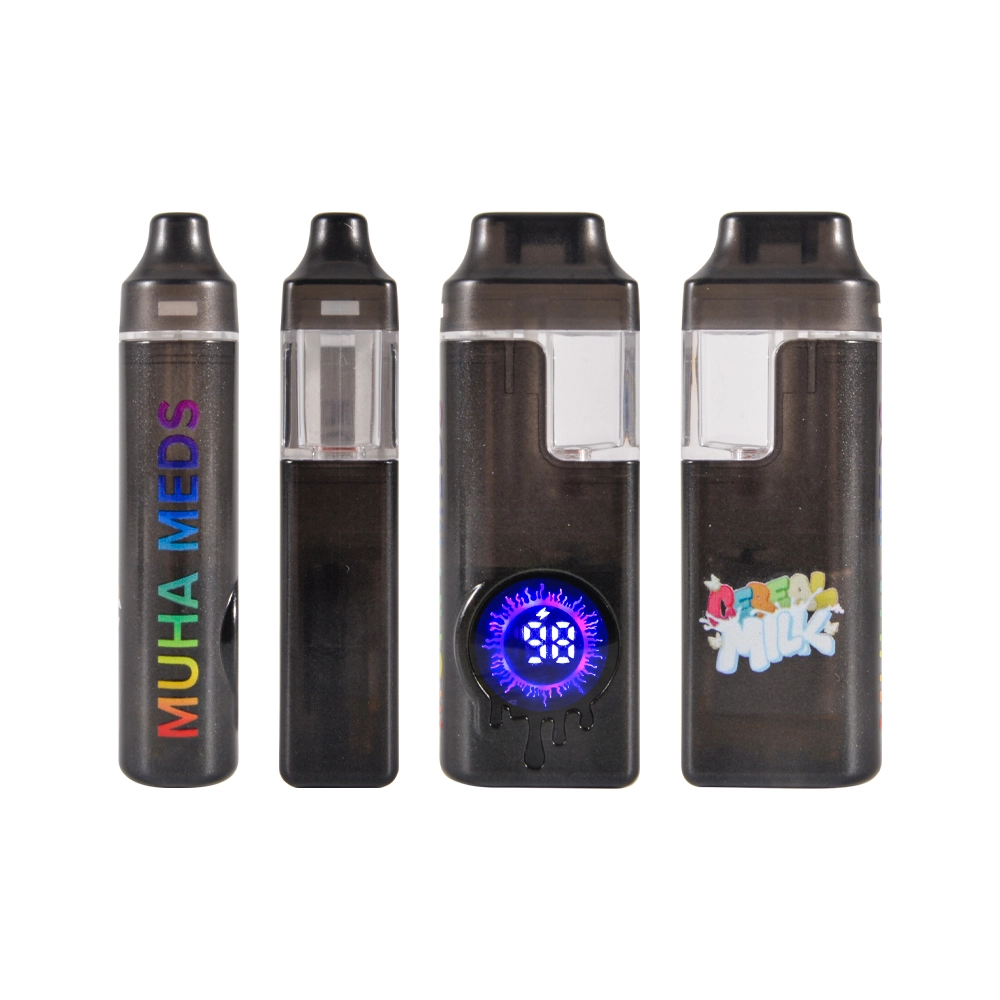
Muha Med With Screen: Why Buyers Prefer the LED Display (2025)
Scope & audience. This article is for adults (21+) comparing hardware features of LED-display disposables/“with screen” devices in 2025. It does not make health claims or recommend dosing. Regulations and labeling rules vary by jurisdiction; always check local law before buying or using devices.
What an LED Screen Actually Shows (and What It Doesn’t)
Across screen-equipped disposables, the display typically provides: (1) battery status, (2) device status icons (e.g., over-draw/over-temp alerts), and in some models (3) a puff counter. These are device-level signals. Consumer vape screens do not directly measure or “track” cannabinoid content or THC levels; they don’t contain analytical sensors for that. When brands reference “oil” or “e-liquid” indicators, those are generally crude estimates (e.g., timed use counters) rather than a chemical measurement.
| Screen item | Typical purpose | Notes |
|---|---|---|
| Battery icon / % | Helps avoid unexpected shut-offs | Device-level voltage estimate |
| Puff counter | Tracks draws for maintenance/runtime | Counter, not a dosing instrument |
| Status/alerts | Short-circuit, over-temp, low-battery | Firmware-based safety feedback |
Why Buyers Prefer Screens in 2025
1) Predictable runtime
A clear battery indicator reduces guesswork and wasted sessions. It lets users recharge before the device cuts off. That’s especially useful on rechargeable disposables where you aim to finish the oil before disposal.
2) Easier troubleshooting
On-screen error prompts (low-battery, short-circuit, time-out) make it easier to distinguish a dead battery from an airflow or contact issue—saving time versus “LED blink” codes.
3) Basic usage tracking
Puff counters can help with consistency (e.g., knowing roughly how much of the session budget you’ve used). Again, these are counters, not dosage instruments.
Device Safety Standards: What Applies to “With-Screen” Hardware
For electrical and battery safety, two reference points commonly cited by hardware makers are:
- UL 8139 — evaluates electrical, heating, battery, and charging systems of e-cigarettes/vaping devices. It does not evaluate e-liquids or health effects. Certification is voluntary but widely referenced for device-level safety design. :contentReference[oaicite:1]{index=1}
- UN 38.3 (UN Manual of Tests & Criteria §38.3) — a transport safety test regime for lithium cells/batteries required for air/ground shipping; manufacturers/shippers should provide a UN 38.3 test summary.
If hardware includes an internal lithium cell and ships by air, IATA’s Lithium Battery Guidance spells out packing instructions, state-of-charge limits in certain cases, and marking/labels. For 2025 shipments, consult the current IATA guidance and carrier requirements.
Labeling: Finished Products vs. Empty Hardware (Jurisdiction: California example)
California’s Department of Cannabis Control (DCC) has detailed packaging and labeling checklists for manufactured cannabis products (finished goods). Those checklists include warnings and disposal language for integrated vaporizers and cartridges. They apply to finished cannabis products in California, not to generic, empty hardware. Always check whether you are buying a finished, filled product (subject to DCC labeling) or empty hardware (generally not covered by those specific labeling items).
Authenticity & QR Safety (Avoiding Counterfeits)
Many brands print QR codes or alphanumeric batch codes on packaging that resolve to a verification page and Certificate of Analysis (COA). When you scan:
- Verify the domain is the brand’s official site (typo-domains are common in scams).
- Confirm the batch/lot on-screen matches the label on your box/device.
- Open COAs and check test lab name, date, analytes, and pass/fail fields.
Typical “With-Screen” Specs (What to Look For)
| Spec | Why it matters | What “good” looks like (2025) |
|---|---|---|
| Battery & recharge | Lets you finish the oil and avoid mid-session cut-offs | USB-C input; reasonable capacity for the oil load; visible battery icon |
| Coil/materials | Affects flavor consistency and clog resistance | Ceramic or equivalent, matched to viscosity; firmware time-out |
| Screen UI | Usability & troubleshooting | Clear battery icon; puff counter (optional); simple alerts |
| Basic safeguards | Electrical/battery safety | Manufacturer cites UL 8139 evaluation and provides UN 38.3 test summary for the cell used in shipping docs |
| Traceability | Counterfeit risk reduction | Batch/lot on the box + QR/batch lookup to brand’s official domain and COA |
Responsible Use & Handling (Hardware-only)
- No sharing. For hygiene and device-care reasons, avoid sharing mouthpieces.
- Charging. Use a reputable USB-C power source; do not charge unattended; stop using if the device or cable is damaged. (General lithium-cell safety principle; see UL 8139 scope.)
- Transport & disposal. Follow carrier rules for lithium cells; at end-of-life, treat as e-waste/battery waste per local guidance. (IATA/UN 38.3 relate to transport safety.)
FAQ
Does the LED screen show potency or “THC per puff”?
No. Consumer vape screens provide device telemetry (battery, counters, alerts). Potency is verified through lab testing (COA), not displayed live on the device.
How do I tell if a QR code is legitimate?
Scan, then check the domain and certificate details; avoid QR codes from unsolicited messages; the FTC recommends inspecting the URL before proceeding.
Are UL 8139 and UN 38.3 legally required?
UL 8139 is a voluntary safety evaluation often cited by manufacturers; UN 38.3 testing is required for cells/batteries in transport, and a test summary must be made available in the shipping documentation chain.
0 Comments