
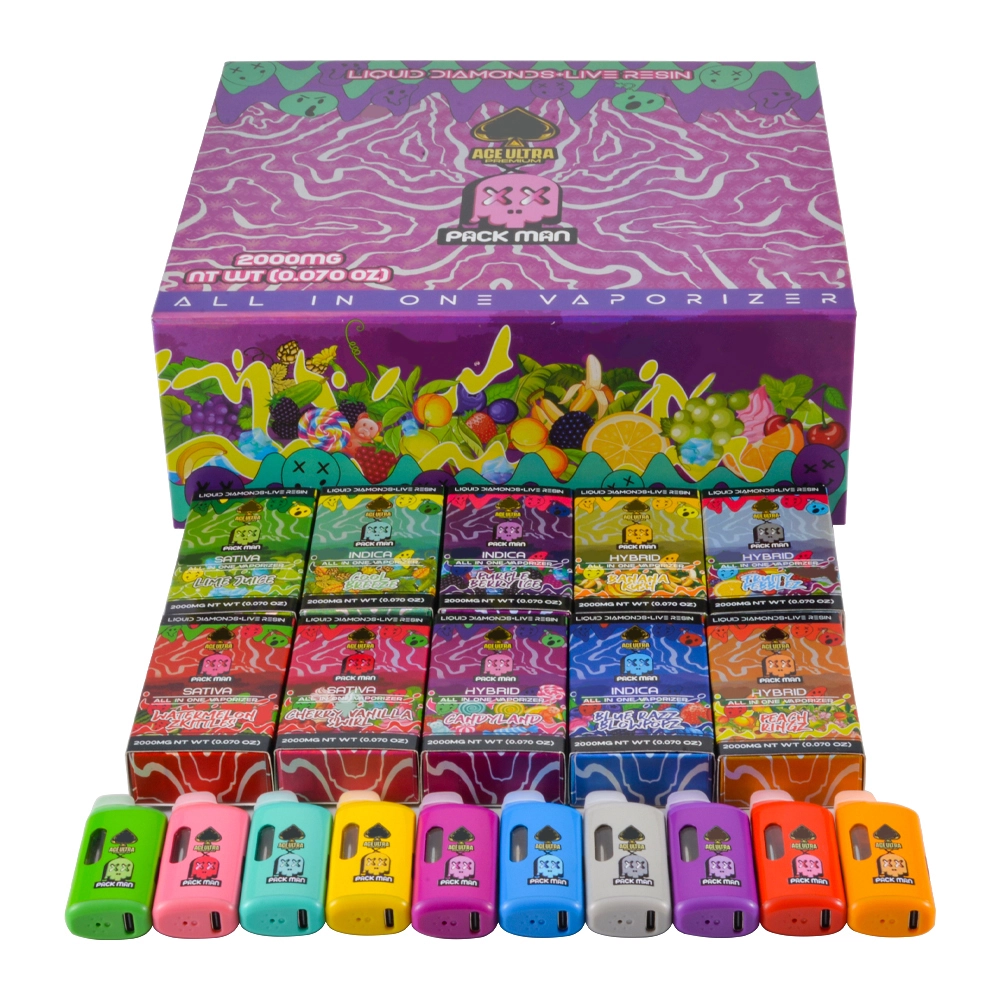
Why Ace Packman Disposable Is Gaining Popularity in 2025
You notice ace packman disposable getting more attention in 2025 for one practical reason: buyers want rechargeable, QC-friendly empty hardware that is easier to ship, inspect, and support at scale. This page focuses on empty hardware only (no pre-filled liquid, no effects, no flavor claims). For wholesale sourcing, you can start with ace x packman wholesale. Packman ace disposable is often selected because rechargeability reduces “dead battery” complaints and improves sell-through for retail partners.
Note: “Popularity” is easy to over-claim. The most credible way is to define measurable signals (search demand, reorder rate, return rate, and compliance readiness) and track them consistently.
Key Takeaways
-
In 2025, buyers increasingly prefer USB-C rechargeable empty hardware because it reduces early failures, supports full usage of the reservoir, and lowers customer support tickets.
-
Compliance talk must be jurisdiction-specific. For example, the UK has a ban on the sale and supply of single-use vapes from 1 June 2025, with specific criteria for what counts as “single-use.” Always verify where your destination market sits before you plan inventory.
-
For cross-border shipping, the credibility jump comes from documents you can actually show: UN 38.3 test summary (transport), and battery safety evidence aligned with IEC 62133-2 / relevant electrical safety evaluations where applicable.
Popularity Metrics 2025
How to Validate Demand (Instead of Guessing)
If you want a defensible “gaining popularity” statement, use a simple 4-signal dashboard and update it monthly. This is stronger than saying “Google Trends is up” without proof.
|
Signal (Track Monthly) |
How to Measure (Verifiable) |
|---|---|
|
Search Demand |
Use Google Trends + Search Console query data for “ace packman disposable” and close variants. Save screenshots/exports per month for an audit trail. |
|
Reorder Rate |
Count how many accounts reorder within 30/60/90 days; split by warehouse/lot. “Reorder” is a stronger popularity indicator than pageviews. |
|
Return / RMA Rate |
Track leakage, clogging, battery/charging issues separately. Popular SKUs stay popular when the support load is low. |
|
Compliance Readiness |
Track which SKUs have a complete transport pack (e.g., UN 38.3 test summary) + consistent spec sheet + stable labeling. Missing documents cause delays and lost sales. |
What the Product Listing Can Confirm (Hardware-Only)
A credible blog separates what you can confirm from what you cannot. For example, your on-site listing for an ACE × Packman 2ml version shows core hardware fields such as tank volume, resistance, charging type, and aperture. If a listing template includes “flavor” fields, treat those as template artifacts unless your supplier provides a separate, verifiable spec sheet stating otherwise.
Practical rule: If you sell empty hardware, avoid “flavor/experience/effects” wording. Keep it mechanical: reservoir, charging, resistance range, intake aperture, QC, and documentation.
Regulatory Impact on Disposable Hardware
UK Example: Single-Use Vape Ban Starts 1 June 2025 (Jurisdiction-Specific)
Regulatory changes do affect availability—but only within the jurisdictions that adopt them. In the UK, the sale and supply of single-use vapes is restricted from 1 June 2025. UK guidance also explains how “single-use” is assessed (for example, whether a product is rechargeable and refillable, and expectations around replaceable coils where relevant). You should confirm your SKU classification before allocating UK inventory.
-
UK guidance (official): Single-use vapes ban guidance</a >
-
UK policy explanation: Defra: what you need to know</a >
WEEE / E-Waste Duties (UK/EU): Plan Recycling as a Producer/Retailer
In many markets, vapes are treated as electrical/electronic equipment for waste obligations. If you place products on the UK market, WEEE producer responsibilities and take-back expectations may apply. For B2B buyers, a “compliance-ready” SKU often includes a recycling plan and clear labeling that your partners can rely on.
-
UK overview: UK WEEE regulations guidance</a >
-
Practical compliance summary: Business Companion: WEEE quick guide</a >
Shipping & Battery Documentation: What “Good” Looks Like in 2025
If your hardware includes built-in lithium cells, transport compliance is not optional. A common baseline expectation is proof that the battery type has passed UN 38.3 testing, and that a UN 38.3 test summary can be provided for shippers and downstream partners. Guidance from PHMSA and IATA outlines these expectations and how test summaries are used in transport workflows.
-
PHMSA on lithium battery test summaries: PHMSA lithium battery resources</a >
-
IATA lithium battery guidance (UN 38.3 context): IATA lithium battery shipping guidance</a >
US Mail Note (USPS): ENDS Mailing Rules Can Be Separate From Battery Rules
If you (or your customers) ship via USPS in the U.S., be aware that USPS has separate restrictions for mailing ENDS products. Even if a package is properly prepared for lithium batteries, ENDS mailing rules may still apply and can limit how/when USPS can be used. For B2B buyers, this is part of “logistics readiness.”
-
USPS ENDS restriction overview: USPS PostalPro: ENDS</a >
Ace Packman Disposable Features & Buyer Tools
Hardware Design and Rechargeability (Why Buyers Care)
From a B2B perspective, the “why” is operational: USB-C rechargeability reduces early failures (dead on arrival / low battery), improves customer satisfaction, and supports fuller usage of the reservoir for compliant filling operations. For hardware-only listings, focus on what can be checked objectively: tank volume, charging type, resistance range, and aperture.
|
Hardware Attribute |
What to Verify (Incoming QC) |
|---|---|
|
USB-C charging |
Port fit (no wobble), charge indicator behavior, stable contact, no overheating during a supervised test. |
|
Tank / reservoir volume |
Match the supplier spec sheet; verify by weight/volume method in your QA workflow (document your method). |
|
Resistance & airflow consistency |
Sample-check resistance tolerance and airflow feel; log outliers by lot number. |
|
Aperture / intake dimensions |
Confirm aperture matches the intended viscosity range for your compliant fill use-case; inspect for burrs and flash. |
QC Checklist for Incoming Shipments
You want every shipment to meet your standards. Use this checklist to check Ace Packman Disposable hardware:
|
Checklist Item |
Description |
|---|---|
|
Packaging & Handling |
Use original trays. Do not let boxes get crushed. Record temperature and humidity on receipt. Photograph cartons + inner trays for claims. Keep a shared log by lot. |
|
Sampling |
Sample by lot (e.g., AQL approach). Check: port alignment, mouthpiece seal, visible cracks, screen/indicator function, and any rattle/loose internal parts. |
|
Leak / Seal Checks |
Inspect seals and seams. Pressure/tilt checks (your SOP) to catch early leak paths. Log failure mode (seal, seam, port, mouthpiece). |
|
Battery Documentation |
Keep the UN 38.3 test summary on file for each battery type/lot family. If the supplier claims IEC 62133-2 alignment, request evidence. |
|
Logistics Preparation |
Confirm carrier acceptance for lithium-in-equipment shipments; verify labels and declarations match the chosen mode (air/ground/sea). Do not rely on “template” paperwork. |
Compliance Pack to Request (UN 38.3, IEC 62133-2)
You need documents you can show. Ask your supplier for a “compliance pack” and store it by SKU + battery type + lot window. Avoid vague claims like “compliant” without a report, test summary, or certificate number.
|
Documentation Type |
Description (What You Can Verify) |
|---|---|
|
UN 38.3 Test Summary |
Transport-focused battery test summary used in logistics workflows. Keep it available for carriers/brokers. (Reference: PHMSA / IATA guidance.) |
|
IEC 62133-2 Evidence |
Battery safety standard commonly used for portable sealed lithium cells/batteries. If claimed, request the test report/certificate showing the edition/scope. |
|
Electrical Safety Evaluation (If Claimed) |
If a supplier claims UL 8139 alignment, ask for the actual evaluation/certificate and scope statement. Don’t publish the claim without proof. |
Buyer-Fit Matrix
You want to know if Ace Packman Disposable is right for your business. Use this matrix to help you decide:
-
You want lower RMA rates through rechargeability and clearer QC checkpoints.
-
You need stable hardware specs you can confirm by lot (not just marketing text).
-
You want a SKU that is easier to ship with complete battery documentation on file.
-
You prefer simple draw-activation workflows that reduce user errors.
-
You value predictable sourcing (spec sheet + samples + incoming QC SOP).
Terminology: Empty Hardware vs Finished Product
You need to know the difference between empty hardware and finished product. The table below explains:
|
Feature |
Empty Hardware |
Finished Product |
|---|---|---|
|
What it is |
Device hardware with no pre-filled liquid |
Ready-to-use device containing liquid |
|
Quality Control |
You can control fill/QC workflow in your compliant operation |
QC depends on the finished-goods producer |
|
Market Agility |
Faster to adapt hardware sourcing and packaging |
Slower changes due to finished-goods constraints |
Tip: Use precise wording in documents and listings. “Empty hardware” means no pre-filled liquid. Don’t imply certifications (UL/IEC/etc.) unless you can provide a report/certificate number and scope.
Ace Packman Disposable is gaining popularity in 2025 mainly for operational reasons: rechargeability, easier QC, and better logistics readiness when documentation is complete. If you want a defensible “popular” claim, track the four signals (search, reorder, returns, compliance readiness) and publish what you can verify.
|
Key Step |
Why It Matters |
|---|---|
|
Define your popularity signals |
Prevents over-claims and improves credibility. |
|
Keep transport docs on file |
Reduces carrier delays and improves cross-border fulfillment. |
|
Run lot-based incoming QC |
Lowers RMAs and builds repeat orders. |
FAQ
What does "empty hardware" mean for Ace Packman Disposable?
Empty hardware is a device sold without pre-filled liquid. Your compliance obligations depend on your market and how the product is used downstream. Keep listings focused on hardware specs and verified documents.
How do you check if Ace Packman Disposable hardware is compliant?
|
Step |
Action |
|---|---|
|
Ask for documents |
Request UN 38.3 test summary and any battery safety evidence (IEC 62133-2 if claimed). |
|
Confirm jurisdiction |
Check local rules (e.g., UK single-use ban criteria) before you plan inventory for that market. |
|
Don’t publish unverified claims |
If UL/IEC claims appear in drafts, only keep them with a certificate/report you can show. |
Why do B2B buyers prefer USB-C rechargeability?
-
Fewer “dead battery” complaints and higher sell-through.
-
Lower perceived waste compared with non-rechargeable devices.
-
Better user experience consistency when battery doesn’t fade early.
-
Stronger logistics readiness when paired with complete battery transport documentation.
0 Comments