
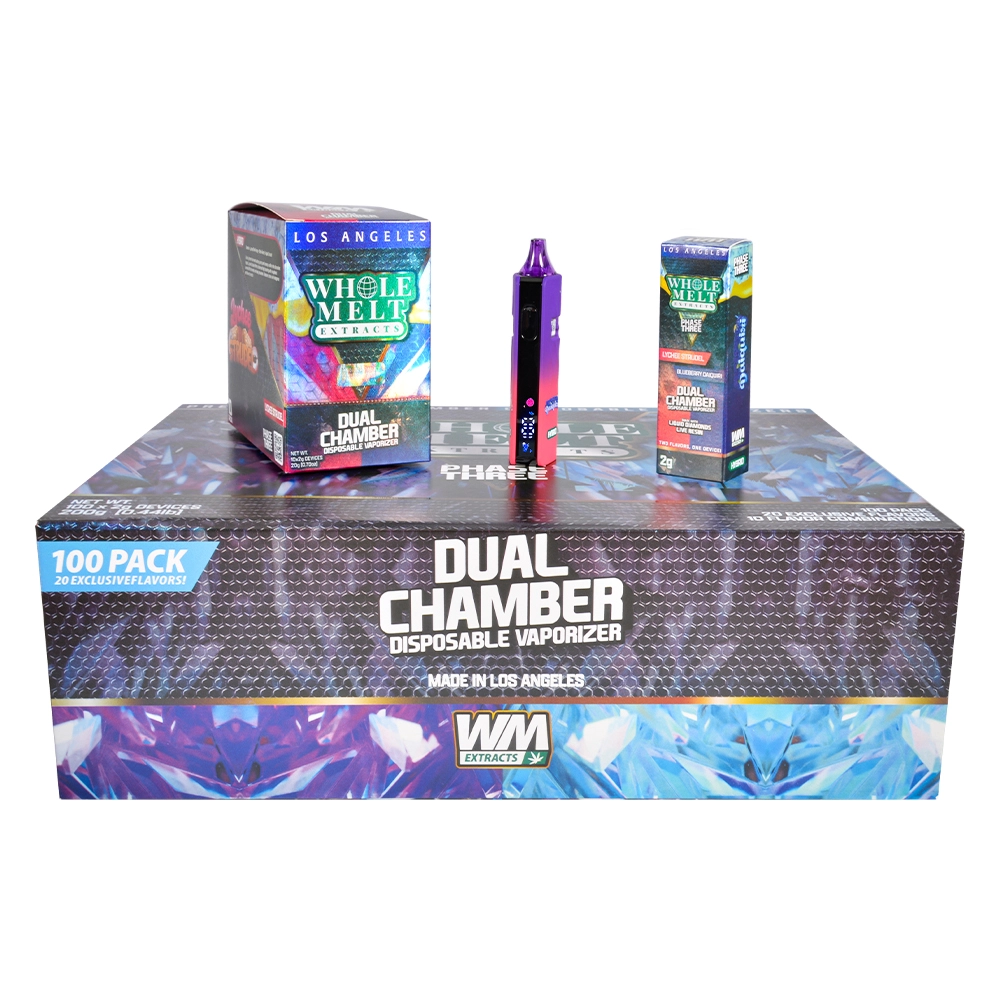
Whole Melt V8 Dual Chamber Specs Explained: 1ml+1ml, 450mAh, Bottom Type-C & Top-Filling
Scope (B2B / hardware-only): This article covers the empty device hardware (shell, power, ports, QC, pack-out). “Whole Melt V8 dual chamber” is commonly a market name used on wholesale listings—so the most reliable way to buy is: approve a golden sample → lock a versioned spec sheet in your PO → run repeatable inbound QC.
1) The V8 spec snapshot (what current listings actually say)
A current V8 product listing shows the following baseline specs:
-
Volume: 1ml + 1ml (dual chamber)
-
Battery: 450mAh
-
Charging: bottom Type-C (USB-C)
-
Fill architecture: top filling (hardware description)
-
Resistance / coil: 1.4Ω, ceramic coil
-
Oil inlet size: 4 × 1.6mm
-
Materials: plastic + aluminum
A separate V8 “Specs, QC, and Sourcing Guide” (dated Jan 27, 2026, updated 2026-01-27) repeats the same “core specs to confirm” framing: 1ml+1ml, 450mAh, ceramic coil ~1.4Ω, 4×1.6mm inlet, plastic+aluminum, and stresses verifying tolerances and supplier consistency.
2) 1ml + 1ml dual chamber: what buyers should expect (and what to test)
What it means: Two separate reservoirs in one device body (often marketed as “1g+1g”). Your operational risk is less about the headline capacity and more about chamber-to-chamber consistency.
Inbound checks that prevent headaches:
-
Chamber isolation: make sure “left” vs “right” behaves predictably and isn’t mixed at the selector/airpath level.
-
Airflow balance: you don’t want one side tight and the other side airy (that becomes “defective” in customer language).
-
SKU labeling: require carton/inner-box cues that clearly identify the variant to prevent warehouse mix-ups.
The 2026 sourcing guide’s main message is to standardize on measurable specs and treat buying as an operations system (spec lock + repeatable QC + consistent pack-out).
3) 450mAh battery: why this single number drives returns
The V8 listing calls out 450mAh as part of the baseline spec.
Why it matters:
-
Expectation setting: battery capacity is one of the first things end users “feel” (runtime, perceived strength/consistency).
-
Spec drift risk: battery capacity is a common silent change across batches unless you enforce it.
-
Return prevention: many “DOA” complaints are actually “arrived low battery” or “won’t charge with my cable.”
PO language that reduces surprises:
-
“Battery capacity: 450mAh (no substitution without written approval).”
-
“No silent changes to charging board/port location/indicator behavior.”
4) Bottom Type-C charging: what to verify beyond “it has USB-C”
The product spec explicitly lists Recharge: bottom type-c.
For wholesale receiving, the practical risk is port fit + stable charging, not the connector name. Add these quick tests:
2-minute receiving test (per sampled unit):
-
Port seating: cable inserts smoothly and sits firmly (no wobble).
-
Charge acceptance: plug in 5–10 minutes and confirm consistent “charging” state/indicator behavior.
-
Reconnect test: unplug/replug once—should re-initiate normally.
This catches the most common “won’t charge” drivers early (misaligned ports, intermittent contact, inconsistent indicator logic).
5) Top-filling architecture: what it implies for QC (without getting into filling)
The V8 listing describes Filling way: Top filling.
The 2026 sourcing guide also notes that “V8-style shells are described as top-fill in listings” and warns buyers not to assume compatibility without engineering review.
For buyers, “top filling” mostly affects mechanical integrity:
-
Top seal/plug consistency: poor sealing shows up as leaks or shipping failures.
-
Mouthpiece fit: loose or mis-seated top components create airflow and durability complaints.
-
Shipping vibration resilience: top assemblies that aren’t tight can fail in transit.
Receiving checks: inspect top seams/fit across multiple units per carton and compare against your approved “golden sample.”
6) What to lock in your PO (copy/paste checklist)
If you want to buy V8 consistently, lock these measurable specs in writing:
-
Volume: 1ml+1ml
-
Battery: 450mAh
-
Charging: bottom Type-C
-
Resistance/coil: ceramic coil, nominal 1.4Ω (with allowed tolerance range)
-
Oil inlet: 4×1.6mm
-
Materials: plastic + aluminum
-
Fill architecture: top-fill design (as supplied)
-
Change control: no silent changes (battery cell, charging board, port position, materials, tolerances)
7) Export readiness: “empty” still ships like a battery product
The V8 sourcing guide highlights a key operational point: even empty disposable bodies can contain a lithium cell, and export delays often come from packaging/paperwork problems, not the device itself.
If you ship internationally, be ready to request UN 38.3-related documentation (test summaries) from your supplier. PHMSA explains the UN 38.3 test summary requirement (effective Jan 1, 2022; revised effective May 10, 2024).
If you want more vape for sale, you can go through those pages: cbd disposable vape|2 gram disposable vape pen| Whole Melt|whole melts disposable
0 Comments