
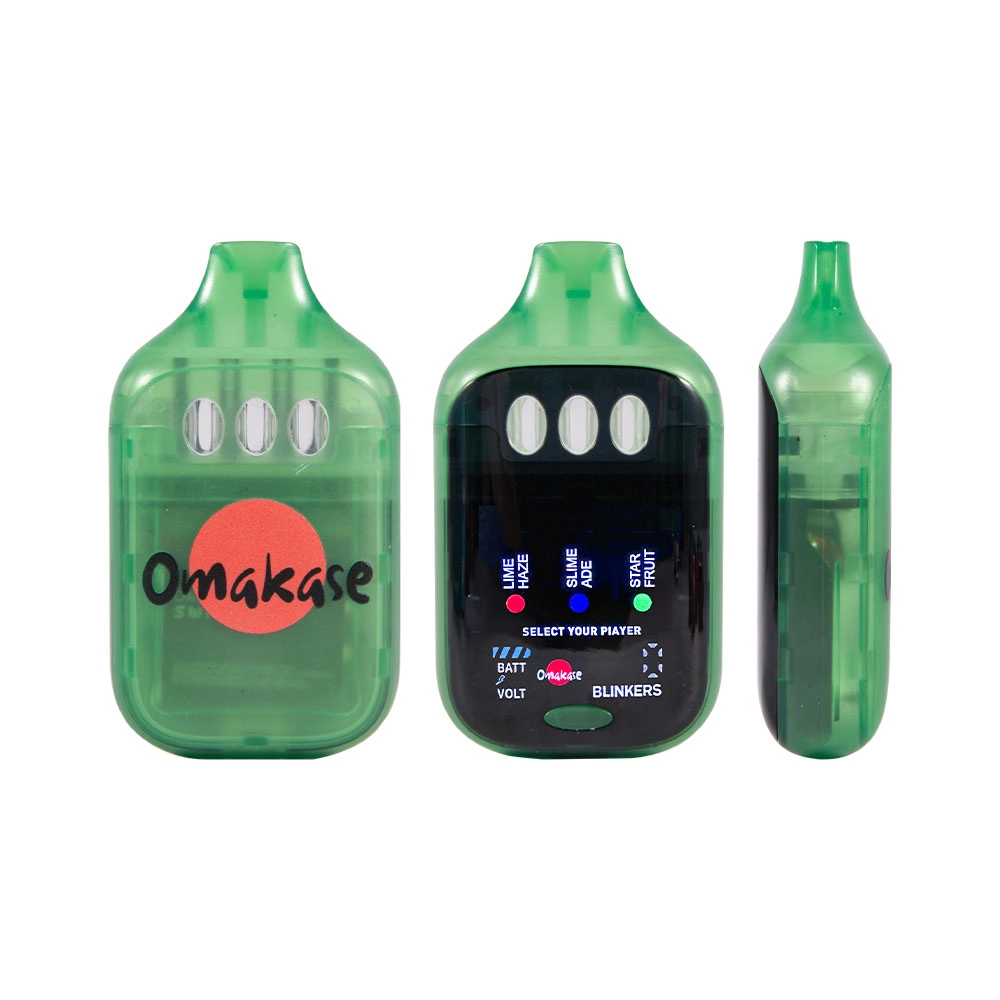
Which Omakase Flavor or Strain Should You Choose? Indica vs. Sativa vs. Hybrid
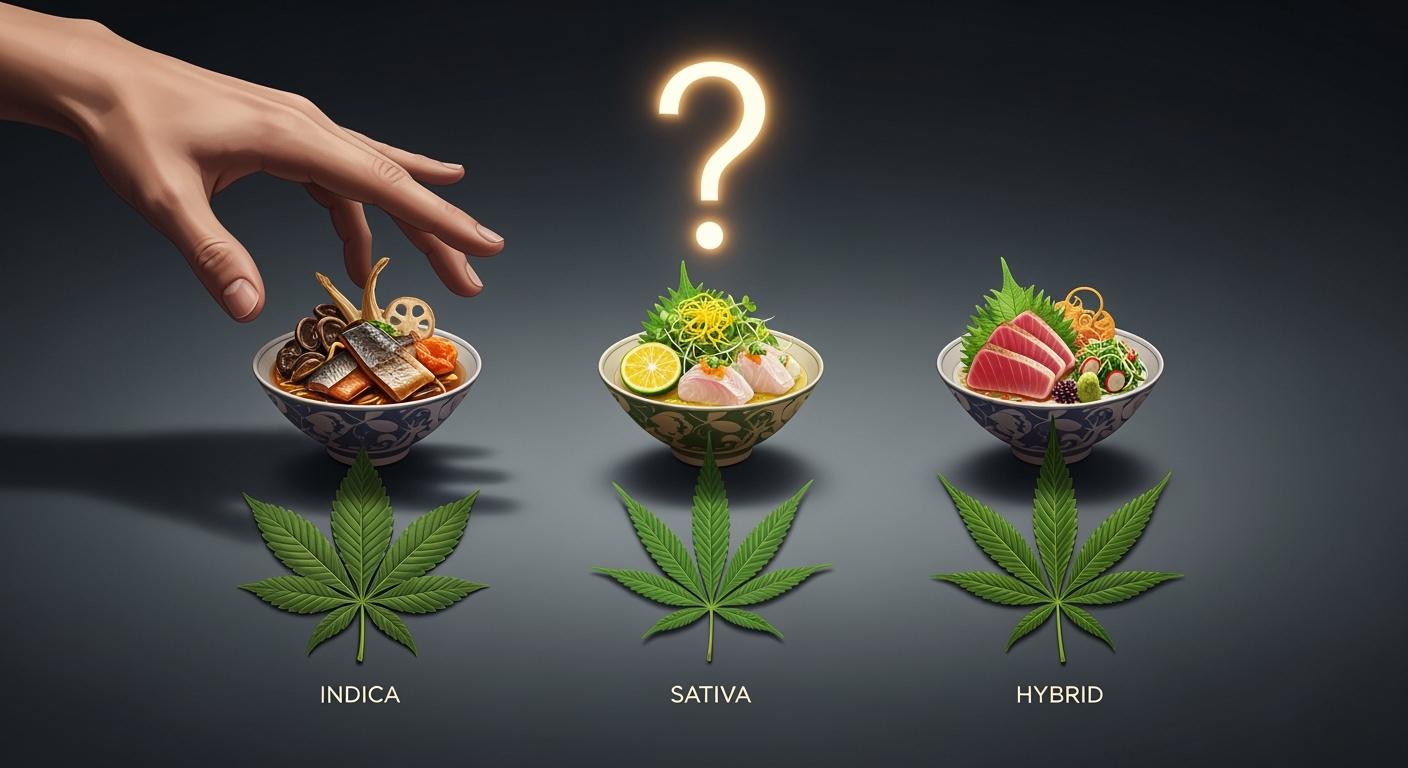
Only people 21 and older should use cannabis. This is not medical advice. Always follow your local laws. Do not drive after using cannabis. Know the risks before you use it.
Disclosure: This article is educational and focuses on safety, labeling limits, and how to read a Certificate of Analysis (COA). If this website sells or links to products, that commercial relationship may create a conflict of interest. When in doubt, rely on independent lab testing and licensed retail regulations rather than marketing claims.
Choosing an Omakase flavor or strain is easier when you use the right order of operations: start with your goal (relaxation, focus, balance), then check the product’s COA for cannabinoid and terpene data, and treat “indica/sativa/hybrid” as a loose label—not a promise. Large-scale chemical analyses of U.S. commercial cannabis show that indica/sativa/hybrid labels often do not reliably match chemical profiles, so effects may vary even when the label sounds familiar.
|
Goal |
Label You’ll Often See |
What to Verify in the COA (More Reliable) |
|---|---|---|
|
Relaxation |
Indica / Indica-leaning hybrid |
Total cannabinoids (THC/CBD), terpene profile, and full contaminant panel “PASS” status. |
|
Energy / Daytime |
Sativa / Sativa-leaning hybrid |
Total cannabinoids, terpene profile, and clear batch/lot traceability. |
|
Balance / Social |
Hybrid |
Balanced potency (if available), terpene profile, and licensed/regulated sourcing. |
Key Takeaways
-
Indica/sativa/hybrid can be a helpful starting label, but it is not a dependable predictor of chemistry or effects across brands and batches. Use COA data as your primary decision tool.
-
Always review a COA for: cannabinoids, terpenes, and contaminants (pesticides, heavy metals, residual solvents, microbes/mycotoxins). Some state regulators publish consumer-friendly COA guides.
-
Safety matters: U.S. public health agencies advise avoiding THC vaping products from informal sources; vitamin E acetate was strongly linked to the EVALI outbreak.
-
If you’re new or sensitive, the most prudent approach is “start low and go slow” and reassess before using more.
Omakase Flavor and Strain Basics
What Does “Omakase Flavor” Mean in Cannabis?
“Omakase” traditionally means “I’ll leave it up to you.” In cannabis marketing, “Omakase flavor” often signals a curated strain/flavor idea rather than a standardized chemical recipe. Because naming conventions are not consistent across the industry, your best protection is traceability: batch/lot information + a matching COA that lists cannabinoids, terpenes, and contaminant testing status.
Indica, Sativa, and Hybrid: What These Labels Actually Describe
Historically, “indica” and “sativa” described plant morphology (how the plant grows), not a guaranteed effect profile. Many consumers still use the labels as shorthand for “nighttime vs daytime,” but chemical testing shows substantial overlap between products sold under these categories.
|
Label |
Common Morphology Association (Not Effects) |
|---|---|
|
Indica |
Often described as shorter, denser plants. |
|
Sativa |
Often described as taller plants with narrower leaves. |
|
Hybrid |
Crosses of many lineages; label can be very broad. |
-
Better predictor than labels: cannabinoid + terpene data in the COA.
-
Expectation management: two products with the same strain name can still test very differently.
Indica vs. Sativa vs. Hybrid: What People Report vs. What’s Proven
Indica: Common Consumer Preference Patterns (Survey Data)
Surveys of medical cannabis users have found that respondents often prefer indica-labeled products for sedation/sleep and some symptom goals, and sativa-labeled products for energy/euphoria. This is preference data—not proof that the label causes the effect—and the authors note limitations such as self-report and inconsistent naming across products.
|
Study |
Sample |
What It Supports (Carefully Stated) |
|---|---|---|
|
Pearce et al., 2014 |
Web survey (n=95) |
Respondents reported preferring indica-labeled products for pain/sedation/sleep and sativa-labeled for energy/euphoria. |
|
Cohen et al., 2016 |
Dispensary sample (n=163) |
Among medical users, chronic pain use was associated with higher likelihood of indica-labeled preference (observational). |
|
Piper, 2017 |
Patient-reported strain use |
Qualitative responses often described “sativa day / indica night” patterns (self-reported). |
Sativa: Common Consumer Preference Patterns (Survey Data)
Sativa-labeled products are often chosen for daytime use, alertness, or “uplifting” expectations in self-report surveys, but chemical overlap means you should still verify potency/terpenes via COA rather than relying on the name alone.
Hybrid: Useful Category, Very Broad Definition
“Hybrid” can mean almost anything in the modern market—many products are hybrids by lineage. If “hybrid” is your label, treat it as an invitation to read the COA carefully and choose based on chemistry + safety testing rather than assuming a “middle ground” effect.
Cannabis Myths: Do Strain Labels Predict Effects?
What Large-Scale Chemical Studies Say
Multiple large-scale analyses of commercial cannabis chemistry report that indica/sativa/hybrid labels do not reliably separate products by chemical content. A widely cited U.S. dataset analysis (tens of thousands of samples; published in a peer-reviewed journal) concluded that this labeling system is unlikely to be a reliable indicator of systematically different effects. University reporting on related research covering nearly 90,000 samples across multiple U.S. states similarly notes that common labels can be confusing or misleading for consumers.
Practical takeaway: Use “indica/sativa/hybrid” as a rough browsing tool, then decide using COA data (cannabinoids, terpenes, and contaminant testing).
Why Chemistry + Context Matter More
Your experience is shaped by (1) the product’s chemistry, (2) your dose, tolerance, and setting, and (3) the method of use. Even authoritative consensus reviews emphasize that effects can vary and that better research is still needed for many claims.
Choosing by Chemistry: Cannabinoids and Terpenes
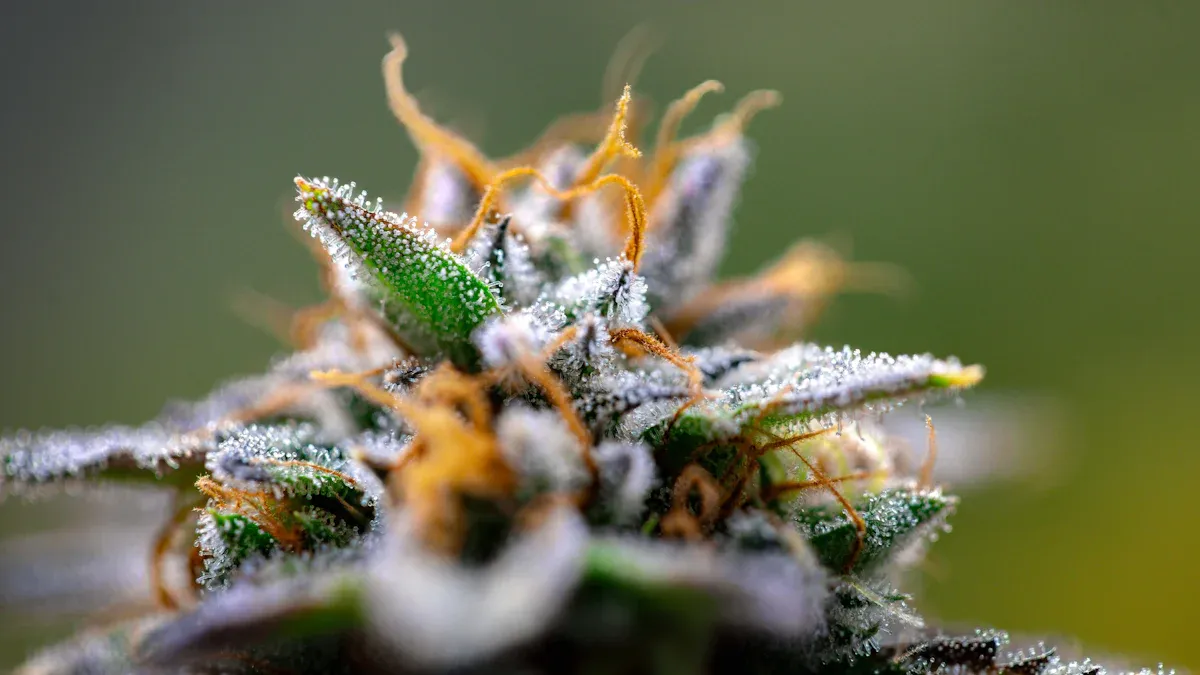
THC, CBD, and Minor Cannabinoids (What to Read First)
THC is the primary intoxicating cannabinoid in most adult-use products; CBD is generally non-intoxicating. The COA will show total THC/total cannabinoids, which helps you compare strength between products. If you have health conditions, are pregnant, or take medications, consult a qualified clinician. Evidence and recommendations continue to evolve.
|
COA Item |
Why It Matters |
|---|---|
|
Total THC / Potency |
Helps you compare strength across products and avoid unexpectedly high potency. |
|
CBD (if present) |
Non-intoxicating cannabinoid; may influence perceived intensity for some users (research varies). |
|
Terpene profile |
Useful for aroma/flavor comparison; treat “terpene-to-effect” claims as suggestive, not guaranteed. |
Terpene Profiles: Great for Flavor, Limited as “Effect Guarantees”
Terpenes help explain aroma and flavor differences and may contribute to subjective effects, but the science is still developing and marketing often overstates certainty. Use terpene data to compare products (especially if you already know what aromas you enjoy), but don’t treat any single terpene as a medical claim or a guarantee of a specific effect.
How to Read a Cannabis COA (Certificate of Analysis)
A COA is your best “truth layer” because it documents lab testing results for potency, terpenes, and contaminant panels. Some state regulators publish consumer guides for reading a COA—use those checklists when available.
COA Checklist (Fast Scan)
-
Batch/Lot matches the package (traceability).
-
Potency: total THC/total cannabinoids (and CBD if listed).
-
Terpenes: major terpenes listed with amounts (if provided).
-
Contaminants: pesticides, heavy metals, residual solvents, microbes/mycotoxins marked “PASS.”
-
Lab info: lab name, method, date tested.
Safety: Contaminants and Additives
U.S. state rules vary, but many regulated programs require contaminant screening. A peer-reviewed comparison of state-level rules documented hundreds of regulated contaminants across states, including large lists of pesticides, solvents, and microbial hazards.Emerging evidence also suggests that metals can be a concern in some vape contexts (from materials or device components), reinforcing why regulated sourcing and testing matters.
|
COA Panel |
Examples |
Why It Matters |
|---|---|---|
|
Pesticides |
State-specific lists vary |
Residues can pose health risks; rules differ by jurisdiction. |
|
Heavy metals |
Lead, cadmium, arsenic, mercury (varies) |
Potential toxic exposure; check “PASS” status. |
|
Residual solvents |
Butane, hexane, etc. (varies) |
Solvent residues may remain if extraction/processing is poor. |
|
Microbes / mycotoxins |
E. coli, Salmonella, aflatoxins (varies) |
Contamination risk; especially important for inhaled products. |
Warning: U.S. agencies advise avoiding THC vaping products from informal sources (friends, family, dealers, online “gray market”). Vitamin E acetate was strongly linked to the EVALI outbreak.
Safety and Source: Why Quality Matters
Risks of Informal-Source THC Vapes (EVALI Context)
During the EVALI outbreak investigation, CDC reported strong links between vitamin E acetate and EVALI, and recommended that people not use THC-containing vaping products—especially those obtained from informal sources.NIDA and FDA similarly warned against THC vaping products from informal sources and products containing vitamin E acetate.
How to Verify Product Authenticity (No Hype, Just Checks)
-
Match the COA to the package (batch/lot, date tested).
-
Check that all required safety panels are reported (not just potency).
-
Buy from licensed/regulated sources whenever possible.
Decision Table: Match Your Goal to Chemistry (Then Use Labels as Secondary)
Use this table as a practical chooser. It doesn’t claim “terpene X guarantees effect Y.” Instead, it tells you what to look for on a COA and how to use labels as a secondary filter.
|
Your Goal |
COA Priority |
Label Filter |
What to Avoid |
Quick Tip |
|---|---|---|---|---|
|
Relaxation |
Potency + full contaminant panels |
Indica / indica-leaning hybrid (secondary) |
Unknown-source THC vapes; missing COA panels |
Choose lower potency if you’re sensitive. |
|
Energy / Day |
Potency + terpene data (if provided) |
Sativa / sativa-leaning hybrid (secondary) |
Overreliance on label alone |
Check batch consistency across purchases. |
|
Focus |
Potency + terpene data + traceability |
Sativa/hybrid (secondary) |
Very high potency if you’re prone to anxiety |
Start with less and reassess. |
|
Balance / Social |
Potency + “PASS” on all safety panels |
Hybrid (secondary) |
Informal-source products |
Plan a safe setting; don’t drive. |
Tips for First-Time or Cautious Users
Start Low and Go Slow
There are no uniform dosing schedules that work for everyone. Authoritative public guidance for cannabis dosing commonly recommends “start low and go slow,” especially when you are using an unfamiliar product or potency.If you ever feel unwell, stop use and seek medical help when needed.
Track What Works (So You Don’t Chase Labels)
-
Write down the product name, batch/lot, and date.
-
Note COA potency and any terpene info.
-
Record setting (day/night, food, stress) and your subjective response.
-
Use your notes to choose future purchases more reliably than “indica vs sativa” alone.
FAQ
What is the best way to choose an Omakase flavor or strain?
Start with your goal, then choose based on COA chemistry (cannabinoids + terpenes if available) and safety testing (contaminant panels “PASS”). Use “indica/sativa/hybrid” only as a secondary filter because labels do not reliably map to chemistry across the market.
Is “hybrid” always a balanced effect?
Not necessarily. “Hybrid” is often a broad label. Two hybrid products can test very differently. Use the COA for potency, terpene data, and safety panels.
How do you know if a vape is safer to use?
Choose regulated, lab-tested products with a complete COA. Avoid THC vaping products from informal sources, consistent with CDC/NIDA/FDA guidance during the EVALI outbreak investigation.
References
- University of Colorado Boulder summary of research on ~90,000 samples (label vs chemistry).
- Smith CJ, et al. The phytochemical diversity of commercial Cannabis in the United States (peer-reviewed).
- Pearce DD, et al. “A Web Survey of Medical Cannabis Users” (2014).
- Cohen NL, et al. “Pain, Cannabis Species, and Cannabis Use Disorders” (2016).
- Piper BJ, et al. “Examination of the Strains used by Medical Cannabis Patients” (2017).
- New Jersey Cannabis Regulatory Commission: “How to Read a COA” (consumer guide PDF).
- NIDA DrugFacts: Vaping Devices (Electronic Cigarettes) — cautions about THC vaping products and vitamin E acetate (2020).
- CDC MMWR: Nationwide EVALI outbreak characteristics and recommendations (2020).
- FDA Public Health Focus: Lung Injuries Associated with Use of Vaping Products (EVALI context).
- Health Canada: Cannabis dosing guidance (“start low and go slow”).
- National Academies (2017): The Health Effects of Cannabis and Cannabinoids (consensus report PDF).
- Jameson LE, et al. Comparison of state-level regulations for cannabis contaminants (2022).
- Gaur S, et al. Heavy metals in cannabis vapes and health implications (scoping review, 2025).
- American Chemical Society (ACS) press release: toxic metal particles in cannabis vaping liquids (2024).
If you want more vape for sale, you can go through those pages: cbd disposable vape|2 gram disposable vape pen
0 Comments