
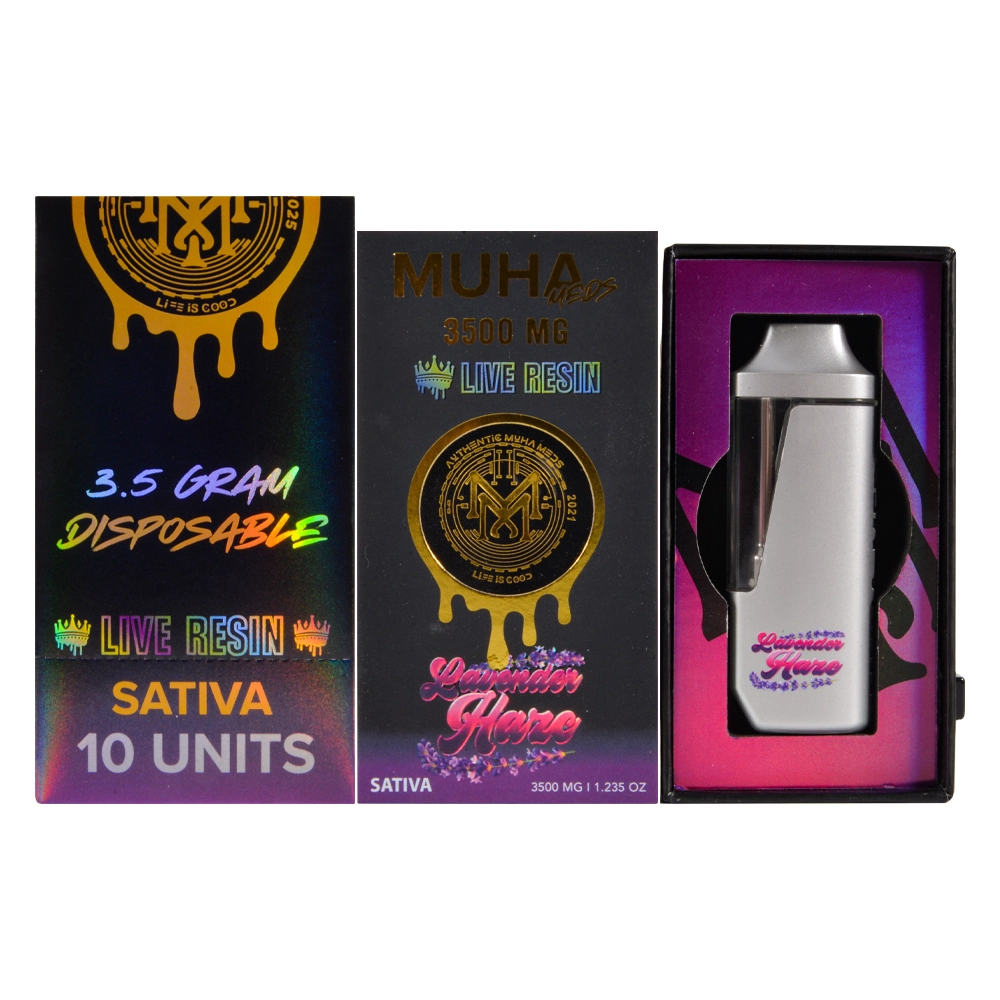
What Inlet Size and Coil Type Do Muha Meds-Style Empty Disposables Use for Thick Oils?
🏷️ Empty hardware only 🚫 No THC/Nicotine 📝 Nominative use only—no affiliation implied
Why inlet size matters for thick oils
Inlet diameter controls how fast viscous oil can reach the heating core. If the inlets are too small, thick oils starve the coil (dry hits, clogs). If they’re too large for a thin blend, the system can flood and leak. Hardware makers and filling specialists explicitly map oil viscosity to hole size for this reason.
Recommended ranges by oil type (use as a starting map)
| Oil Type | Typical Inlet Range (per hole) | Preferred Coil | Notes |
|---|---|---|---|
| Distillate (thinner) | ~1.0–1.2 mm | Porous ceramic | Too-large holes can flood with terpene-rich blends; start smaller and validate. :contentReference[oaicite:3]{index=3} |
| Live resin | ~1.8–2.0 mm | Porous ceramic | Higher viscosity needs wider inlets and gentle, even heat to preserve terpenes. :contentReference[oaicite:4]{index=4} |
| Rosin (thickest) | ~1.8–2.0 mm (sometimes higher) | Porous ceramic | Watch cold-storage viscosity; pre-warm and use ceramic for stable capillary feed. :contentReference[oaicite:5]{index=5} |
Major brands publish standard menus including 1.2/1.4/1.6/1.8/2.0 mm apertures, with custom options by request. Treat this table as a range, not a single “correct” number.
Coil types for thick oils (and why ceramic wins here)
Porous/sintered ceramic cores are the mainstream choice for viscous cannabis oils because their capillary pathways feed thick extracts evenly and tolerate gentle, uniform heating—reducing burnt hits and preserving flavor compared to cotton-wick systems. Multiple technical explainers and brand docs point to ceramic’s durability and viscosity tolerance.
| Coil Type | Strengths | Trade-offs | Thick-Oil Fit |
|---|---|---|---|
| Porous ceramic | Even heat; stable wicking; flavor retention; long life | Slightly slower ramp than mesh | Best overall for live resin/rosin/distillate. :contentReference[oaicite:8]{index=8} |
| Cotton/mesh | Fast ramp; big vapor (for thin e-liquids) | Flooding risk with thin cannabis blends; less ideal for very viscous oils | Use cautiously; generally not first choice for thick oils. :contentReference[oaicite:9]{index=9} |
| Quartz/other | Fast heat | Less common for very viscous oils; may require higher temp control | Special cases only |
Formulation & temperature: two variables that change your “ideal” hole size
- Terpene/diluent % lowers viscosity → oil gets runnier → big apertures can leak/flood. Tune hole size and coil to the final blend, not just the base distillate. :contentReference[oaicite:10]{index=10}
- Cold storage raises viscosity → even 1.8–2.0 mm setups can starve at low temps. Pre-warm before use or filling and validate at expected shipping/retail temperatures.
Buyer’s validation workflow (keep it simple but disciplined)
- Request the datasheet for the exact SKU: inlet diameter & count (e.g., 4 × 1.6–2.0 mm options), core type, nominal resistance (≈1.2–1.5 Ω), and intended oil class. (Example public spec sheets show ~1.4 Ω with 4 × 2.0 mm as one common build.)
- Pilot fills with your thickest oil at target temps; log leak/clog/return rates over 7–14 days. :contentReference[oaicite:13]{index=13}
- Adjust inlet size within the 1.2–2.0 mm menu and re-test until the device clears a stability threshold.
FAQ
Is 2.0 mm always the right choice for thick oils?
No. It’s a common upper-range setting, but storage temp, terpene percentage, and particle load all affect results. Validate under your real conditions.
Why not use mesh/cotton for more vapor?
Those systems are optimized for thin e-liquids; with viscous oils they can flood or starve unpredictably. Porous ceramic remains the mainstream choice for live resin/rosin/distillate.
How many inlet holes should I choose?
Vendors offer multiple counts and diameters (e.g., 2–4 holes across 1.2–2.0 mm). Hole area and placement matter as much as count; use the datasheet and pilot fills to decide.
0 Comments