
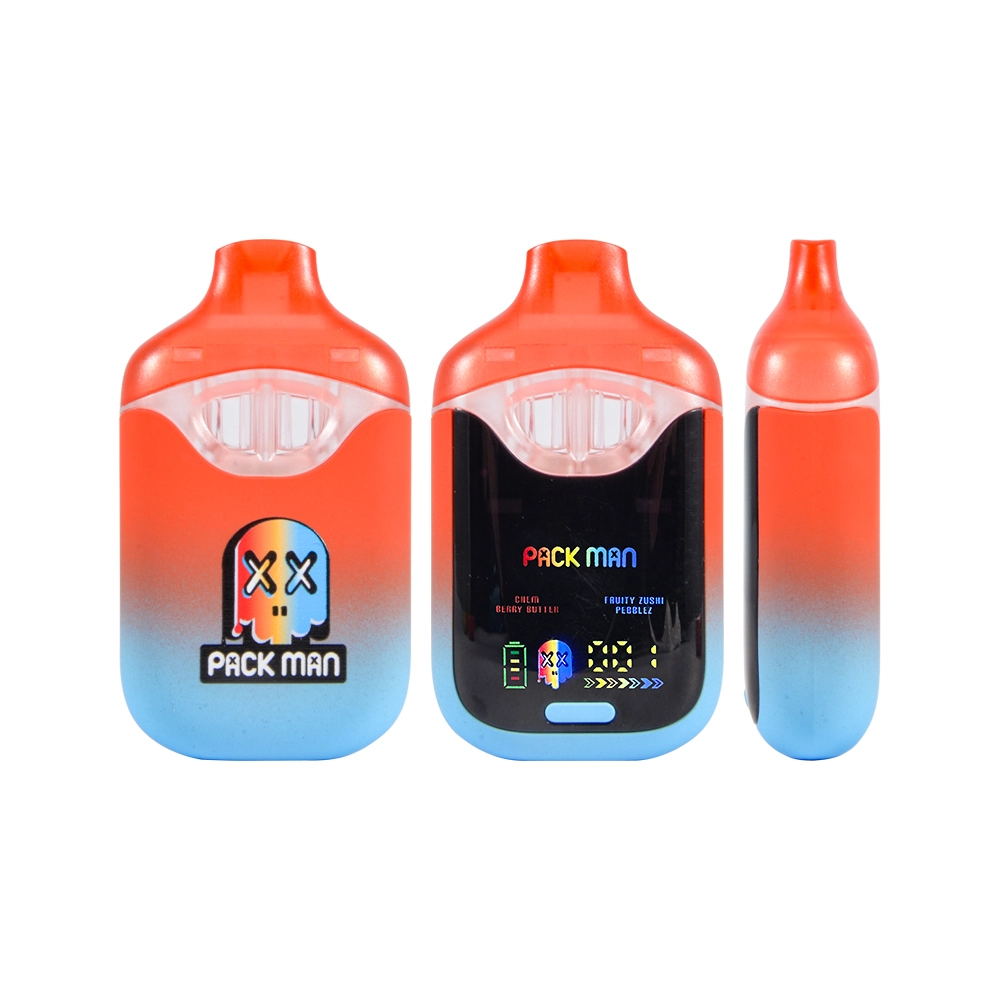
UK Stock Packman Dual Chamber 1g Empty Disposable Vape: A B2B Sourcing & QC Guide
If you’re a wholesaler, distributor, retailer, or OEM/ODM brand looking to scale UK Stock fulfillment, the Packman Dual Chamber 1g Empty Disposable Vape is primarily a hardware decision: version clarity, batch consistency, leak control, and warehouse-ready receiving—empty hardware only (no oil included).
Who This Is For
This guide is built for:
-
Wholesalers and distributors managing multi-SKU inventory
-
Retail chains needing stable returns/defect rates
-
OEM/ODM brands standardizing hardware across multiple oil lines
-
Licensed packers focused on receiving accuracy and QC traceability
What “Dual Chamber” Changes in Real Operations
Dual-chamber hardware usually matters less for marketing and more for operations:
-
SKU differentiation: fewer mix-ups when your catalog has multiple “Packman” variants
-
Line segmentation: easier to map “Chamber A/B” to flavor or formulation lines in your internal SOP
-
Perceived value: dual-chamber devices tend to support higher-end positioning—useful for tiered pricing strategies
Where Dual Chamber Helps Most
-
When you run multiple oil profiles and need clear variant labeling
-
When returns are driven by inconsistent airflow or clogging caused by user mismatch to oil viscosity (hardware standardization helps isolate variables)
1g Capacity Positioning: How to Set Expectations Correctly
“1g” should be treated as a capacity spec for the hardware class rather than a promise of user runtime. In a B2B context:
-
Use 1g to standardize listings, receiving, and carton labeling
-
Avoid performance claims tied to oil (because you’re selling empty hardware only)
-
Keep the value proposition on compatibility + consistency + defect control
Copy Rule for Listings
Always pair “1g” with a simple statement such as:
“Empty hardware only. No oil included.”
Core Hardware Specs to Standardize (So Your Catalog Doesn’t Drift)
To keep returns low, your product page + internal spec sheet should lock:
-
Heating core type (e.g., ceramic or equivalent)
-
Airflow structure (fixed vs adjustable)
-
Fill method / inlet design (for packing workflow)
-
Battery capacity range and charging interface (if applicable)
-
Device dimensions and mouthpiece style (packaging fit + customer expectations)
QC & Leak-Resistance Receiving Checklist (Warehouse-Ready)
Treat receiving as a repeatable checklist, not “spot checks.”
Visual & Assembly Checks (Per Carton)
-
Housing integrity (no cracks, dents, loose seams)
-
Mouthpiece fit (no wobble, no gaps)
-
Port alignment (charging port centered, no burrs)
Functional Checks (Per Sample Unit)
-
Draw activation consistency (no false-firing)
-
Airflow resistance within your acceptance band
-
No rattling parts (battery or inner structure movement)
Packaging & Label Checks (Prevent Mix-Ups)
-
Variant name must match PO line item exactly (Dual Chamber + 1g + Empty)
-
Batch/lot marking present on carton or inner packaging
-
Barcode/SKU scannability (if you use WMS)
Practical tip: define a “receiving rejection rule” (e.g., if defect rate > X% in sample, quarantine the batch) and keep it in your SOP.
UK Stock Logistics: What to Put in the Blog (So Buyers Trust It)
When you say UK Stock, buyers expect operational clarity. Your blog should include:
-
Dispatch window (e.g., same-day/next-day—use your real policy)
-
Carrier options and tracking availability
-
Packaging options for bulk orders (master carton standards)
-
How you handle replacements (RMA flow, photo/video evidence, timelines)
Recommended “Version Naming” for UK Stock Listings
Use a strict, scannable pattern such as:
-
Packman Dual Chamber – 1g – Empty
-
Optional: add “Gen/Version” if you sell multiple revisions
This prevents internal confusion when teams copy/paste product titles across listings.
Compliance & Documentation: What You Can Safely Promise
For empty hardware pages/blogs, keep compliance discussion focused on hardware documentation, not oil effects:
-
Material declarations (where applicable)
-
QC records or inspection standards you follow
-
Packaging declarations (if you support compliant packaging workflows)
-
After-sales documentation requirements (what buyers must submit for claims)
How to Reduce Returns: The 3 Biggest B2B Levers
-
Version clarity (title/SKU/packaging all match)
-
Receiving SOP (repeatable sampling + rejection rules)
-
After-sales rules (clear evidence requirements + timelines)
Internal Linking Plan (Keep It Natural, No Keyword Stuffing)
Within your post, add up to 3–5 internal links (example anchors):
-
“Browse all empty disposable vape hardware” → your category page
-
“Check UK warehouse availability” → your UK stock page
-
“Contact our team for OEM/ODM requirements” → your contact page
-
“View packaging and QC standards” → your QC/standards page
Buying FAQ (B2B)
Q1: Is this product filled or ready-to-use?
No. It is empty hardware only and does not include oil.
Q2: What’s the MOQ for UK Stock orders?
Set your real MOQ tiers here (and keep them consistent across pages).
Q3: Can we do OEM/ODM branding and packaging?
Yes—outline what can be customized (device color, packaging, labeling, inserts) and what lead times change.
Q4: How do you prevent variant mix-ups?
Explain your SKU naming rules, carton labels, and batch marking practices.
Q5: What evidence is required for after-sales claims?
List required photos/videos, batch code, quantity affected, and timeline from delivery.
Q6: What should we check during receiving?
Reference the checklist above and recommend a sampling percentage.
If you want more vape wholesale, you can go through those pages: thc vape pen|2 gram disposable|packman wholesale|packman disposable vape
0 Comments