
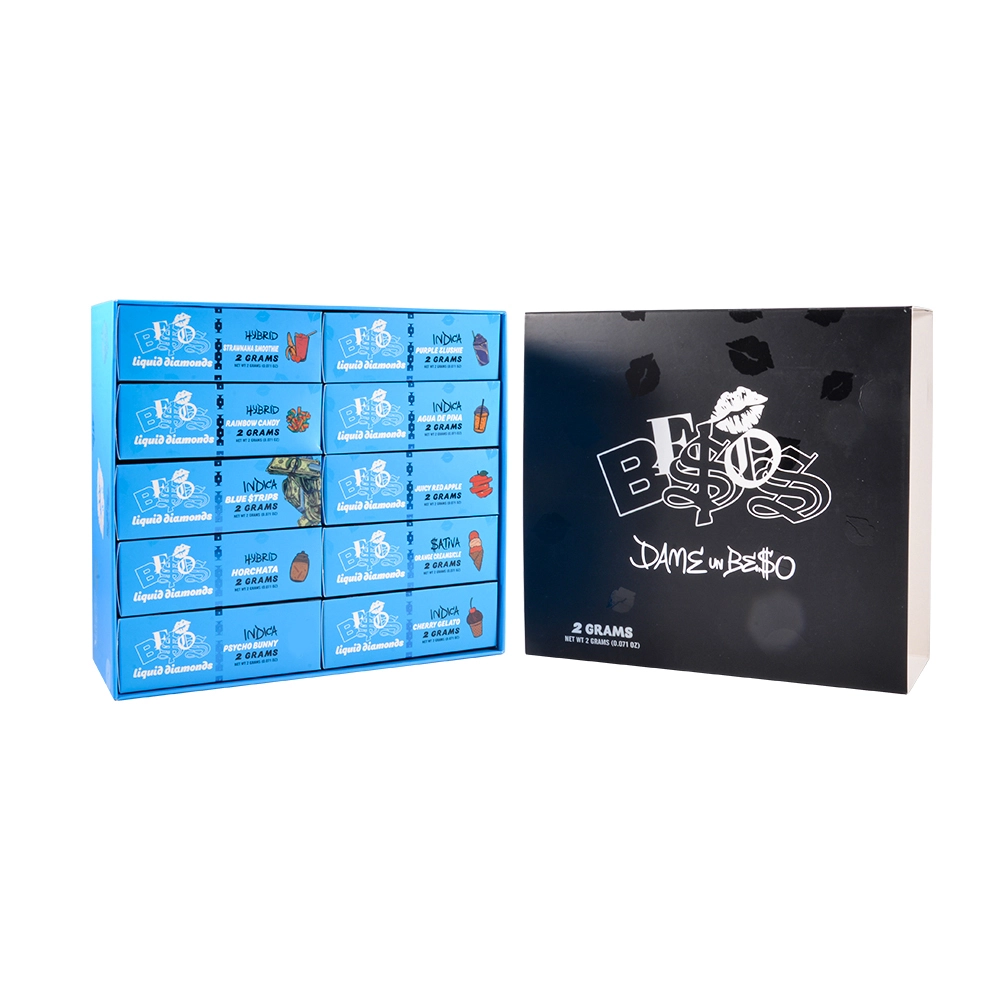
Top 3 Reasons to Choose Besos Blue Strips Empty Disposable Vape
If you buy vape hardware for a business, you’re not choosing a “cool device” — you’re choosing a supply-chain component. You care about consistent specs, QC that catches issues before they hit your line, and shipping/document readiness that won’t collapse at the first carrier or compliance review.
Important: This article covers empty hardware only (no oil, no nicotine, no THC). It’s general compliance information, not legal advice. Rules and carrier policies change; always verify the latest requirements with official sources and your shipping partners.
Key Takeaways
-
Reason #1: Consistent specs and stable supply reduce rework, line interruptions, and “surprise changes” across batches.
-
Reason #2: QC + traceability makes defects actionable (lot isolation, faster corrective actions, cleaner after-sales handling).
-
Reason #3: Compliance-ready delivery is about documents you can prove, not claims you can’t. For lithium batteries and USPS handling rules, use official guidance and keep the right records.
Reason #1: Consistent Specs & Supply for Disposable Vape Hardware
Why It Matters for Wholesale Buyers
Batch-to-batch consistency is what keeps B2B orders profitable. When the hardware changes unexpectedly, you lose time on refits, packaging adjustments, SOP edits, and extra inspection. A stable spec baseline helps you forecast inventory, reduce returns, and keep your downstream partners aligned.
What to Verify: Specs & Batch Consistency
-
Request the latest spec sheet and confirm it matches what you previously received.
-
Ask whether the supplier uses a documented change-control process (what changes trigger notice?).
-
Confirm how lots are defined (e.g., by production date/line/material batch) and how the lot ID appears on cartons.
-
Ask what parts are “locked” (battery, heater type, airflow parts) and what parts can vary (colors/labels).
Tip: For repeat purchases, request a small “lot verification sample” before releasing the full order — it’s cheaper than reworking pallets after arrival.
What It Doesn’t Solve
Consistent hardware does not guarantee the outcome of your filling, storage, or downstream handling. You still need your own process validation after filling (temperature, viscosity, storage conditions, etc.).
Proof: What You Should Be Able to Get
-
Spec sheet (revision/date), BOM/critical components list (if available).
-
Lot definition + how the lot code is printed/encoded.
-
Shipment-level packing list that matches lot IDs on cartons.
Reason #2: Quality Control & Traceability

Why It Matters for Wholesale Buyers
QC is not a slogan — it’s the difference between manageable defects and expensive disputes. Traceability turns “we have an issue” into “we can isolate lot X and apply corrective actions.” Without lot-level traceability, you’re forced to treat everything as suspect.
What to Verify: QC Controls That Actually Reduce Risk
-
Incoming material checks: critical components (battery/heater/airflow parts) are verified, not assumed.
-
In-process checks: leak path checks, airflow consistency checks, electrical safety checks (basic functional verification).
-
Pre-ship sampling: defined sampling plan + recorded results (not just “passed”).
-
Traceability: lot code on cartons + a consistent mapping to production date/line/material batch.
Tip: Ask for a one-page “QC control plan” (what is checked, when, and what triggers rework/hold). This is often more useful than a generic certificate list.
What It Doesn’t Solve
QC and traceability reduce hardware-side risk. They don’t replace your own receiving inspection, nor do they cover how filled products behave in real storage/transport conditions.
Proof: Records You Should Keep
-
Pre-shipment inspection summary (lot IDs + date + sampling notes).
-
Receiving inspection checklist and results (your side).
-
Warranty/DOA handling policy tied to lot IDs (so disputes don’t become “he said/she said”).
Reason #3: Compliance-Ready Delivery (Docs You Can Prove)
Why It Matters for Wholesale Buyers
“Compliance-ready” is not a badge — it means you can produce the correct paperwork quickly, classify the battery correctly, and ship with packaging/marking that matches the mode and carrier rules.
What to Verify: Packaging & Documentation
-
Battery type & classification: identify whether the product contains lithium-ion (most common) vs lithium metal.
-
UN identification: confirm the correct UN number for the shipping scenario (battery in equipment vs battery alone).
-
Test documentation: request the lithium battery UN 38.3-related documentation and keep it accessible.
-
Packaging/marking: confirm the outer package marking/labeling required for your carrier and route.
Tip: If a supplier can’t explain whether the device is shipped as “battery contained in equipment” vs “battery alone,” you don’t have compliance readiness — you have guesswork.
What It Doesn’t Solve
Even perfect paperwork doesn’t override carrier policy or ENDS/PACT restrictions. Carrier acceptance and legal mailability depend on the product category and the specific shipment context. Verify before shipping.
Proof: Lithium Battery Documentation (Accuracy-First)
Many vape devices contain lithium-ion batteries. USPS Packaging Instruction 9D lists the proper shipping names and UN numbers, including UN3481 for lithium-ion batteries contained in or packed with equipment, and UN3480 for lithium-ion batteries shipped alone (and UN3090/UN3091 for lithium metal). It also describes marking expectations and quantity/Wh constraints in USPS mail. Always align your documentation and packaging with the correct category.
|
What to Confirm |
Why It Improves Trust |
|---|---|
|
Battery chemistry: lithium-ion vs lithium metal |
Different UN numbers and limits apply; mixing them is a common compliance failure. |
|
UN number matches shipment scenario (in equipment vs alone) |
USPS 9D explicitly lists UN3480/UN3481 and UN3090/UN3091 depending on scenario. |
|
USPS mail marking (if USPS is used and the shipment is otherwise eligible) |
USPS 9D describes when the DOT lithium battery mark is needed and which UN number to show. |
|
Watt-hour (Wh) visibility (where applicable) |
DOT/PHMSA rules include Wh-related requirements and updates; keep docs current. |
|
Test Summary retention |
PHMSA guidance explains the lithium battery test summary requirement and updates (including 2024 revisions). |
Logistics & Compliance Notes (USA)
ENDS / USPS Mailability (Know the Baseline)
In the U.S., ENDS (electronic nicotine delivery systems) are generally non-mailable via USPS unless a specific exception applies and all conditions are met. USPS rules also cover ENDS-related parts/components/accessories under the Publication 52 framework. If you plan to use USPS for any part of fulfillment, verify eligibility and the exact exception pathway in the current USPS documentation before shipping.
PACT Act: What “Compliance” Commonly Includes (High-Level)
The PACT Act sets requirements for delivery sales of covered products, including ENDS, in interstate commerce. ATF guidance highlights registration and reporting obligations (for example, registering with ATF and relevant state/local/tribal tobacco tax administrators into which shipments are made, and filing required reports where applicable). If your business touches covered delivery sales, treat this as a compliance program — not an afterthought.
Note: This is high-level information only. For operational decisions, confirm your obligations with official guidance and qualified counsel, especially because rules and interpretations can change.
Carrier Acceptance & State/Local Rules
Carrier policies and state/local requirements vary and can change quickly. Don’t rely on hearsay: request written carrier acceptance criteria, confirm adult-signature/age-verification rules if applicable, and document your internal shipping SOP for audit readiness.
Lithium Batteries: Use Official Guidance (Don’t Guess)
For lithium batteries, treat PHMSA guidance and USPS Packaging Instruction 9D as your “baseline reality check”: confirm the UN number category, marking expectations, and any applicable limits. Keep a current copy of the test summary documentation and ensure your supplier can provide the right paperwork on demand.
Buyer Checklist: Disposable Vape Procurement
MOQ & Sample Policy
Confirm MOQ and insist on samples (and repeat samples for repeat lots). For ongoing purchases, sample-by-lot is often the cheapest way to prevent “silent changes.”
Incoming Inspection & Sampling
Inspect every shipment on arrival. Use a checklist and record results by lot code. If you don’t record it, you can’t prove it.
|
Inspection Step |
What to Check |
|---|---|
|
Visual Check |
No cracks/dents; seals intact; ports protected; cartons match lot codes. |
|
Basic Electrical Function |
Device powers/charges as designed (functional verification, not a safety certification claim). |
|
Fit/Assembly |
Critical interfaces consistent (mouthpiece fit, airflow path, port closures). |
Required Docs (Practical, Not Performative)
-
Spec sheet with revision/date (and change notice process).
-
Lot code definition + packing list matching lot IDs.
-
Lithium battery documentation: test summary availability + shipping classification notes (as applicable).
-
Warranty/DOA policy tied to lots (so claims can be resolved objectively).
Packaging & Labeling
Ensure packaging protects the hardware during transport and supports your compliance needs. If shipping into jurisdictions with specific labeling or age-related requirements, align packaging to the destination rules and keep evidence that you did so.
Traceability & Support
Confirm that lot codes are present and scannable/readable on arrival, and that the supplier can map lots to production context. Support quality is proven when issues happen — ask how claims are handled and what data is required.
Besos Blue Strips can be a strong choice for wholesale buyers when you prioritize: (1) stable specs and supply, (2) QC + traceability you can verify, and (3) compliance-ready documentation. This guide is only about empty hardware.
FAQ
What documents should you request before buying empty disposable vape hardware?
Start with the spec sheet (revision/date), lot/traceability definition, and inspection records. If the device contains a lithium battery, also request the supplier’s test summary availability and classification notes, and keep those records accessible for shipping audits.
How do you check batch traceability for disposable vape pens?
Look for a lot code on cartons and a consistent lot definition (date/line/material batch). Confirm that the packing list references the same lot codes. On receiving, record inspection outcomes by lot — this is what makes corrective actions possible.
Can you ship empty disposable vape hardware anywhere in the USA?
It depends. ENDS-related products have USPS mailability restrictions unless an exception applies, and PACT Act obligations can apply to covered delivery sales. Carrier policies and state/local requirements also vary. Verify the current official requirements and carrier acceptance before shipping.
Sources & Last Updated
Last updated: January 5, 2026
-
USPS Postal Bulletin update (Publication 52 revision allowing certain exception shipments via USPS Ground Advantage, effective Apr 3, 2025)
-
USPS PostalPro: Cigarettes, Smokeless Tobacco, and ENDS are generally non-mailable unless an exception applies
-
USPS Publication 52 revision incorporating statutory restrictions on ENDS (effective Oct 21, 2021)
-
USPS Publication 52 Packaging Instruction 9D (lithium battery UN numbers, marking, quantity/Wh constraints)
-
PHMSA (DOT): Lithium Battery Test Summary guidance (updated 2024, including revisions effective May 10, 2024)
-
PHMSA Lithium Battery Guide for Shippers (2024)
-
ATF: PACT Act requirements (registration & reporting overview)
If you want more vape wholesale, you can go through those pages: thc vape pen|2 gram disposable|besos vape wholesale|besos disposable vape
0 Comments