
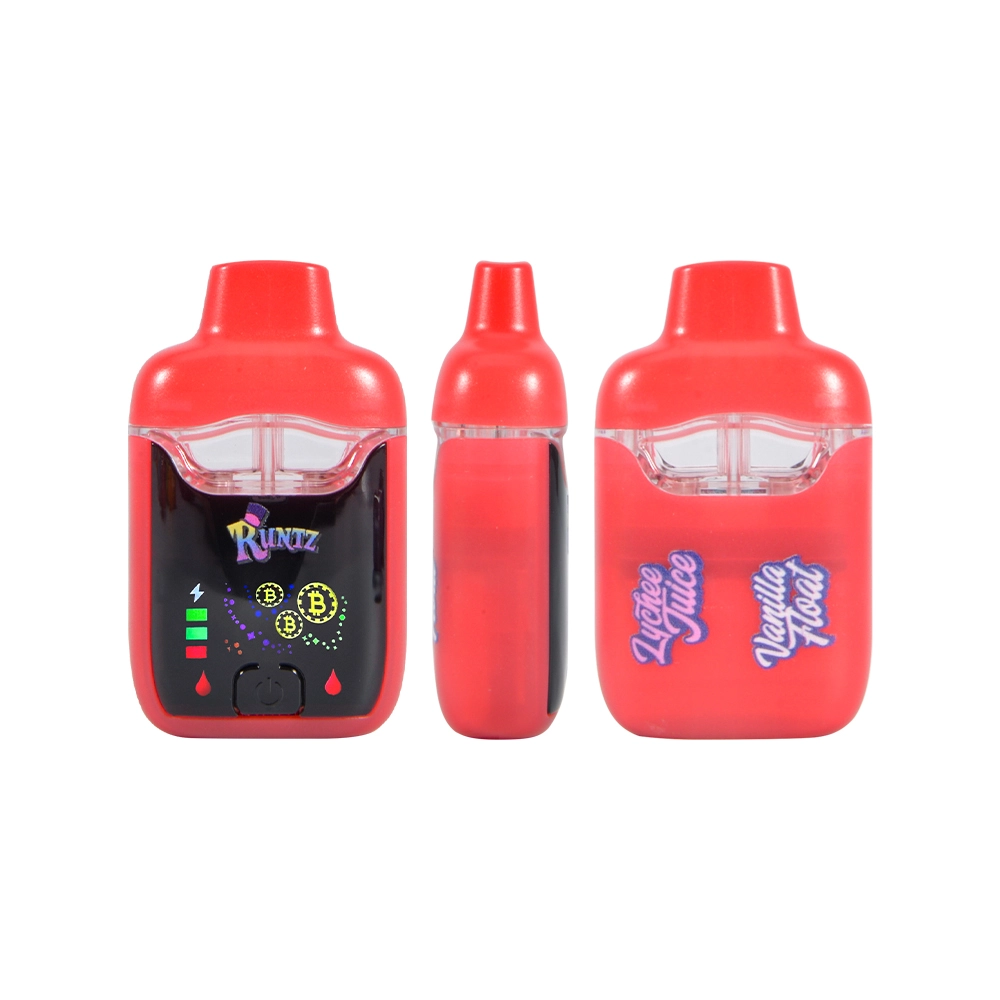
Runtz Dual Chamber 2g Specs Explained: 1g+1g, LED Screen, USB-C & Switch Modes
Scope (B2B + hardware only): This post covers empty, unfilled dual-chamber disposable hardware (no oil, no nicotine, no THC/CBD). “Runtz Dual Chamber 2g” is often used as a market name; specs can vary by supplier and batch, so use the checklists below to lock down the exact build you’re buying.
What “1g+1g / 2g dual chamber” usually means (and the more reliable unit)
Many listings market the device as “1g+1g” (two chambers) and also describe it as “1ml+1ml” from the hardware side. For procurement and QC, ml is the measurable tank volume, while “g” is often used as a shorthand in listings.
Why you should verify: Even on “2g dual chamber” pages, you can see internal inconsistencies (e.g., a page calling it “1g+1g” but listing a much larger ml total elsewhere). That’s exactly why serious buyers base POs on approved samples + locked spec sheets, not titles.
Core spec set (cross-checked from common supplier listings)
Here’s the most commonly listed spec cluster for Runtz-branded dual-chamber 2g/2ml hardware:
-
Chambers / volume: 1ml + 1ml dual chamber (often marketed as “2g” / “1g+1g”)
-
Battery: commonly listed around 280mAh (varies by batch/vendor)
-
Charging: USB-C (Type-C), sometimes specified as bottom Type-C
-
Coil: ceramic coil (resistance varies by listing, e.g., 1.4Ω or 1.6Ω)
-
Switching: button toggle to switch chambers; many pages describe press-to-toggle behavior with an indicator
-
Oil intake holes / structure (often listed): example specs include 4 intake holes per chamber (hole size varies by listing)
Buyer takeaway: Treat resistance, hole size, and even the screen UI as versioned specs (V1/V2/Vx), because vendors don’t always publish the same numbers.
LED screen: what it’s usually for (and what to test in receiving)
The “LED screen” is typically positioned as a usability + returns-reduction feature. In practice, screens help prevent: “dead device” complaints (actually low battery), mode confusion, and chamber confusion.
Inbound QC (fast checks that catch most problems)
-
Full segment/pixel check: ensure no missing segments.
-
Mode sync: screen/indicator updates correctly when switching chambers.
-
Battery indicator sanity: low → charge → full transitions behave consistently.
-
Window fit & light leaks: loose lens = high return risk.
Tip: Ask your supplier to label cartons with a screen UI/version code (even a simple “UI-A / UI-B”) so you can keep batches consistent.
USB-C charging: what “good” looks like for B2B
USB-C is a headline feature, but for bulk buyers the real issue is port durability + stable charging.
Your sample test (2 minutes each):
-
Port alignment: cable inserts smoothly (no angled insertion).
-
Charge acceptance: charges from common USB sources; no intermittent reconnect.
-
Heat check: after 10–15 minutes charging, no abnormal heat at the port/body.
Some listings explicitly call out USB-C/Type-C and rechargeable behavior—build your PO around that exact configuration.
Switch modes: how dual-chamber toggling typically works
A common behavior described on supplier pages is:
-
Press button to toggle chambers
-
LED/screen (or indicator) reflects the active chamber
-
Draw-activation handles normal pulls, while the button controls switching
The critical buyer point: don’t assume the click map
Different factories/firmware can change:
-
what a “single press” does,
-
whether there’s a “dual flavor / both chambers” mode,
-
whether there’s a dedicated preheat action.
So your process should be:
-
Verify the click map on the approved sample
-
Freeze it in your PO + insert card
-
Require no firmware change without approval
PO-ready spec checklist (copy/paste into your purchasing notes)
Use this to keep “2g dual chamber” from turning into a mixed-batch headache:
-
Chamber volume: 1ml+1ml (confirm with supplier)
-
Battery: mAh rating + cell type (if available)
-
Charging: USB-C location (bottom/side) + charge indicator behavior
-
Coil: ceramic, resistance target range (e.g., 1.4–1.6Ω depending on approved version)
-
Switch behavior: button toggle + indicator logic
-
Intake holes: count + size (versioned)
-
Packaging: master carton packout + labels that show version/UI
Shipping compliance note (battery documentation you should request)
If you ship devices containing lithium batteries, your logistics partners may request UN 38.3 test documentation. United Nations lithium battery designs must be tested per UN 38.3, and test summaries are an established requirement in major transport frameworks.
Practical ask for suppliers:
-
UN 38.3 Test Summary (TS) availability and traceability
Guidance is outlined by Pipeline and Hazardous Materials Safety Administration and referenced in International Air Transport Association materials.
Conclusion
“Runtz Dual Chamber 2g” hardware usually points to a 1ml+1ml dual-chamber, USB-C rechargeable, screen-equipped platform with button-toggle switching—but the exact resistance, intake hole spec, battery rating, and UI behavior can vary by batch. Cross-check your sample, lock a versioned spec sheet, and QC the few failure points (screen, port, toggle) to keep returns low and fulfillment smooth.
If you want more thc vape, you can go through those pages: empty disposable vape|2ml disposable|runtz vape|runtz disposable
0 Comments