
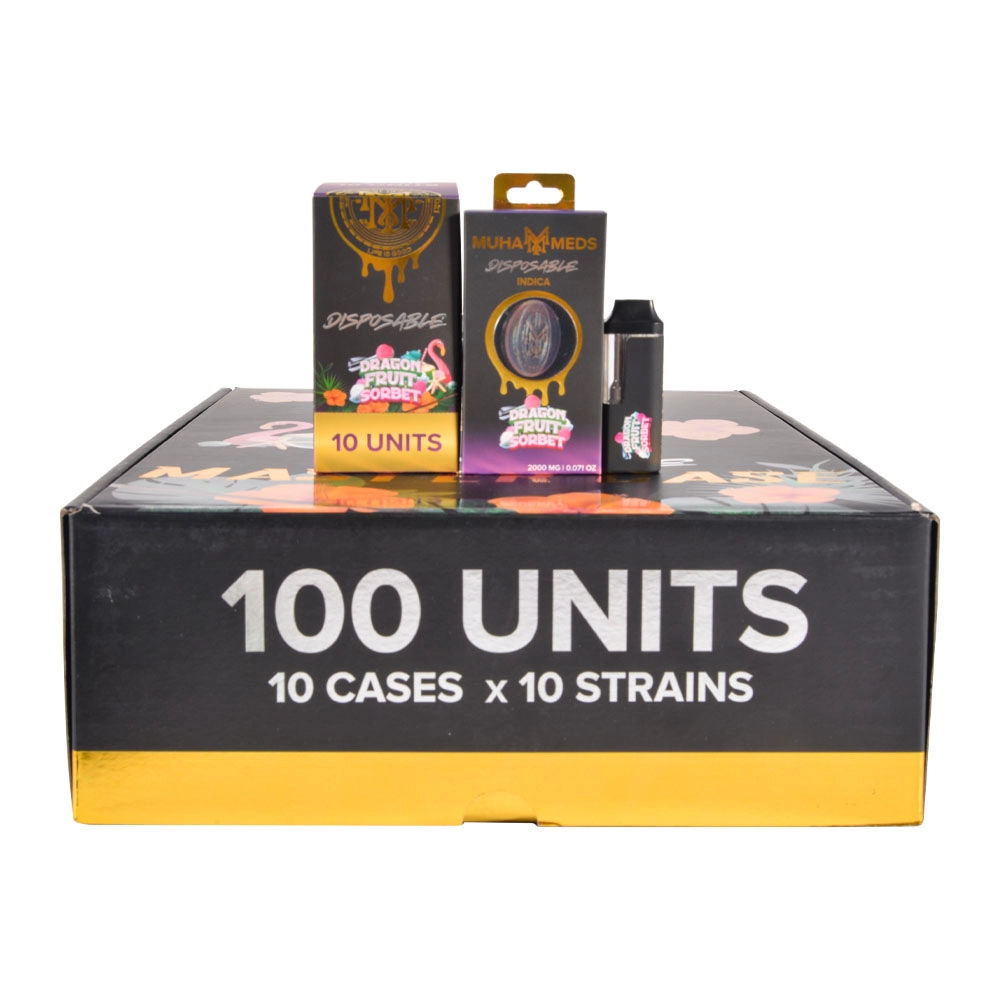
Real vs Fake Muha Meds Disposable Vape Guide (2025)
Who this is for: shoppers comparing Muha Meds–branded disposables on licensed menus vs. social posts/third-party sellers. You’ll verify the store, authenticate the package with a proper two-step check, and scan QR codes safely—using government and brand sources, not hearsay.
1) Start with the store: licensed vs. unlicensed (US, state by state)
Counterfeits surface overwhelmingly outside the licensed system. In California, confirm a retailer in two state resources before you even read the box:
-
Real CA Cannabis — consumer map of licensed retailers statewide. If a shop isn’t here, treat any Muha Meds device on their shelf as unverified.
-
DCC License Search — updated daily; verify a business or file a complaint. Many cities (e.g., Los Angeles) direct consumers back to these state tools.
Outside California, use your state regulator’s license lookup (state cannabis control or health department). Availability and rules differ by state; don’t assume a single federal threshold makes a product “legal everywhere.”
2) Product basics (and a quick label myth fix)
“Disposable” here means a filled, ready-to-use device. When labels show “1 g / 2 g / 3.5 g,” that “g” is mass of oil, not volume in milliliters—don’t equate g = mL, because oil densities differ. Treat “live resin,” “liquid/melted diamonds,” “USB-C,” “screen,” or “preheat” as model-specific features—confirm on the box and the licensed menu you’re actually buying from. (Do not rely on reposted images.)
Legal reminder: labeling requirements come from state rules. In CA, manufactured products (vapes) must present specific items such as batch/lot, cannabinoid content, warnings, and placement/typography per the DCC labeling checklist. A QR page does not replace information that must be printed on the package.
3) Two-step authenticity: scan plus scratch/PIN
Many cannabis anti-counterfeit systems use a two-step flow that defeats simple QR reuse:
Step 1: scan the on-package QR to open the product page.
Step 2: enter the hidden scratch/PIN/serial printed on the sticker/label to confirm that exact unit.
Muha Meds provides brand instructions for this exact flow. Use the official verify pages and follow the scan → scratch/PIN steps shown there. If a scan lands on an unfamiliar domain, no second step appears, or the code shows “already used,” treat the result as inconclusive and verify with the retailer/brand.
4) Scan QR codes safely (FTC guidance)
Only scan codes printed on sealed retail packaging or signage inside licensed stores. The U.S. FTC warns that scammers embed phishing links in QR codes (“quishing”), including on unexpected packages and stickers. If a scan asks for personal info, prompts an app download, or the URL looks off, back out and navigate to the brand’s verify page manually.
5) Packaging & labeling checklist (fast red-flag filter)
Use this at the counter—hold the box and check:
-
Labeling basics present and placed correctly (brand/manufacturer info, batch/lot ID, cannabinoid content, government warnings, outer/inner panel rules). Cross-check with the DCC manufactured products labeling checklist.
-
CR + TE packaging: look for child-resistant (CR) and tamper-evident (TE) features. “Child-resistant” is a regulatory term under the Poison Prevention Packaging Act (PPPA)—packaging must be significantly difficult for children under five to open while usable by adults. (Avoid the marketing term “child-proof.”)
-
Two-step sticker present: QR and hidden scratch/PIN area intact; seals unbroken.
If labeling is incomplete, CR/TE seems off, or the verify sticker looks tampered, ask for another unit—then complete the two-step check.
6) Real vs. Fake: quick side-by-side
| Checkpoint | Real (what you should see) | Fake (red flags) |
|---|---|---|
| Retailer | Listed in Real CA or your state’s license search | Not in state tools; evasive about licensing |
| Labeling | Batch/lot, cannabinoid content, warnings; layout matches DCC checklist (in CA) | Missing batch/lot; odd fonts; required warnings misplaced |
| Package | CR + TE evident; seals intact; professional finish | “Child-proof” buzzwords; flimsy wrap; misprints |
| QR verify | Scan → scratch/PIN completes on an official domain | Unknown domain; no second step; “already used” |
| Price | In line with licensed menus; taxes applied at checkout | “Too good to be true,” cash-only via social DMs |
7) Why this caution matters (safety context, not a health claim)
During the 2019 EVALI investigation, the CDC linked vitamin E acetate to many lung-injury cases, particularly in THC products from informal sources. Their guidance: do not use THC vapes from informal channels such as friends/dealers or unlicensed online sellers. Sticking to licensed retailers and verifiable packaging reduces risk.
8) If verification fails (or something feels off)
-
Stop using the device.
-
Re-verify directly on the brand’s official verify page and repeat the scan → scratch/PIN sequence.
-
Record details (store name, address, date, batch/lot, photos of labels/seals).
-
Report: in CA, use DCC License Search to locate the business and file a complaint; ask the retailer for a replacement/refund as appropriate.
9) FAQs
Is there a single U.S. rule that makes a vape “federally legal” if Δ9-THC < 0.3%?
No. Cannabis vaping products are regulated primarily at the state level (and by local authorities). Do not rely on a single percentage to assume compliance everywhere—verify the retailer’s license and the product’s packaging/labels in your state.
What does “child-resistant” actually mean?
Under PPPA/16 CFR 1700, CR packaging must be significantly difficult for children under five to open yet not difficult for adults to use. It’s a legal definition—not just a marketing claim.
Which labels should be on a compliant vape package in CA?
Per DCC guidance: brand/manufacturer details, batch/lot, cannabinoid content, required warnings, and correct placement/typography. Use the DCC labeling checklist to compare.
Why do I need a second step after scanning the QR?
Because scratch/PIN confirms the unit-level code and prevents simple QR screenshot reuse. If the product lacks a second step, treat the check as inconclusive.
Should I scan any QR I see online to “check authenticity”?
No. The FTC warns about QR phishing; scan only codes printed on sealed packages or at licensed counters, and verify the domain before entering information.
References (authoritative)
-
California DCC — License Search (verify businesses; file complaints) & Real CA Cannabis consumer map.
-
DCC — Labeling: Manufactured cannabis products (explainer + checklist PDF).
-
PPPA/CPSC and 16 CFR Part 1700 (child-resistant packaging definition & performance specs).
-
FTC — QR/“quishing” consumer alert (2025).
-
CannVerify — two-step (scan + scratch/PIN) anti-counterfeit model; Muha Meds official verify pages.
-
CDC — EVALI evidence linking vitamin E acetate to THC vapes from informal sources.
What changed vs. your original
-
Replaced generalized compliance lines (e.g., “<0.3% Δ9 THC = compliant”) with state-based verification steps and official tools.
-
Added brand and platform verification flows (scan → scratch/PIN) with sources.
-
Brought packaging terms in line with DCC labeling and PPPA definitions (CR/TE).
-
Inserted FTC QR-safety guidance and CDC context for informal-market risks—grounded, not alarmist.
If you want to more vape wholesale pls go through these pages:muha meds wholesale|muha meds disposable bulk|muha meds bulk 2025|fake muha meds 2g
0 Comments