
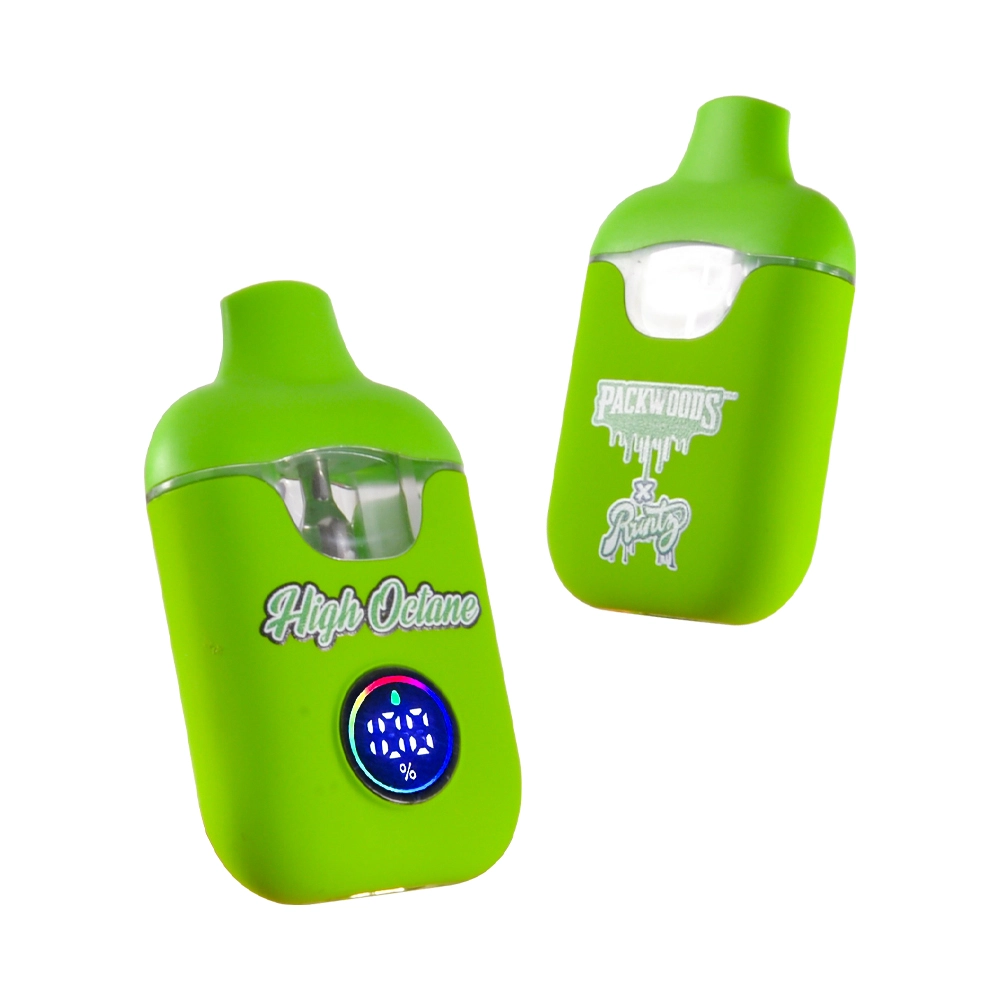
Audience: first-time or early-stage B2B/B2C buyers who want to understand what “empty 2 mL disposables” are, how they differ from prefilled devices, how to choose SKUs, and what safety/compliance signals to check before a wholesale purchase.
TL;DR
-
“Empty” means hardware only (shell + tank + coil + battery, no oil). You (or your licensed filler) add the formulation later.
-
For 2025 shipping and retail, look for UL 8139 device-level electrical safety, UN 38.3 lithium-battery transport testing, and follow IATA 2025 air-cargo rules when applicable.
-
QR codes help with authenticity—but only scan from sealed packaging and verify the domain; the FTC warns about QR-code (“quishing”) scams.
-
California DCC labeling rules apply to finished, packaged cannabis goods, not to bare empty hardware—useful if you’re a licensed filler planning retail packs.
What is a “Packwoods x Runtz 2 mL empty disposable”?
In this context, “2 mL empty disposable” refers to a closed, draw-activated AIO (all-in-one) shell that includes:
-
a 2 mL reservoir (often paired with a ceramic atomizer for thick oils),
-
an integrated lithium-ion rechargeable battery (commonly USB-C),
-
a sealed mouthpiece and gaskets,
-
sometimes quality-of-life features like a battery indicator.
Because the device ships without oil, buyers can align fill volumes, terpene profiles, and viscosity modifiers to their own SOPs. This is attractive for private-label programs and licensed labs that want consistent hardware but control over the formulation.
Note: Grams (g) and milliliters (mL) are different units; empty shells are typically specified in mL for tank volume. Your filled weight in grams depends on density of the oil you use.
Why buyers look at 2 mL in 2025
-
Fewer changeovers: 2 mL supports longer session life per device once filled, meaningful for high-viscosity formulations where consumer runtime matters.
-
SKU efficiency: One 2 mL platform can support multiple strain SKUs with only artwork/packaging variances.
-
Cost control: Larger tank + rechargeable battery can improve perceived value while keeping BOM predictable.
How to evaluate empty 2 mL shells (checklist)
1) Safety & transport readiness
-
UL 8139 testing (device-level): looks at electrical, heating, battery, and charging-system safety to mitigate fire/electric hazards. Ask your supplier for the UL file/marking or a test report reference.
-
UN 38.3 (cell/pack transport tests): nearly all lithium batteries must pass UN 38.3 to be shipped; obtain the UN 38.3 test summary from the battery/ODM.
-
IATA DGR 2025 requirements (air shipments): confirm SoC limits, proper PI (965-970), marking/labels, and documentation if devices ship by air.
-
Passenger policies trend: airlines keep tightening lithium-battery handling; if you or reps fly with samples, follow airline rules.
2) Materials & coil system
-
Ceramic atomizers remain the preferred option for thick oils; check pore size and intake ports (e.g., 4×1.8 mm class) to match your viscosity and fill temps.
-
Seals & tolerances: ask for drawings/tolerance ranges on press-fit mouthpieces, gasket durometer, and leak-rate claims under thermal cycling.
3) Battery & charging
-
USB-C with charge-cutoff and short-circuit/over-temp protection. Request a basic battery SDS and the charger protection outline from the ODM.
4) Manufacturing quality
-
Incoming QC: require a vendor AQL plan (e.g., AQL 0/2.5/4.0) plus sample reports for drop/vibration/thermal cycle.
-
Serialization options: laser codes or batch stickers help lot-level traceability.
5) Anti-counterfeit & QR policy
-
Prefer unique, per-unit QR or batch QR that resolves to a brand-controlled domain. Train staff to check destination URLs because malicious QR redirects are increasingly common.
“Empty” hardware vs. finished retail: where labeling rules apply
If you are a licensed filler producing finished cannabis vaporizers for sale in California, your final, sealed retail package must satisfy DCC labeling checklists (outer-layer info, minimum font size, warnings, etc.). Empty shells you procure as components are typically outside those consumer-facing labeling rules until you fill, package, and submit the finished good to distribution/testing.
Keep DCC, CDPH/CDTFA expectations in mind for the finished product’s label hierarchy (outer vs. supplemental labels). QR codes/websites are not a substitute for required on-pack info in California.
Common specs buyers request (illustrative)
-
Tank volume: 2.0 mL (verify tolerance)
-
Coil: sintered ceramic, resistance typically 1.2–1.4 Ω
-
Intake ports: 4×(~1.5–1.8 mm) for thick oil
-
Battery: 280–400 mAh rechargeable (USB-C)
-
Features: draw-activation; optional LED/battery indicator; optional window to view fill level
-
QC: pressure-decay leak test, drop test at 1 m, thermal cycle –20 °C↔60 °C
(Confirm with your supplier’s datasheet; require the precise tolerances and test limits in writing.)
Filling & handling tips (for licensed labs)
-
Match viscosity: size your intake and power curve to your target viscosity at fill and at ambient; test at hot-soak and cold-soak extremes to avoid dry hits.
-
Pre-conditioning: follow your lab’s SOP for pre-heat cycles after fill and cap-time before boxing.
-
Shipping: if devices are shipped with batteries installed, keep the UN 38.3 test summary on file and follow IATA/ICAO docs when flying product.
Authenticity & buyer safety
-
Where you scan matters: scan only from sealed packaging; check the URL and certificate (https, brand domain). The FTC notes QR codes can route to spoofed sites.
-
What to ask vendors:
-
UL 8139 certificate/report reference
-
UN 38.3 test summary + battery SDS
-
AQL/QC plan and latest lot yield
-
Options for serialization and batch traceability
-
Who should consider a 2 mL empty disposable?
-
White-label brands that want a single chassis across multiple strains/SKUs
-
Licensed extractors needing a ceramic-friendly format for diamond/live-resin styles
-
Retailers building exclusive house lines (with compliant finished-goods packaging downstream)
Quick FAQ
Is 2 mL “better” than 1 mL?
Not inherently; it’s a trade-off. 2 mL reduces changeovers and perceived value per unit can be higher, but hardware tolerances and coil power must match the oil or you risk clogging or muted flavor.
Do empty devices need DCC consumer labels?
Not until you turn them into finished retail products. Component hardware is generally handled under your procurement/QC system; finished packs must follow state labeling checklists.
What proof should I collect before a PO?
UL 8139 evidence, UN 38.3 test summary, battery SDS, warranty/RMA terms, and a dated spec drawing with tolerances.
Bottom line
A Packwoods x Runtz-style 2 mL empty disposable is a practical, scalable chassis for 2025—provided you insist on UL 8139, UN 38.3, and IATA-aligned logistics, and you train teams to verify QR destinations. With the right coil/porting and a robust QC plan, 2 mL AIOs can deliver consistent, low-defect runs that make private-label programs simpler and safer.
If you want to more vape wholesale you can go through these pages:|Packwoods X Runtz|Packwoods x Runtz Vapes|Packwoods Runtz Disposable
0 Comments