
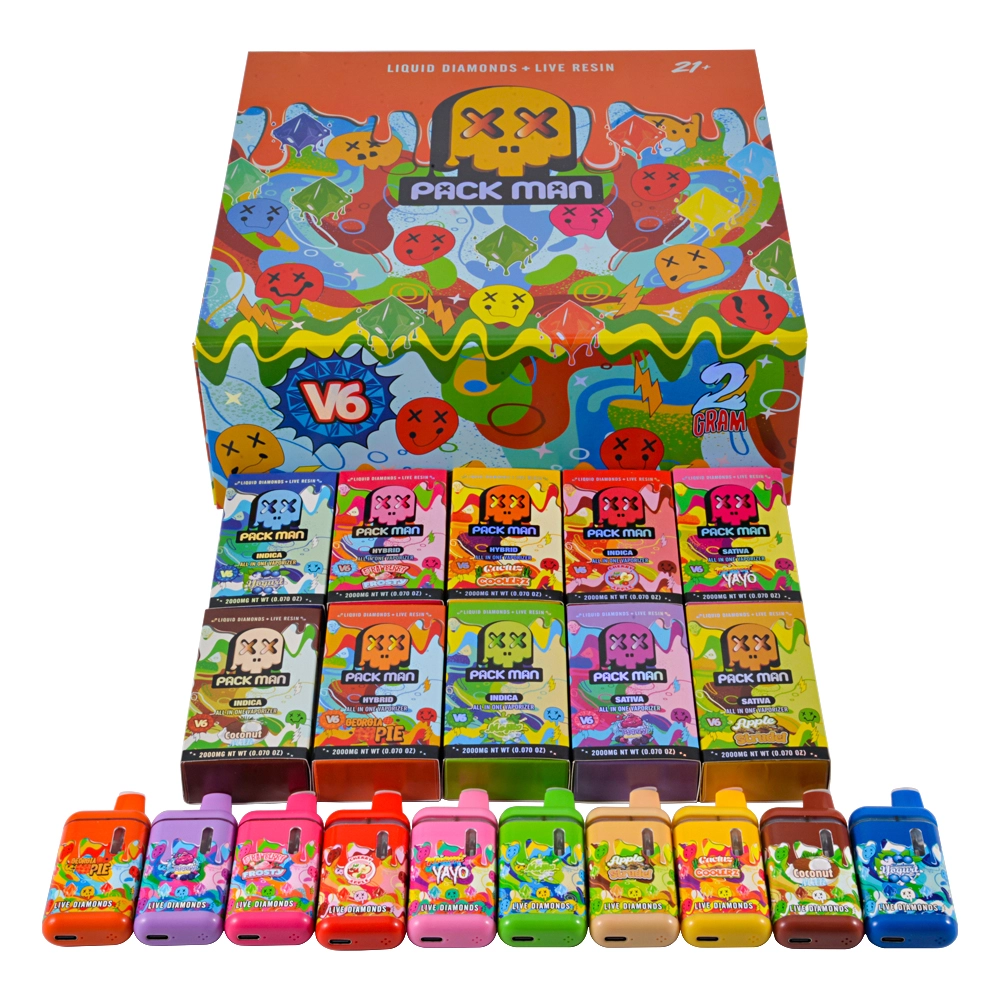
Packman Wholesale Playbook — MOQ, Tooling, QC (AQL) & Lead Times (2025)
This 2025 update strengthens evidence and reproducibility: we add an EOQ-based lens to right-size MOQ, align QC with ISO 2859-1 (AQL sampling), model lead times with Incoterms® 2020 milestones, and include a compliance pack referencing IATA Lithium Battery Guidance 2025, UN38.3, and IEC 62133-2.
Executive Summary (What’s new in 2025)
- Evidence-ready frameworks: EOQ math for MOQ planning; ISO 2859-1 AQL sampling procedure; Incoterms® 2020-aware lead-time map.
- Authoritative compliance pack: IATA DGR 66th ed. Lithium Battery Guidance (2025), UN Manual Sub-section 38.3, IEC 62133-2 safety testing.
- Templates & checklists: EOQ worksheet, AQL setup form, negotiation clause samples, documentation list (COC/COA/SDS, UN38.3, test reports).
MOQ Framework (with EOQ)
Definitions: MOQ = supplier’s minimum lot size; EOQ = buyer’s cost-minimizing order size under stable demand and costs.
EOQ formula
EOQ = √( 2 · D · S / H )
- D: annual demand (units)
- S: order/setup cost per order (USD)
- H: annual holding cost per unit (USD)
Illustrative example
Assume D=48,000 units, S=$120, H=$1.10 → EOQ ≈ √(2*48000*120/1.1) ≈ 3,230 units. If supplier MOQ is 5,000, negotiate phased deliveries (e.g., 2×2,500) with price protection.
Negotiation clause samples
| Clause | Purpose | Drafting tip |
|---|---|---|
| Split-lot MOQ | Meet MOQ financially but take phased releases. | “Supplier accepts MOQ 5,000 units with 2 deliveries of 2,500 ±5% within 30/60 days; unit price applies to total MOQ.” |
| NRE/Tooling amortization | Spread mold/NRE over first X POs. | “Tooling fee $Y amortized over first 4 POs; title transfers after last installment; maintenance included ≥ Z shots.” |
| Quality gate with AQL | Define acceptance/rejection. | “Inspection per ISO 2859-1, General Level II, AQL 1.0% (critical 0, major 1.0, minor 2.5). Over-AQL → rework or replacement at supplier cost.” |
Tooling & Fixtures (NRE, DFM → T0/T1 → Ramp)
- Milestones: DFM sign-off → T0 (first shots) → T1 (tuning) → pilot run → PPAP/FAI → mass production.
- Cost controls: Amortize NRE; set preventive maintenance; define cavity life & spare inserts.
- Change control: Use ECN/ECO; freeze window prior to mass run.
Quality Control (ISO 2859-1 AQL)
Standard: ISO 2859-1 provides sampling plans by attributes for lot-by-lot inspection; choose inspection level and AQL, then pull the code letter and sample size from the standard’s table.
Setup steps
- Pick level (e.g., General II) and AQLs (e.g., Critical 0, Major 1.0, Minor 2.5).
- Find code letter from lot size (per ISO 2859-1 table).
- Use the corresponding sample size & acceptance number (Ac) / rejection number (Re).
AQL form (fill in)
| Lot size | Level | AQL | Code | Sample | Ac/Re |
|---|---|---|---|---|---|
| ________ | General II | Maj 1.0 / Min 2.5 | __ | __ | __/__ |
Lead Times (2025, Incoterms® 2020 aware)
Milestone model: PO placed → materials → production → outbound QC → EXW/FOB handoff → international carriage → import clearance → inbound to DC/3PL.
| Incoterms® 2020 rule | Seller’s delivery point | Who books/pay freight? | Lead-time sensitivity |
|---|---|---|---|
| FOB | Goods on board at port of shipment | Buyer | Buyer controls main leg; port congestion & space drive variance. |
| CIF | On board + seller pays ocean + insurance to named port | Seller | Insurance & carrier choice on seller; buyer controls destination handling. |
| DDP | Delivered, duty paid at buyer’s site | Seller | Seller manages full chain; customs delays borne by seller. |
Compliance & Documentation (authoritative references)
Battery & transport
- IATA Lithium Battery Guidance (2025): align with 66th ed. DGR (packing instructions, SOC limits, device vs spare, data loggers).
- UN38.3: ensure cells/batteries passed required tests for transport classification.
- IEC 62133-2: safety of portable secondary lithium batteries (design & test).
Docs checklist
- COC/COA; SDS (GHS) for oils/chemicals where applicable.
- UN38.3 test summary; IEC 62133-2 test reports (where applicable).
- Packing list, commercial invoice, HS codes; compliance marks per market.
Cost & Risk Controls
- Contract levers: service-level credits for late readiness; rework/replace on over-AQL; price-hold window tied to resin/metal indices.
- Continuity: dual-sourcing for critical SKUs; safety stock sized from service target & variability.
- Logistics risk: lane diversification (air/sea/rail), advance booking during peak weeks; DG-trained forwarders for battery shipments.
Templates & Worksheets
EOQ worksheet
| SKU | D (units/yr) | S ($/order) | H ($/unit·yr) | EOQ |
|---|---|---|---|---|
| ________ | ________ | ________ | ________ | =SQRT(2*D*S/H) |
AQL setup
| Lot | Level | AQLs | Code | Sample | Ac/Re |
|---|---|---|---|---|---|
| ________ | G-II | C0 / M1.0 / m2.5 | __ | __ | __/__ |
Negotiation addendum
| Topic | Sample wording |
|---|---|
| MOQ phasing | “MOQ 5,000 units, released as 2,500±5% x2; price based on total MOQ.” |
| NRE amortization | “Tooling fee $Y amortized over 4 POs; maintenance incl. ≥ Z shots; spare inserts included.” |
| AQL gate | “ISO 2859-1 General II; Critical 0 / Major 1.0 / Minor 2.5; over-AQL → rework/replace at supplier cost.” |
Internal links (≤5)
References (authoritative)
- ICC — Incoterms® 2020 official page. (Incoterms definitions and explanatory notes).
- IATA — Lithium Battery Guidance Document (2025) & DGR lithium batteries portal.
- UN — Manual of Tests & Criteria, Sub-section 38.3 (transport testing).
- IEC — IEC 62133-2:2017 (portable secondary Li batteries – safety). See also FDA recognition note: Recognition List #064 (2025).
- ISO — ISO 2859-1 attributes sampling overview (see official standard; background explainer example: AQL inspection levels).
0 Comments