
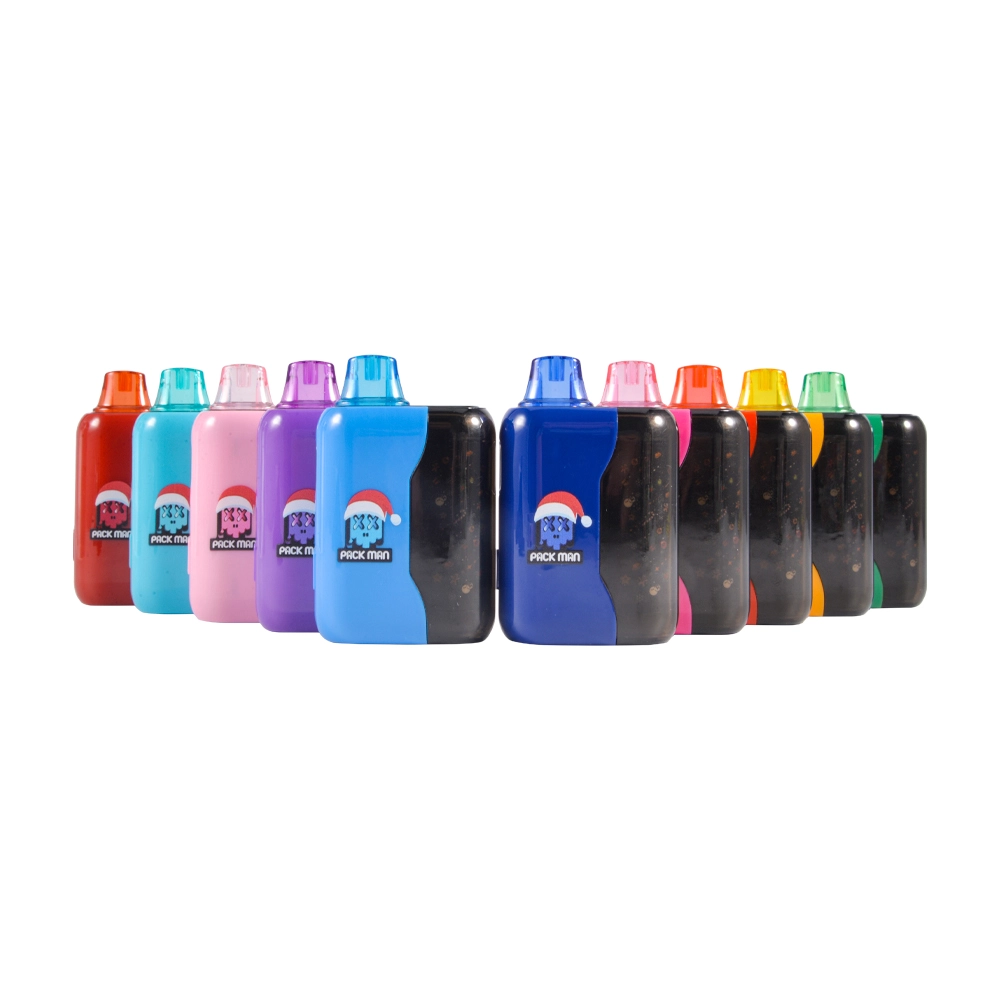
Packman Empty Hardware Only FAQ: 19 Questions U.S. B2B Buyers Ask (2025)
U.S. retailers and distributors don’t just buy “a design.” They buy consistency + documentation. If your Packman empty hardware program can answer the questions below with clean proof (spec sheets, case IDs, QC logs, battery documents), you’ll close faster, reduce chargebacks, and avoid “mixed batch” headaches.
A) Empty hardware scope & what’s included
Buyers start here because “empty” gets misused online. Your first job is to define the scope in invoice language and receiving language, so the buyer can hand it to their ops team without re-explaining anything.
Q1. Is this Packman unit 100% empty hardware only (no oil, no nicotine, no THC) and shipped unfilled?
Yes—this is empty hardware only. Nothing is prefilled and there are no active substances included. For B2B orders, we recommend adding a “hardware-only scope” line on the invoice/packing list so your receiving team can document it at intake.
Q2. What exactly is included per unit and per case (device, mouthpiece, retail box, inserts, master carton)?
“What’s included” needs to be defined at unit level and master-carton level. Ask for a packing configuration sheet (units per inner/master, accessory list, inserts, and carton standards). This prevents short-ship disputes and makes receiving faster.
Q3. Is it branded, unbranded, or style-compatible housing—and can you supply logo-free versions?
Many U.S. B2B buyers prefer logo-free housings for private-label flexibility and lower confusion at retail. Confirm branding configuration, artwork proofs, and packaging samples before production. If you need a style-compatible run, define exactly what “compatible” means (and what it does not).
Mini checklist (A): Scope line on invoice ✅ / Packing configuration sheet ✅ / Branding configuration locked ✅
B) Versions & core specs
Retailers don’t want surprises. If “the same SKU” ships with different boards, coils, or airflow, your return rate spikes. Your best defense is a simple spec sheet per batch and a version/change log.
Q4. Which Packman hardware version is this (V1/V2/2025 batch), and what changed vs previous batches?
Version clarity is a trust signal. Ask your supplier for a short change log: what changed (airflow path, gasket, mouthpiece fit, board revision), when it changed, and how to identify it at receiving. If you require consistency, lock a version/spec window in the PO.
Q5. What is the chamber capacity (mL) and the recommended working fill volume (headspace) for this empty hardware?
Capacity and working volume are not the same. A good spec sheet states nominal capacity and a recommended working volume so ops teams avoid overfill-related leak risk. This FAQ provides spec guidance only and does not include procedural fill steps.
Q6. Battery specs: mAh, charging port (USB-C), charge current, and protection features—what’s standard for this batch?
Buyers commonly request battery mAh, USB-C configuration, and board protections (over-charge/over-discharge/short-circuit). These details reduce “won’t charge” disputes and help buyers choose compatible shipping lanes. Add a receiving spot-check: sample charge indicator + basic power/LED response.
Q7. Coil type and resistance options (ceramic/mesh, ohms range)—and how consistent is it across a PO?
Coil type/resistance drives susceptibility to clogging and leakage, and it’s a common source of “same look, different performance” complaints. B2B buyers want consistency across the PO, with clear carton labeling to prevent mixed-coil commingling. If available, request QC sampling records for the batch.
Mini checklist (B): Version/change log ✅ / Batch spec sheet ✅ / Carton labeling for coil/board ✅
C) Compatibility (structure only) & leak-control design
In B2B hardware-only programs, “compatibility” should be discussed as structure and defect prevention, not procedures. Keep it high-level: what design category it is, how seals work, and what your QC team should look for.
Q8. Is the hardware designed as bottom-fill, side-fill, or top-fill (structure description only)?
You can confirm the structural design category so buyers understand how the unit is intended to be integrated into production. This FAQ does not provide filling steps. If a buyer needs an integration brief, keep it non-instructional: parts map, tolerances, and critical seal points.
Q9. What are the inlet hole sizes/count and the airflow path design (for clogging + leak control)?
Buyers ask because inlet geometry and airflow routing influence clogging, leakage, and inconsistent draw. Provide basic geometry specs (count and size range) plus an airflow-path diagram reference for QC. At receiving, the practical check is consistency across sampled units—mismatch is a red flag.
Q10. What mouthpiece and seal structure is used (press-fit, welded, gasket type) and what are the anti-leak features?
Seal architecture drives leakage and “loose mouthpiece” returns. Confirm whether the mouthpiece is press-fit or welded and what gasket/seal type is used. Add a simple receiving check: look for misalignment, damaged seals, or obvious fit looseness on sampled units.
Mini checklist (C): Structure category documented ✅ / Airflow + inlet consistency check ✅ / Seal/fit inspection ✅
D) Packaging, identity tracking & Proof Pack
The fastest way to earn repeat orders is to make your program auditable. That means: case IDs, standardized photos, and a Proof Pack folder per PO. If you plan to add FAQ structured data, make sure every Q&A is visible on-page and avoid content that could be considered promotion of illegal activity. :contentReference[oaicite:0]{index=0}
Q11. Do you offer serial/QR identity labels for case-level tracking (not “verification of filled product”), and how do we prevent code reuse?
For hardware-only programs, QR/serial is mainly for inventory identity + traceability. Treat codes like serial numbers: don’t publish them in listings, and log them by case ID during receiving. If codes are used for verification, always confirm the official destination and log pass/fail results internally.
Q12. Can you provide standardized batch photo sets (outer carton labels, seals, inner layout, device markings) for receiving QC?
Yes—standardized photos reduce disputes because buyers can compare intake evidence to the packing configuration sheet. Use a consistent “photo station” so images are readable and repeatable. Retailers love this because it supports chargeback disputes and internal audits.
Q13. Do you support a Proof Pack per PO (invoice, packing list, spec sheet, QC logs, and receiving records)?
A Proof Pack is a single folder that answers most buyer questions. At minimum: invoice/packing list, version/spec sheet, case-ID roster, receiving photos, and an exception log for quarantined cases. Use clear, descriptive anchor text for supporting internal pages so users and search engines understand the destination.
Mini checklist (D): Case IDs ✅ / Standard photo set ✅ / Proof Pack folder per PO ✅
E) QC, DOA, warranty & claims
U.S. B2B buyers don’t expect “zero defects.” They expect a controlled system: what you test, how you sample, how you quarantine, and how you resolve issues. The goal is to reduce friction and keep the buyer’s ops team confident.
Q14. What QC tests do you run (leak check, draw resistance, power output, charging test, visual inspection), and can you share the checklist?
A credible QC checklist maps to predictable failure modes: leaks, airflow inconsistency, charging failures, and cosmetic defects. Ask for a checklist template and define sampling rates by risk (new model vs repeat model). Buyers appreciate receiving-friendly tests they can replicate on arrival.
Q15. What’s your typical DOA/defect policy, and how do you define “DOA” for empty hardware?
For empty hardware, DOA is typically “non-functional at first inspection” (charging failure, no indicator response, severe airflow blockage), not performance with any substance. Set a clear DOA inspection window (X days after delivery) and define what evidence is required. Clear definitions prevent slow, expensive disputes.
Q16. What evidence is required for warranty claims (photos, videos, case ID, batch ID), and what’s the replacement/credit workflow?
The best systems are simple: case ID → issue type → evidence → resolution. Require batch/case identifiers plus short clips (charging indicator test, airflow check) and photos of seals/packaging when relevant. A standard process speeds approvals, protects both sides, and makes your program look mature.
Mini checklist (E): QC checklist ✅ / DOA definition ✅ / Claims evidence rules ✅
F) MOQ, lead time, logistics & battery/shipping documents
Even if you only sell empty hardware, many buyers will treat these as battery-powered devices and ask for battery transport documentation. Be ready with test summaries, and keep shipping language factual and conditional.
Q17. What are your MOQ, price breaks (1k/5k/10k), and lead time for ready stock vs custom packaging?
Most B2B buyers want two timelines: ready stock ship time and custom production time (including proof approval time). Confirm whether changes like branding, inserts, and tray layout reset lead times. If you need consistency, lock the spec and version for a defined run.
Q18. What battery transport documents can you provide (UN 38.3 test summary, lithium battery paperwork) for devices with built-in batteries?
Many partners and forwarders will ask for a lithium battery test summary because lithium cells/batteries must be tested under UN 38.3, and PHMSA provides guidance and updated publications (including revisions effective May 10, 2024). For air logistics, IATA’s lithium battery guidance also points to UN 38.3 testing as a baseline requirement.
Q19. Shipping: which warehouses/carriers do you use, and are there any U.S. restrictions we should plan for (USPS/PACT) if a carrier treats devices as ENDS?
Carrier rules vary by product classification and destination. If a shipment is treated as ENDS, ATF notes the PACT Act amendment prohibits using USPS to ship e-cigarettes/vapes, and USPS guidance reflects ENDS products are generally nonmailable (with limited exceptions).
Keep your commitments conservative: state what you can do, what documentation you provide, and what is buyer-dependent (destination rules and carrier acceptance).
Mini checklist (F): MOQ/lead time table ✅ / UN 38.3 test summary ready ✅ / Conservative carrier policy ✅
References (authoritative)
- Google Search Central: FAQPage structured data (FAQ content must be visible; restricted content guidance).
- Google Search Central: Link best practices (crawlable links & descriptive anchor text).
- PHMSA: Lithium battery test summaries; revised guidance (effective May 10, 2024) and 2024 publications.
- IATA: Lithium battery guidance document (references UN 38.3 tests; aligned with 2025–2026 ICAO TI / IATA DGR context).
- ATF + Federal Register + USPS: ENDS mailing restrictions and policy background.
If you want more vape wholesale, you can go through those pages: thc vape pen|2 gram disposable|packman wholesale|packman disposable vape
0 Comments