
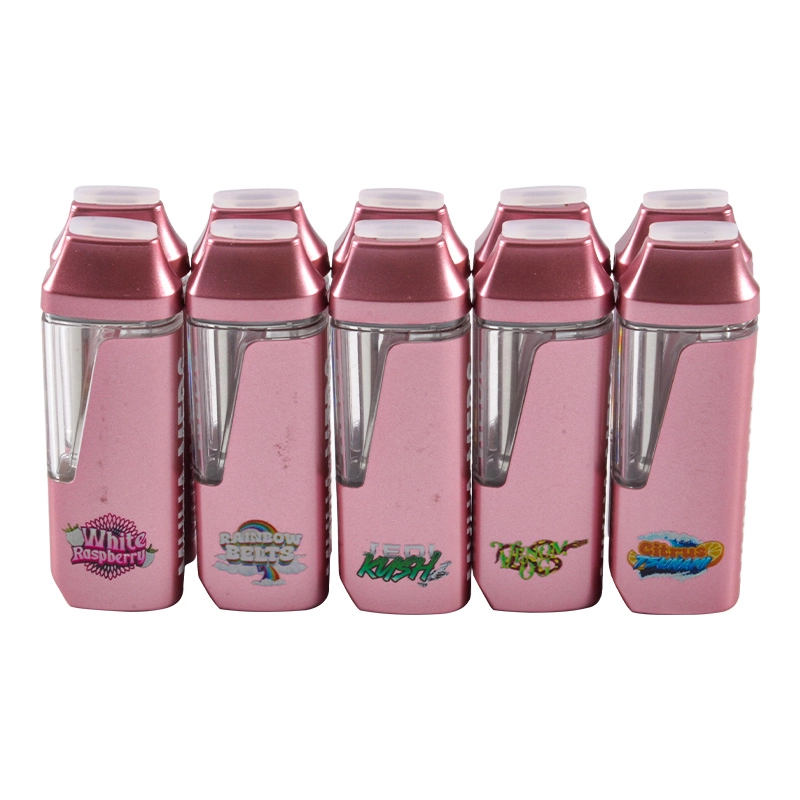
Scope & Disclaimer: This guide is written for B2B wholesalers, distributors, and filling labs. It covers hardware only / empty shells (explicitly: no oil, no THC, no nicotine) and is intended for Adults 21+. It is not legal or medical advice.
Muha Meds Pink Hardware Only Bulk Order Tips 2025
On this page
- Who This Guide Is For & Hardware-Only Scope (2025)
- What “Muha Meds Pink” Typically Refers To (SKU/Version Clarity)
- Quick Spec Snapshot Buyers Should Confirm Before Paying
- Supplier Vetting: How to Reduce Bulk Order Risk
- RFQ & Sampling Plan (Make the Quote Comparable)
- QC Gates: Sample → Pilot → Mass Production
- Packaging, Label Space & Traceability Checks
- Pricing, MOQ & Landed Cost Math (Buyer Framework)
- Shipping & Warehouse Strategy (US/EU/UK)
- Red Flags & Common Failure Patterns (Avoid Scams)
- FAQ: Bulk Ordering Muha Meds Pink Hardware Only
- References (Authoritative Sources Placeholder)
Who This Guide Is For & Hardware-Only Scope (2025)
B2B buyer profiles
If you’re buying “Muha Meds Pink” at scale, you’re usually in one of three groups: (1) a wholesaler stocking empty hardware for multiple retail accounts, (2) a distributor standardizing a few SKUs across regions, or (3) a filling/packaging operation that needs consistent shells that run predictably across lots.
Hardware-only definition (no oil/THC/nicotine)
In this article, hardware only means you are procuring the physical device components (housing, tank, mouthpiece, electronics, battery) without any consumable contents. Keep purchase orders, invoices, and packaging language aligned to “empty / hardware only” to prevent avoidable confusion in shipping, receiving, and compliance review.
21+ and disclaimer placement
Place an Adults 21+ and “hardware-only” disclaimer near the top of your product/guide pages and mirror that language in your RFQs. It reduces misinterpretation and keeps your internal teams aligned on what is (and is not) being supplied.
What “Muha Meds Pink” Typically Refers To (SKU/Version Clarity)
Version identifiers and naming consistency
“Pink” often functions as a version/appearance line rather than a technical spec. That’s where bulk orders go wrong: one team thinks “Pink” = a specific shell size; another team thinks it’s only a colorway. In 2025, treat the name as a label, not a spec.
Avoiding SKU confusion in RFQs and invoices
Insist on a “SKU clarity pack” before you pay: product photos from multiple angles, a dimension sheet, a BOM-level description (what’s included), and a packaging mock. If a supplier can’t repeat the same identifiers across quote → sample → invoice, that’s a signal to slow down.
What to document in writing
- Exact SKU name as it will appear on the invoice (no nickname substitutions).
- Configuration statement: “hardware only / empty shells.”
- Target volume format (e.g., tank size class) and mouthpiece type.
- Any visible differentiators (finish, window style, button/port placement).
Quick Spec Snapshot Buyers Should Confirm Before Paying
Capacity / tank assumptions (hardware-only)
Even when you’re not buying contents, you still need the shell to match your filling and packaging plan. Confirm the tank class you’re expecting (for example, 1–2 ml class vs larger formats), and confirm whether the design is optimized for thicker vs thinner liquids (air intake sizing and wicking architecture matter).
Battery / charging interface expectations
Ask for battery capacity range, protection features (over-charge/over-discharge/short protection), and charging interface (USB-C vs other). You’re not buying “a battery”—you’re buying a system that must remain stable across lots.
Airflow / draw behavior checkpoints
Define how you’ll evaluate draw: target draw tightness, auto-draw sensitivity (if applicable), and any airflow adjustability. Bulk buyers should request a simple draw test procedure so every receiving team can replicate it.
Materials/contact surfaces notes
Confirm materials for mouthpiece and tank contact surfaces and request material declarations where relevant to your market. You’re managing not only performance, but also returns risk and customer complaints.
Supplier Vetting: How to Reduce Bulk Order Risk
Business verification checklist
- Company registration info matches bank beneficiary name.
- Stable business address and production capability evidence.
- Clear warranty/DOA policy in writing (not “chat promises”).
Factory vs trading company questions
Trading companies can be fine—if they control quality and can enforce change control. Ask who owns the tooling, who controls incoming components, and who signs off on lot release. If the answer is “our partner factory,” get that partner’s accountability stated in the contract.
Samples, references, and audit signals
Strong suppliers welcome structured sampling and provide lot IDs, packing lists, and repeatable documentation. Weak suppliers resist sampling or send “best hand-picked samples” with no traceability.
RFQ & Sampling Plan (Make the Quote Comparable)
RFQ fields that must be fixed
To compare suppliers fairly, lock these RFQ fields:
- SKU name + photos + dimensions (attach as appendix)
- Hardware-only statement (no contents)
- MOQ, tier pricing, lead time, and packing configuration (units/carton)
- QC approach: what they test, when they test, and what they record
- Spare parts policy (mouthpieces, seals) and rework policy
Sample size and lot labeling rules
Don’t accept “3 pcs only” samples for a bulk decision. Use a sample size that can reveal variation (for example, 30–60 units split across cartons). Require lot labels on samples so results are traceable.
“Golden sample” retention procedure
Once you approve a sample, retain a sealed “golden sample” set internally and require the supplier to retain the same. Your bulk order should be judged against that baseline—especially for cosmetic finish and assembly feel.
QC Gates: Sample → Pilot → Mass Production
Define accept/reject KPIs
Bulk buying becomes predictable when you decide in advance what “good” means. Use KPIs your team can measure without specialized lab equipment:
- Leak check: define a basic orientation/holding test and reject criteria (e.g., any visible seepage in defined conditions).
- Draw consistency: set a target band for draw feel and flag outliers for teardown.
- Power behavior: verify stable activation, no flicker, no unexpected shutoff, consistent indicator behavior (if present).
- Fit/finish: seam alignment, mouthpiece fit, port alignment, no rattles, no sharp edges.
AQL / inspection approach (high-level)
Many B2B teams adopt an AQL-style incoming inspection method (based on sampling rather than 100% checks) for efficiency. If you do, document the sampling plan, defect classifications (critical/major/minor), and escalation path when defects exceed your threshold.
Lot-to-lot consistency controls
Variation is the silent bulk killer. Require change control: suppliers must notify you of component substitutions (battery vendor, seals, tank material), process changes, or packaging changes before shipping. Your contract should define what counts as a “notifiable change.”
Packaging, Label Space & Traceability Checks
Box/carton consistency checks
Packaging is not decoration; it’s part of your operational control. Confirm unit box dimensions, carton counts, carton markings, and whether packaging protects the mouthpiece and port during transit.
Batch/lot tracking and anti-mix controls
Ask for a simple traceability model: batch ID on carton, packing list mapping batch → quantity, and internal anti-mix handling (separate staging for different batches). This reduces “mixed lots” that complicate returns analysis.
Incoming inspection workflow at warehouse
Build a receiving checklist: verify carton labels, count units, pull random samples, run the KPI checks, photograph anomalies, and record results in a lot log. Fast feedback prevents repeat defects in your next PO.
Pricing, MOQ & Landed Cost Math (Buyer Framework)
MOQ and tier pricing strategy
MOQ isn’t only a minimum—it’s a commitment to process stability. If a supplier offers an unusually low MOQ with aggressive pricing, confirm whether they’re using leftover components or mixed inventory.
Tooling/OEM/ODM cost flags
If you request custom color, logo, or packaging, separate “one-time” costs (tooling, plates, proofs) from unit pricing. Require written confirmation of ownership and reuse rights where relevant.
Landed cost checklist
- Unit price
- Packaging upgrades (if any)
- Freight + insurance
- Customs/duties (market-specific)
- Expected reject/DOA allowance (plan for reality)
Shipping & Warehouse Strategy (US/EU/UK)
Multi-warehouse replenishment logic
Bulk success often comes from inventory discipline: split inbound shipments by demand region, keep one “buffer” location for urgent replenishment, and avoid repeatedly mixing lots across warehouses without traceability.
Lead times and reorder points
Define reorder points using your real sell-through rate and the supplier’s proven lead time. If lead times vary, plan using the slower case to avoid stockouts that force emergency buys from unknown sources.
Damage prevention and receiving checklist
Require protective packing (dividers, trays, or inserts) that prevents mouthpiece damage and port scuffs. Then train receiving to spot crush indicators and photograph carton condition before opening.
Red Flags & Common Failure Patterns (Avoid Scams)
“Sample good, bulk bad” warning signs
- Samples arrive unlabelled; bulk arrives with different packaging or finish.
- Supplier refuses to share lot IDs or changes carton counts mid-stream.
- Performance shifts (draw/leak/power) with no disclosure of component changes.
Documentation inconsistencies
When the quote uses one SKU name, the invoice uses another, and the cartons show a third label, you’re headed toward disputes. Standardize naming and require document consistency.
Payment risk controls
Use staged payments aligned to QC gates (sample approval → pilot pass → mass shipment). If a supplier demands 100% upfront while refusing sampling or change control, treat it as a high-risk signal.
FAQ: Bulk Ordering Muha Meds Pink Hardware Only
How do I keep “Pink” from becoming a vague SKU internally?
Assign a formal internal SKU and attach a photo pack + dimension sheet. Require that exact identifier on every document.
What’s the minimum sampling that actually catches variation?
Enough units to reveal outliers—ideally dozens across more than one carton—plus strict lot labeling so results remain traceable.
What QC checks create the biggest ROI for wholesalers?
Leak screening, draw consistency checks, activation stability, and fit/finish inspections catch most return-causing defects early.
How do I prevent mixed lots in my warehouse?
Enforce batch labels, separate staging by lot, and record lot IDs on outbound shipments to support returns analysis.
What should I require in the purchase order?
Hardware-only statement, SKU identifiers, packaging configuration, QC gate requirements, and change-control notification terms.
How do I avoid overpaying for “custom” changes?
Separate one-time costs from unit costs, and insist on written approvals for color/logo/packaging proofs before mass production.
References (Authoritative Sources Placeholder)
Insert 10–15 authoritative references here (regulators, standards organizations, manufacturer guidance). Do not add unverifiable citations.
- ISO/IEC standards relevant to sampling/inspection and product safety (as applicable)
- UN transportation guidance relevant to lithium batteries (as applicable)
- Market-specific regulator guidance for packaging/labeling and consumer product safety (as applicable)
- Internal QC SOP templates and receiving checklists (company-controlled documents)
If you want to more vape wholesale pls go through these pages:muha meds wholesale|muha meds dual chamber|muha meds bulk 2025
0 Comments