
Adults 21+. Educational content only. This guide is not legal/medical advice. Always follow federal, state, and local laws, including track-and-trace, labeling, testing, and shipping rules.
Muha Meds Authenticity Guide (2025): How U.S. Sellers Spot Fakes Fast
Counterfeits don’t just create refunds—they can trigger compliance exposure, marketplace account risk, and brand damage. Below is a practical, B2B-friendly system U.S. sellers use to reduce “real vs fake” disputes: verify the package, verify the code, verify the paperwork, and document everything.

Key Takeaways
- Don’t rely on one signal. Real-vs-fake decisions should combine packaging QC, official verification, and documentation.
- Make authenticity repeatable. Use a receiving SOP + photo standards so every staff member checks the same way.
- Proof beats opinions. A “proof pack” (invoice + intake photos + verification logs + COA) reduces disputes and chargebacks.
Why Fakes Win (and How Sellers Stop Them)
Counterfeits spread for simple reasons: buyers chase low prices, sellers skip intake checks, and teams don’t record verification results. The fix is also simple: create a one-page standard your team follows every time—then store the evidence. If you can’t prove what you received, you can’t defend what you sold.
In 2025, the most effective U.S. reseller mindset is: “Verify at receiving, not after a complaint.” That means your authenticity workflow happens when cases arrive—before inventory is commingled, relabeled, or listed online.
Step 1 — Verify the Source (Before You Verify the Box)
Supplier credibility checks (minimum standard)
- Business identity: verifiable entity name, address, and a consistent payment trail (no “random” beneficiary names).
- Paper trail: invoices/packing lists that match SKUs, quantities, and batch/lot identifiers when applicable.
- Consistency: same product, same packaging, same verification flow across multiple orders—not a “new box every week” story.
Red flags U.S. sellers treat as “stop and quarantine”
- Prices far below market without a clear reason (clearance, damaged boxes, discontinued packaging).
- Supplier refuses intake photos, refuses batch info, or won’t provide COAs where applicable.
- “We can ship anything through USPS” or “no adult signature needed” claims.
Step 2 — Packaging & Printing Checks (Fast Visual QC)
Most fakes fail basic packaging discipline. Your goal isn’t to become a graphic designer—it’s to spot obvious inconsistencies quickly and consistently.
60-second packaging checklist
- Print clarity: sharp text and logos (no blur, bleed, or misalignment).
- Spelling/grammar: errors are a high-signal red flag.
- Seal integrity: tamper seals intact; no re-glue lines, tears, or resealing marks.
- Code placement: verification sticker/code area present where it should be.
- Batch/lot marks: look for consistent formatting and location across units in the same case.
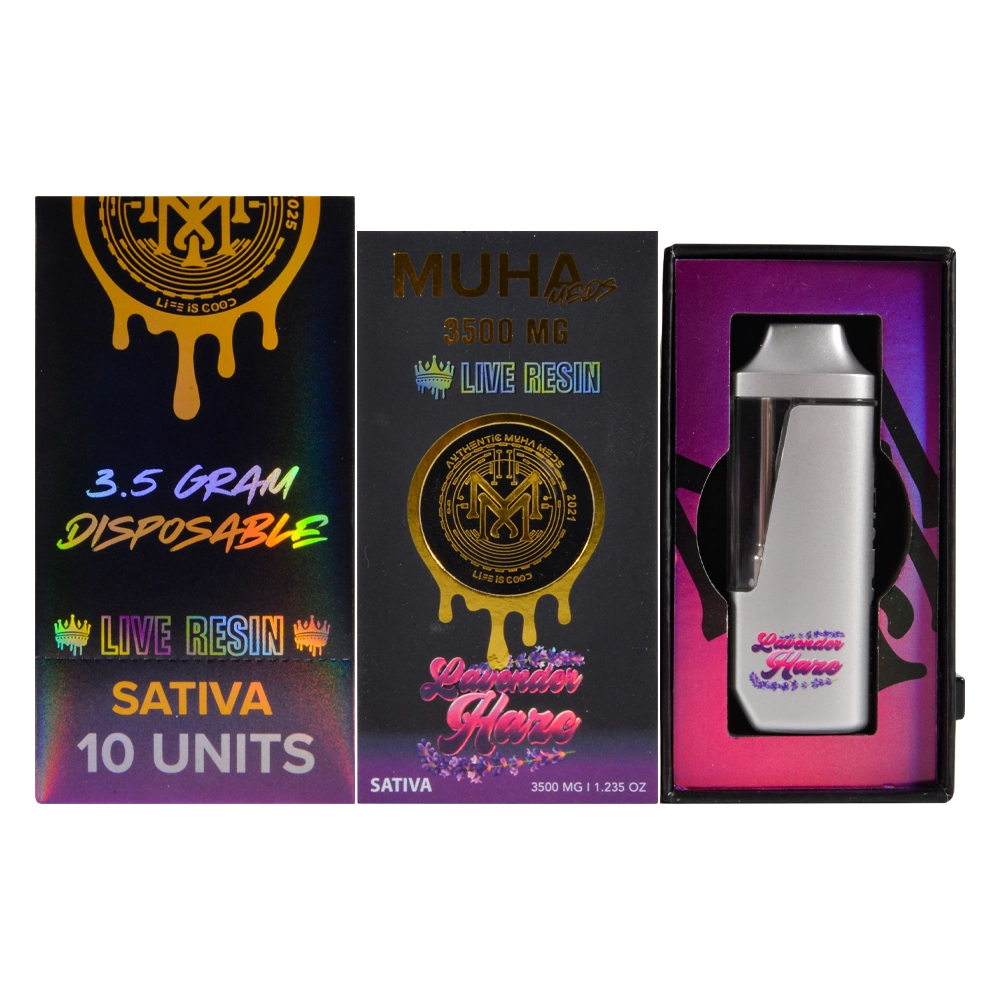
Pro tip: Take one “golden sample” set of photos from a verified unit (front/back/side, seal close-ups, code close-up). Use it as a training reference for staff.
Step 3 — Use Official Verification (Scan + Scratch/PIN)
If the brand provides an official verification portal, use it—every time, at receiving. Muha Meds promotes an official verification flow designed to confirm authenticity via a code-based check rather than relying on packaging alone.
Safe verification workflow
- Scan carefully: use a phone camera and confirm the domain before entering any code.
- Use the two-step method: scan + scratch/PIN/code entry where applicable.
- Log the result: record date/time, who verified, the case ID, and the result (pass/fail).
- Quarantine failures: do not list/sell. Separate the case and escalate to supplier immediately.
Step 4 — COA + Lab Credibility (What “Good” Looks Like)
Authenticity is “is it real?” Safety is “is it tested and documented?” For filled products in regulated channels, COAs matter. For hardware-only distribution, material and battery transport documentation may matter more. Either way, the rule is: documents must be batch-linked (not generic PDFs that never change).
COA quality checklist (for products that require lab testing)
- Batch linkage: COA references a batch/lot that matches packaging or inventory records.
- Scope: potency and contaminant screens appropriate to your market requirements.
- Lab credibility: look for ISO/IEC 17025 accreditation where required by regulators.
- Freshness: test date aligns with production timeframe; not a “reused” old report.
Note: Many U.S. cannabis regulators require testing labs to maintain ISO/IEC 17025 accreditation, which is why reputable buyers ask about accreditation status and documentation trail before they stock a product.
Step 5 — Receiving QC SOP (15 Minutes per Case)
Tools you need
- Phone + dedicated “Verification Log” sheet (Google Sheet/ERP intake module)
- Photo station (white background, fixed lighting, same angle every time)
- Case ID labels (simple: date + supplier + PO + case number)
- Quarantine bin/shelf (locked or clearly separated)
Standard operating steps
- Assign case IDs before opening (e.g., PO-1127-SUPA-CASE03).
- Photograph the case (outer label + seals), then open and photograph the inner layout.
- Sample plan: verify 3–5 units per master case (or more if supplier is new).
- Run packaging checklist (print, seals, code placement, batch marks).
- Run official verification (scan + scratch/PIN entry) and log results.
- Decision: Pass = receive into sellable inventory. Fail = quarantine and escalate.
Documentation rule: If it isn’t written down (or photographed), it didn’t happen.
The Wholesale “Proof Pack” (Audit-Ready in One Folder)
U.S. buyers increasingly expect a simple evidence bundle they can store for internal audits, platform disputes, and customer escalations. Build it once per PO.
What to include
- Commercial docs: invoice, packing list, PO confirmation.
- Receiving photos: outer case + inner layout + close-ups of seals/codes/batch marks.
- Verification log: date/time, verifier, case ID, result, notes.
- COA/lab docs (if applicable) or compliance docs for hardware-only (materials, battery transport summaries).
- Exception record: what was quarantined, why, and supplier resolution.
Why this matters
A proof pack turns “I think it’s real” into “Here’s the verification record.” It also prevents commingling—one of the biggest reasons sellers can’t isolate a problem batch during disputes.
Shipping & Compliance Notes (PACT Act / USPS)
This article focuses on authenticity, but U.S. sellers should also understand distribution rules. If your products fall under ENDS (electronic nicotine delivery systems), federal requirements can apply to delivery sales and shipping workflows, including restrictions on using USPS for these products and obligations around reporting, age verification, and adult signature processes. Plan private-carrier workflows and compliance SOPs accordingly.
If you sell nicotine products: Check which ENDS products are authorized for lawful sale in the U.S. using FDA resources.
If you handle liquid nicotine containers: U.S. law requires child-resistant packaging meeting CPSC standards.
FAQ
What’s the fastest way to spot a fake Muha Meds unit?
Run the trifecta: packaging QC (print + seal + code placement), official verification (scan + scratch/PIN), and documentation review (invoice + batch-linked records). If one fails, quarantine.
Is scanning a QR code enough?
No. QR codes can be copied. Use the full official verification flow (including scratch/PIN/code entry when provided) and confirm the destination domain before submitting info.
How many units should I verify per case?
For a trusted supplier, many sellers sample 3–5 units per master case. For a new supplier or a new packaging version, increase sampling and require more documentation before listing.
What if the verification fails?
Stop. Quarantine the case, document the failure (photos + log), and escalate to the supplier with a request for resolution (replacement, credit, or traceable proof).
Do I need COAs for hardware-only items?
COAs are typically tied to tested substances (e.g., filled products). For hardware-only, buyers often prioritize material documentation and transport/battery handling paperwork—plus a reliable receiving QC process.
0 Comments