
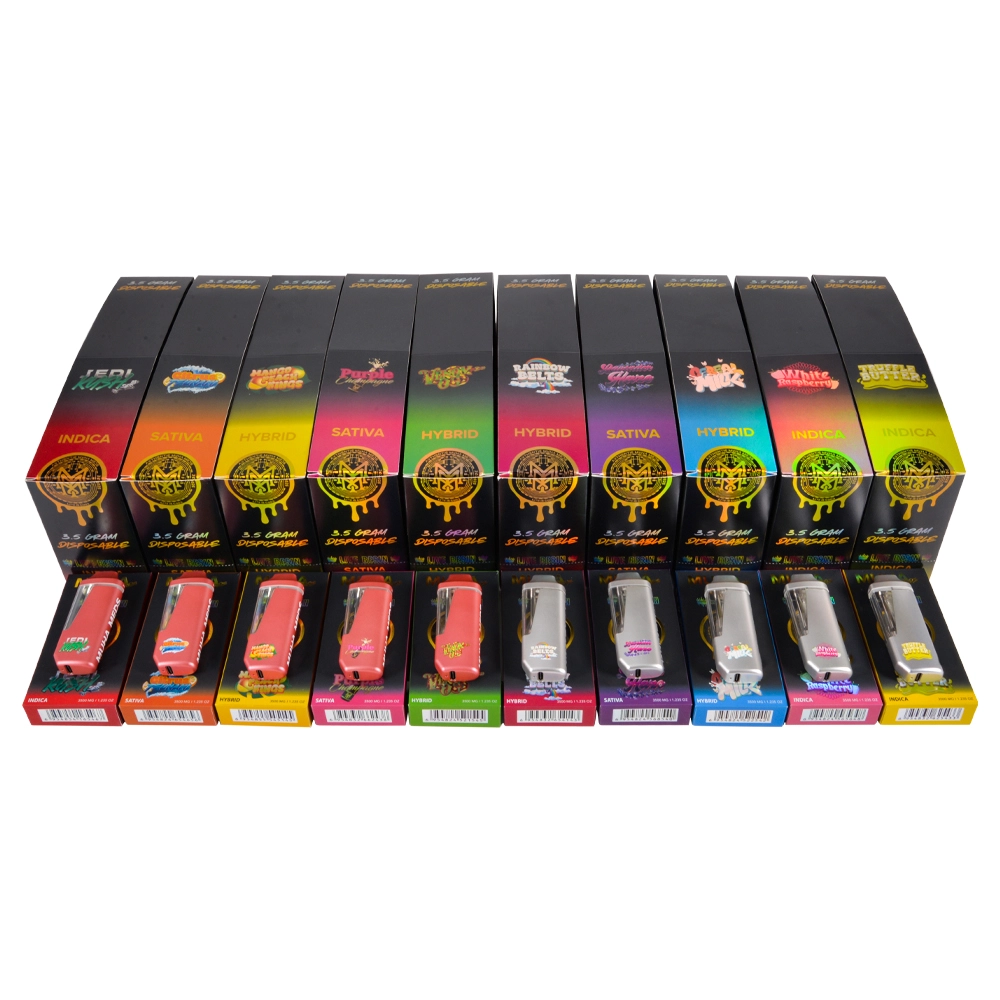
Muha Meds 3.5g Empty Disposable: Top 3 Things to Check Before Buying
Scope note (important): This article is about empty hardware and procurement risk control. It does not evaluate consumables, effects, or “strain/flavor” claims. For safety and compliance, always rely on verifiable documents and official verification portals—not marketing text.
Before you buy a Muha Meds 3.5g empty disposable, check three things in this order: (1) verification, (2) safety & shipping evidence, and (3) incoming QC on the actual batch. If you skip the evidence, you can’t reliably separate real, consistent hardware from look-alikes.
Top 3 checks • 1) Verification & authenticity evidence • 2) Safety & shipping documents to request • 3) Incoming QC on the batch (AQL-style) • Reference specs (as listed) • FAQ
Key Takeaways
-
Treat “authenticity” as an evidence workflow: verify using the brand’s official portal, then confirm packaging traceability matches the unit you received.
-
For battery-powered devices, the safest approach is document-first: request UN38.3 test summary (shipping), battery safety test evidence (IEC 62133-2/UL 62133 family), and (if available) electrical system testing to UL 8139.
-
Don’t rely on a single sample. Use an incoming QC plan (AQL-style sampling) to catch batch drift in resistance, intake port machining, charging port fit, and seal quality.
1) Check Verification & Authenticity Evidence
Use the brand’s official verification portal (don’t “trust the QR” blindly)
A QR code alone is not proof—counterfeits can copy graphics. What matters is whether the code resolves to the brand’s official verification flow, and whether the verification result behaves like a real system (e.g., flags reused codes). For Muha Meds, start with the brand’s verification entry point: Muha Meds Verify.
Packaging traceability checklist (what you can verify without lab gear)
|
Check |
What “good” looks like |
|---|---|
|
Print quality + alignment |
Crisp text, consistent fonts, no fuzzy microtext, no misaligned cut lines |
|
Tamper evidence |
Seal present and intact; no re-glue marks; no lifted corners |
|
Unique code behavior |
Verification portal returns a clear result; reused/invalid codes are flagged |
|
Unit-to-box match |
Box lot/batch identifiers (if present) match the units shipped in that carton |
Tip: If a listing page uses wording like “Empty … Live Resin” as a label, treat it as marketing shorthand and ask your supplier to confirm the hardware-only SKU, packaging text, and documentation set before you buy.
2) Request Safety & Shipping Documents (Evidence-First)
Battery-powered devices are YMYL-adjacent because failures can cause injury or fires. The most defensible buyer workflow is: request documents → verify they match the exact battery/device → record them per lot.
Battery safety basics (consumer guidance): FDA advises charging on a clean, flat surface, away from flammables, and avoiding extreme temperatures. Reference: FDA: Tips to Help Avoid Vape Battery Fires or Explosions .
Document checklist (what to request, and why)
|
Document |
Why it matters |
Red flags |
|---|---|---|
|
UN38.3 test summary (TS) |
Proves lithium battery design testing for transport; TS is required to be made available in many shipping contexts. Reference: PHMSA lithium battery test summaries . |
No TS available, TS missing battery model, or TS for a different cell design |
|
Battery safety test evidence (IEC 62133-2 / equivalent) |
IEC 62133-2 specifies requirements/tests for safe operation of portable sealed secondary lithium cells/batteries. Reference: IEC 62133-2:2017 (and an overview example: Intertek IEC 62133 overview). |
Only a logo, no report ID/lab name/date; or tests don’t match the cell used |
|
Electrical system testing evidence (UL 8139, if available) |
UL states UL 8139 evaluates the safety of the electrical, heating, battery and charging systems of e-cig/vape devices. Reference: UL: E-Cig and Vape Battery and Electrical Certification . |
“Certified” claims with no test scope, no lab/CB, no model number match |
|
Material declarations (RoHS / MSDS as applicable) |
Useful for internal compliance files and customer due diligence |
Outdated docs; generic PDFs not tied to your SKU |
Practical rule: If the supplier can’t provide a clean document set tied to the exact battery/device model, treat the purchase as higher-risk—no matter how good the pictures look.
3) Run Incoming QC on the Batch (AQL-Style, Not “One Sample”)
Batch drift is real: the same listing can ship different internals over time. For B2B buying, acceptance sampling is a common way to catch drift without testing every unit. ISO 2859-1 describes an acceptance sampling system indexed by AQL. Reference: ISO 2859-1 (overview).
Incoming QC checklist (fast checks that actually catch problems)
|
Area |
How to check |
What to record (evidence) |
|---|---|---|
|
Seams & mouthpiece fit |
Look for gaps, glue marks, loose mouthpieces, sharp edges |
Close-up photos + defect count per sample |
|
Type-C port alignment |
Insert cable gently; check wobble/tilt; verify indicator behavior |
Short video of plug-in + LED behavior |
|
Airflow consistency |
Dry draw test (no consumables): consistent pull, no whistling, no blocked airflow |
Pass/fail notes + any outliers |
|
Intake port machining |
Visually inspect intake holes for burrs/obstructions; measure if you have gauges |
Macro photo of intake area for sampled units |
|
Resistance drift (if measurable in your setup) |
Compare measured resistance to supplier’s stated spec; agree tolerance in writing |
Test log: unit ID → reading → pass/fail |
Why this improves E-E-A-T: It turns claims into a repeatable method: sample plan → recorded evidence → accept/reject decision. That’s more defensible than “it feels solid.”
Reference Specs (As Listed on the Product Page)
These are the specs shown on the Muha Meds 3.5g listing. Use them as a cross-check during purchasing and incoming QC, and ask the supplier to confirm they apply to your exact shipment/lot.
|
Spec field |
Listed value |
|---|---|
|
Tank volume |
3.5 ml |
|
Battery capacity |
280 mAh |
|
Intake oil hole |
4 × 1.6 mm |
|
Resistance |
1.4 Ω |
|
Charging |
Type-C |
|
Pod material |
PGTC |
|
Packaging |
Small boxes + master boxes + stickers |
Note: If any listing field mentions “flavors/strains,” treat it as a template field from finished-product listings. For an empty hardware article, standardize your copy to hardware-only language and rely on verifiable documentation.
Where to Buy on Vapetech420 (Internal Links)
If you’re sourcing for resale, keep your buying workflow evidence-first. These pages help you navigate related collections:
FAQ
Is a QR code alone enough to prove authenticity?
No. A QR graphic can be copied. Use the brand’s official verification portal and confirm the verification behavior makes sense (e.g., invalid/reused codes are flagged). Start here: Muha Meds Verify.
Can I claim “UL 8139 compliant/certified” in my marketing?
Only if you have documentation that clearly matches the exact model/lot and scope. Otherwise, phrase it as “documents to request / checklist,” and link to the UL scope statement: UL 8139 certification service overview .
What’s the most important shipping document for battery-powered devices?
Ask for the lithium battery UN38.3 test summary (TS) and ensure it matches the battery design used in your product. Reference: PHMSA: lithium battery test summaries .
How should I charge devices safely during inspection?
Follow conservative safety habits: charge on a clean, flat surface, away from flammables, and avoid extreme temperatures. Reference: FDA battery safety tips .
0 Comments