
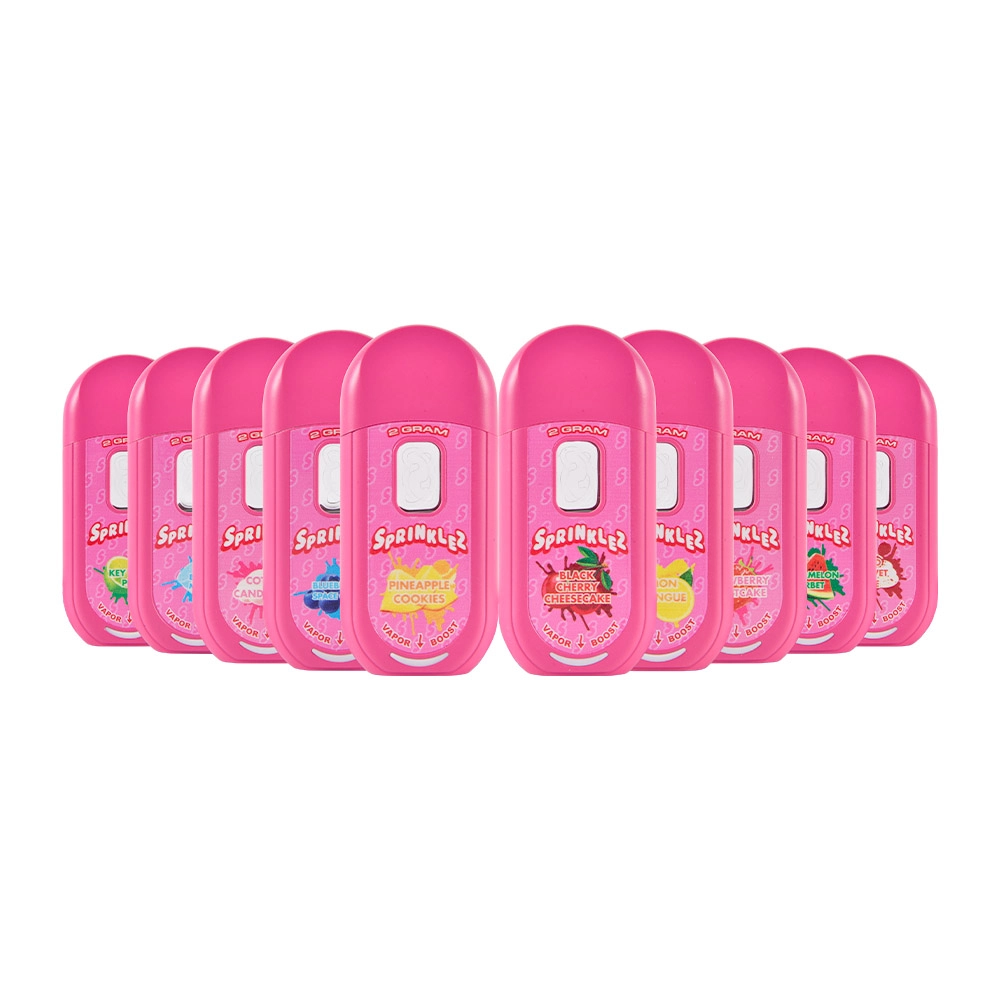
Is Sprinklez 2g (2ml) Empty Disposable Vape the Best Hardware for Beginners?
If you’re buying your first empty disposable vape hardware—either as a first-time user of prefilled products or as a retailer onboarding a simple starter SKU—your #1 risk is not “features.” It’s unclear claims: vague safety statements, unverifiable certifications, and specs that don’t match the listing.
This guide fixes that by anchoring the discussion to (1) what the product page actually states, (2) what you can quickly verify on arrival, and (3) the exact documents you should request if you want to talk about battery safety and shipping compliance with confidence.
On this page
- Key takeaways (verified + actionable)
- Verified specs from the Sprinklez 2g listing
- What “best for beginners” means in hardware terms
- Runtime math (simple, repeatable, no hype)
- Beginner-friendly incoming QC you can actually run
- USB-C charging safety (evidence-based habits)
- Compliance docs to request (UL 8139, IEC 62133-2, UN 38.3)
- Packaging & logistics (what the site says + what to verify)
- FAQ
- References (official / standards bodies)
Key takeaways (verified + actionable)
-
The Sprinklez wholesale listing describes an empty rechargeable device with 2ml tank volume, 500mAh battery, 1.4Ω resistance, and Type-C (USB-C) charging. See the product page for the current spec block: Wholesale Sprinklez 2g (2ml) listing</a >.
-
Don’t claim “UL 8139 / IEC 62133-2 compliant” unless you can show documentation. Instead: request proofs and link to what those standards cover (see Docs).
-
For “beginner-friendly,” prioritize draw activation, clear LED status, consistent resistance (no opens/shorts), and safe charging habits—over marketing buzzwords.
Verified specs from the Sprinklez 2g listing
Instead of repeating generic claims, start with what’s actually stated on the current wholesale page. As written on the listing, the core parameters are:
|
Parameter |
Value shown on listing |
Why it matters for beginners |
|---|---|---|
|
Tank volume |
2ml |
“2g” is often used as a marketing label; 2ml is the measurable reservoir spec. Beginners benefit from a clear, repeatable spec for inventory and expectations. |
|
Battery capacity |
500mAh |
Battery size drives how much usable energy you have between charges. It also affects how forgiving the device is when users take longer draws. |
|
Resistance |
1.4Ω |
Resistance that’s stable (no opens/shorts, no extreme variance) supports consistent heating behavior. It’s a beginner-friendly “sanity check” you can measure with a multimeter. |
|
Charging |
Type-C (USB-C) |
USB-C reduces “wrong cable” friction. Beginners still need safe charging habits and basic screening for port damage. |
|
Pod material |
PGTC (as listed) |
Treat material abbreviations as supplier declarations unless a datasheet is provided. Ask for material confirmation if you plan to make “food-grade” claims. |
|
Packaging |
Small boxes + master boxes + stickers (as listed) |
Packaging consistency is a practical beginner win: easier counting, fewer damage claims, simpler shelf prep. |
What “best for beginners” means in hardware terms
“Beginner” is often treated like a marketing word. In a hardware guide, it should mean: fewer steps, fewer ways to misuse the device, and fewer unknowns at purchase time.
Beginner-friendly signals to look for
-
Simple activation: draw-activated (no wattage modes, no hidden button combos).
-
Status feedback: an LED that clearly indicates charging / low power / fault states.
-
Predictable specs: a listing that states tank volume, battery capacity, resistance, and charging type (like this one does).
-
Low-variance batches: resistance readings that cluster tightly around the listed spec (not scattered).
Beginner “red flags” (avoid confidence-killing returns)
-
Certification claims with no report IDs, no test lab name, and no links to public references.
-
“Empty hardware” pages that accidentally describe nicotine salts or prefilled flavor effects (that’s a trust leak).
-
“Puff count” promises without a defined draw protocol (oil viscosity, voltage curve, and draw duration change everything).
Runtime math (simple, repeatable, no hype)
You don’t need “600 puffs” claims to estimate whether a device is beginner-friendly. You can do basic energy math using the listed battery capacity.
|
Step |
Formula |
Example (500mAh battery) |
|---|---|---|
|
Convert to watt-hours (approx.) |
Wh ≈ (mAh ÷ 1000) × nominal volts |
0.5Ah × 3.7V ≈ 1.85Wh |
|
Estimate continuous heating time |
Hours ≈ Wh ÷ average watts |
If avg power is 6W: 1.85 ÷ 6 ≈ 0.308h ≈ 18.5 minutes continuous heating (not a puff count) |
Beginner-friendly incoming QC you can actually run
The biggest credibility upgrade you can make is to add a method readers can replicate. Here’s a simple incoming inspection flow that doesn’t require lab gear.
Recommended sample plan (simple but defendable)
|
Lot size |
Quick sample |
What you record |
|---|---|---|
|
≤ 1,000 units |
10 units |
Resistance (Ω), charge port check, LED behavior, visual leak check |
|
1,001–5,000 units |
20 units |
Same + packaging damage rate |
|
≥ 5,001 units |
32 units |
Same + count a full master case for label consistency |
QC checklist (hardware-only)
-
Visual: cracks, loose mouthpiece, misaligned seals, debris in tank.
-
Port check: USB-C port centered, no bent contacts, cable seats firmly.
-
Resistance sanity check: measure near the listed 1.4Ω; reject obvious opens/shorts.
-
LED behavior: consistent indicator response during charge and activation (no random flicker).
-
Packaging: crushed corners, missing stickers/labels, mixed variants inside a master carton.
USB-C charging safety (evidence-based habits)
Battery incidents are a real risk category for vape hardware. The safest beginner advice is not a brand claim— it’s charging discipline and damage screening.
Practical habits to reduce risk
-
Charge on a clean, flat surface where you can see the device (avoid soft surfaces like couches/pillows).
-
Avoid extreme temperatures (don’t charge in a hot car / direct sun / freezing conditions).
-
Stop using devices that are damaged, leaking, unusually hot, or swelling.
For an official consumer-facing safety reference, see FDA’s battery fire/explosion prevention guidance: Tips to Help Avoid Vape Battery Fires or Explosions (FDA)</a >.
Compliance docs to request (UL 8139, IEC 62133-2, UN 38.3)
If you want higher E-E-A-T content, don’t say “certified” unless you can show it. Instead, publish a document request checklist. That’s both honest and useful.
|
Claim you might want to make |
What you should request |
Public reference to link |
|---|---|---|
|
Electrical / charging system evaluated |
UL 8139 test report or evaluation summary (include lab name, date, model ID). If UL certified: provide a public certificate or file reference. |
UL 8139: what it evaluates (UL)</a > |
|
Battery safety standard evidence |
IEC 62133-2 test report (cell/battery level), including test lab, standard edition, and exact cell model used in your device. |
IEC 62133-2 overview (IEC)</a > |
|
Shipping compliance for lithium batteries |
UN 38.3 Test Summary (TS) for the battery design, available upon request for transport. |
Lithium Battery Test Summaries (PHMSA)</a > |
Packaging & logistics (what the site says + what to verify)
The Sprinklez collection page describes wholesale packaging and typical delivery windows at a high level. Your credibility improves when you also tell buyers what to verify on arrival.
What the site states
-
Packaging is described as small boxes + master boxes + stickers on the Sprinklez wholesale listing: Sprinklez 2g listing</a >.
-
The Sprinklez category page also mentions master case packing and delivery ranges: Sprinklez Disposable Vape Pens</a >.
What beginners should verify (simple checks)
-
Master case label matches SKU name and tank volume (2ml).
-
Variant mixing: confirm each inner box matches the master case label.
-
Damage rate: record crushed corners and broken seals to support claims.
FAQ
Is this article about prefilled vape products?
No. It’s about empty disposable hardware. We intentionally avoid substance, flavor, and effects discussion.
What are the core specs I can verify right now?
The current wholesale listing states: 2ml tank volume, 500mAh battery, 1.4Ω resistance, and Type-C charging.
Can I say it’s “UL 8139 certified” or “IEC 62133-2 compliant” in my marketing?
Only if you can show documentation tied to the exact model/battery used. If you don’t have reports, publish a “documents we request” checklist instead.
What’s the safest beginner charging advice?
Charge on a flat, visible surface, avoid extreme temperatures, and stop using damaged devices.
References (official / standards bodies)
-
FDA — Battery safety tips for vape devices: Tips to Help Avoid Vape Battery Fires or Explosions</a >
-
PHMSA (U.S. DOT) — UN 38.3 lithium battery test summary requirement: Lithium Battery Test Summaries (TS)</a >
-
UL — UL 8139 program overview (what it evaluates): E-Cig and Vape Battery and Electrical Certification (UL 8139)</a >
-
IEC — IEC 62133-2 publication overview: IEC 62133-2:2017 (portable sealed secondary lithium cells/batteries safety)</a >
-
Product references on this site: Sprinklez collection</a > · Wholesale Sprinklez 2g (2ml) listing</a >
If you want, I can also convert this into your “blog editor” format by adding: a cleaner intro snippet, a tighter “beginner fit scorecard,” and a one-page downloadable QC sheet (HTML table) that matches your internal inspection workflow.
If you want more vape wholesale,pls go through those pages:empty disposable vape|2 grams disposable wholesale|wholesale sprinklez|sprinklez disposable bulk
0 Comments