
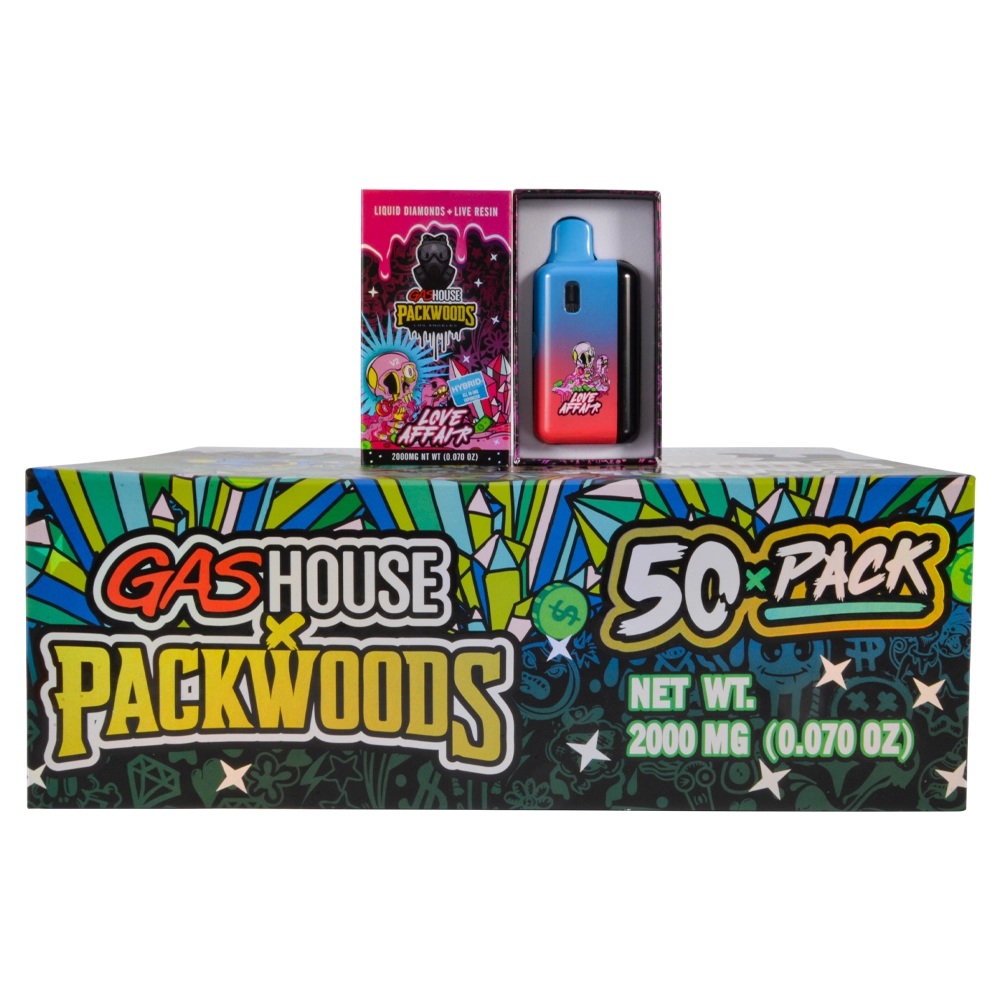
Gas House Packwoods — Specs, Coil Tech & Total Cost of Ownership (TCO)
Who this is for: retail buyers, distributors, and experienced adult consumers comparing 2 g disposables by specs, coil tech, and lifetime cost—while staying within safety and compliance guardrails.
At-a-glance (spec-oriented, no hype)
-
Fill mass & format: marketed as a “2 g disposable” (mass), not volume. Some sites list ml; do not assume 1 g = 1 ml because density and formulation vary (live resin, “liquid diamonds,” terpene content). Always read the label and spec sheet; grams and milliliters are not inherently interchangeable.
-
Coil technology: ceramic atomization (favored for viscous extracts) to distribute heat more evenly and preserve terpene fidelity when properly designed and validated.
-
Power: rechargeable Li-ion with USB-C is common; if present, confirm over-charge/over-discharge protection and venting pathways with the supplier’s electrical/safety test summary. See battery-safety guidance below. NFPA
Verification note: treat any spec or performance claim as vendor-asserted until you can review a batch COA (from an ISO/IEC 17025–accredited lab) and a basic device safety dossier (charging IC, protections, and materials declarations). Department of Cannabis Control
Compliance & safety: the trust checklist you should demand
-
COA from an ISO/IEC 17025–accredited lab (per state rules like California DCC): cannabinoid profile plus required contaminant panels (e.g., residual solvents, pesticides, heavy metals, microbials, mycotoxins). Ask for the accreditation scope and lab certificate. Department of Cannabis Control+2Westlaw+2
-
Jurisdictional fit: cannabis rules are state-specific. If selling in CA, confirm panels match DCC regs; if selling hemp (CBD/Δ8, etc.) in states like LA, regulators also require COAs from ISO/IEC 17025 labs. Verify locally before listing. Westlaw+1
-
Age-gating & retail controls: U.S. Tobacco-21 is federal law for all tobacco products incl. e-cigarettes; while cannabis is governed by state law, you should still implement 21+ age gates, ID checks, and point-of-sale controls (and follow FDA retail rules if any nicotine devices are sold on the same site or premises). Public Health Law Center+3Federal Register+3U.S. Food and Drug Administration+3
-
Device safety basics: request evidence of protections (OCP/OVP/OTP/short-circuit) and materials safety statements. Educate customers with Li-ion charging do’s/don’ts (UL-listed chargers, ventilated charging, don’t charge near exits/flammables; stop using if swelling/odor/heat). NFPA+1
-
Evolving standards: ASTM D37 is actively developing vape device and ingredient safety standards; some certification bodies are integrating these as they finalize. Track and adopt as they publish. Cannabis & Tech Today+2mg Magazine+2
Specs & coil tech (what to look for, and how to verify)
Fill & formulation clarity
-
Request a spec sheet that lists net contents by mass (g) and formulation type (e.g., live resin, diamond-infused, terpene %). Avoid mixing units in your copy. If your upstream lists ml, ask for the density (g/ml) and show both with a range rather than a hard equivalence.
Ceramic coil design
-
Ceramic atomizers can deliver even heat distribution for viscous extracts; performance depends on porosity, wicking path, and power profile. Ask vendors for: (a) coil resistance (Ω), (b) nominal wattage curve, (c) dry-hit mitigation testing, and (d) extract compatibility validation (live resin vs. distillate).
-
If a screen or power modes are present, request firmware safeguards and lockouts documentation.
Battery & charging
-
Prefer embedded Li-ion packs with a protected charge IC and USB-C port. Include consumer-safe charging instructions on PDPs and boxes (UL charger, room-temp charging, don’t charge unattended). These align with mainstream safety bodies’ guidance on Li-ion risk mitigation. NFPA+1
TCO (total cost of ownership) without unverifiable claims
Instead of quoting unverified “puff counts” or third-party retail prices, use a transparent, input-based TCO model you can document:
Inputs you (or your vendor) can substantiate
-
Unit ex-works or landed cost (USD)
-
Fill mass (g) and expected consumption rate per user cohort (e.g., light/moderate/heavy) measured from your own sell-through + returns data
-
Defect/RMA rate across batches (aim for ≤2–3% with ceramic coils; publish your real rate quarterly)
-
Recharge cycles until empty (observed median)
Formulas
-
Cost per gram consumed = (unit cost × (1 – RMA%)) / net grams actually consumed
-
Cost per session = cost per gram × grams consumed per session (you define session = X draws or Y mg)
-
Inventory carrying cost factor = capital cost × average days on hand / 365
Publish the inputs and observation window on the blog so buyers can audit your math. If you later collect reliable, third-party-sourced market ranges (with links), you can add them as cited examples, not absolutes.
Comparison framework (evidence-first)
Use a framework the editor can render as a table, but populate only what you can verify:
| Dimension | Gas House Packwoods (as supplied to you) | Comparable 2 g disposable | Notes |
|---|---|---|---|
| Fill (mass) | 2 g (label) | 2 g (label) | Provide density if any brand lists ml |
| Extract type | Live resin / “liquid diamonds” (vendor spec) | Live resin | Link spec/COA |
| Coil | Ceramic (Ω range: vendor-declared) | Ceramic | Request resistance + wattage curve |
| Battery | USB-C embedded Li-ion | USB-C | Ask for protections (OCP/OVP/OTP/SCP) |
| COA | Batch COA (ISO/IEC 17025 lab) | Batch COA | Link COA PDFs; check panels per state Department of Cannabis Control+1 |
| RMA rate | Your 90-day observed % | Peer % (if available) | Publish your own |
| TCO | Show your inputs & math | Show inputs | No retail hearsay |
Risk & responsible-use messaging (put this near the top of the PDP/blog)
-
Adults 21+ only. Implement age-gating and ID verification consistent with U.S. federal Tobacco-21 enforcement norms for e-cigarettes; apply equal or stricter controls for THC where legal. Retailers may not sell to people under 21. Federal Register+1
-
Know your jurisdiction. Cannabis product legality, testing panels, and labeling vary by state. Verify state rules (e.g., CA DCC) before purchase or resale. Westlaw
-
Battery safety. Charge in ventilated areas using certified chargers; don’t charge near exits/flammables; discontinue use if the device overheats, swells, smells odd, or leaks. NFPA+1
-
Health caution. Inhalation carries risk; avoid use if pregnant, nursing, or with respiratory/cardiovascular conditions. (Add your local regulatory phrasing as required.)
FAQ (now evidence-aligned)
Is “2 g ≈ 2.0 ml”?
No. Grams measure mass; milliliters measure volume. Extract density varies with composition (cannabinoid %, terpenes, diluents). If a supplier uses ml, ask for density so you can state both units accurately—avoid hard equivalences in copy.
How do I verify safety and compliance?
Ask for a batch COA from an ISO/IEC 17025–accredited lab and check that required panels match your state’s rule set (example: CA DCC lists residual solvents, pesticides, microbials, metals, mycotoxins). Confirm the lab’s accreditation status and scope. Department of Cannabis Control+1
Are there recognized device standards?
ASTM D37 committee is publishing cannabis-vape device and ingredient standards; certification programs are beginning to incorporate them as they finalize. Track and adopt as they’re published to strengthen buyer trust. mg Magazine+2Cannabis & Tech Today+2
Any special battery precautions?
Yes—follow mainstream fire-safety guidance for Li-ion packs: use manufacturer-recommended chargers, avoid damaged devices, charge in ventilated areas away from combustibles, and never charge near exits. NFPA+1
Plain-language legal & safety disclaimers (add these to the page footer)
-
Adults 21+ only. No sale to persons under 21. ID verification required at purchase and delivery. Federal Register
-
Jurisdiction notice. Cannabis products and accessories are subject to state law. Availability, labeling, and testing requirements vary by state. You are responsible for complying with local regulations (e.g., CA DCC testing). Westlaw
-
Safety & COA. Do not use products without reviewing the batch COA issued by an ISO/IEC 17025–accredited laboratory; avoid products lacking test detail for residual solvents, pesticides, heavy metals, microbials, and mycotoxins. Department of Cannabis Control+1
-
Battery caution. Lithium-ion batteries can overheat if damaged or misused. Charge with certified equipment, in ventilated areas, and stop using if overheating occurs. NFPA
-
Information only. This page is for informational/educational purposes and not medical or legal advice.
What changed vs. your previous draft (and why)
-
Removed unverifiable price tiers, “700-puff” promises, and “verified compliance” phrasing.
-
Replaced them with a TCO framework you can support with your own inputs + posted COAs.
-
Clarified mass vs. volume to avoid 2 g ≈ 2.0 ml equivalence errors.
-
Added COA/ISO 17025, state testing panels (CA DCC example), T21 age controls, and battery safety with citations. NFPA+3Department of Cannabis Control+3Westlaw+3
-
Added ASTM D37 standards-in-progress to show alignment with evolving best practices.
If you want to know more gas house vapes, pls go through these pages:gashouse packwoods disposable vape|2 grams disposable wholesale
0 Comments