
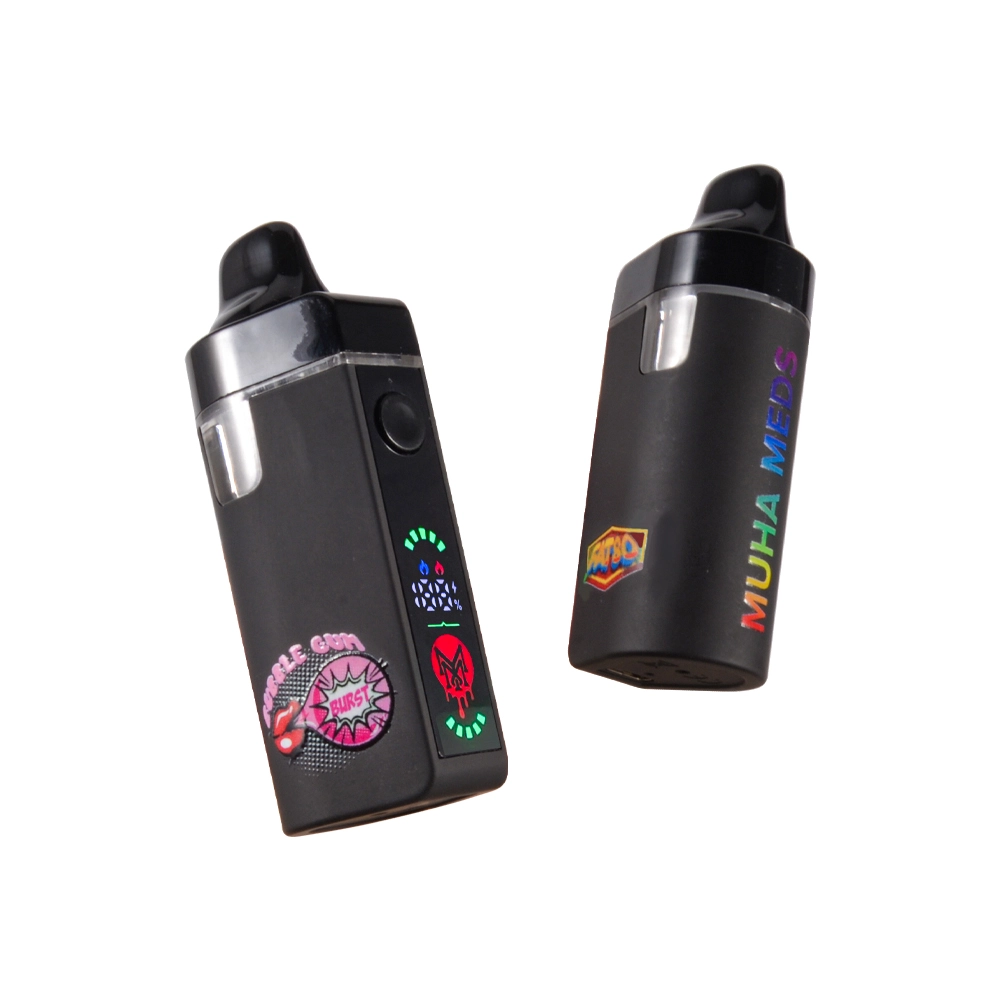
From Sample to Bulk: How to Standardize Muha Meds Dual Chamber Empty Disposables for B2B
Audience: B2B wholesalers, distributors, and filling labs.
Focus: Empty hardware only (no oil/THC/nicotine included).
Who this guide is for (and what “empty dual chamber” means)
B2B readers, not consumer reviews
If you’re sourcing “Muha Meds dual chamber empty disposables” through Vapetech420, you’re typically solving operational problems: keeping DOA and leak rates low, reducing cross-chamber complaints, and making sure warehouses can pick the right SKU every time. That’s what “standardize from sample to bulk” really means—repeatable outcomes, not one impressive prototype.
Empty hardware only: keep the message clean
This article stays strictly in the “hardware-only” lane. Your downstream partners will handle local compliance, filling, labeling, and market-specific requirements. In your blog and product messaging, this clarity reduces confusion and helps customers understand what they’re buying: a ready-to-fill device chassis.
Quick specs snapshot (what you should standardize first)
Use a single “Specs Snapshot” in every PO, label, and QC sheet
Standardization starts by copying the same core spec block everywhere—your purchase order, your warehouse receiving checklist, your supplier confirmation, and your master carton label template.
Specs Snapshot (Example Platform)
| Spec | Target | Why it matters in bulk |
|---|---|---|
| Tank Volume | 1ml + 1ml (dual chamber) | Defines fill workflow, chamber separation risk, and “two-in-one” merchandising. |
| Battery Capacity | 320mAh | Battery-to-tank balance impacts “weak hits” complaints and support tickets. |
| Charging | Type-C | Common cable availability reduces friction and returns tied to “can’t finish device.” |
| Resistance | 1.4Ω | Heat profile affects perceived smoothness and burnt-hit risk depending on fill. |
| Intake Oil Holes | 4 × 1.6mm | Wicking capacity vs flooding/condensation risk when oils vary. |
| MOQ | 200pcs/lot (EU warehouse example) | Defines carton math, sampling plan structure, and inventory planning. |
| Packaging | Small boxes + master boxes + stickers | Protects product, enables fast pick-pack, and prevents wrong-SKU shipments. |
Tip: choose a single “reference spec block” and treat any change as a formal version update (V1 → V2), never as a silent substitution.
Why a great sample doesn’t guarantee a great bulk lot
Samples are often “best-case” units
Many bulk failures happen because the sample was built with extra attention while mass production introduces variance: slightly different seal compression, small alignment shifts, inconsistent assembly torque, or component sourcing substitutions. Your job is to ensure the bulk lot behaves like the sample—not just “looks like it.”
The real cost is not the unit price—it’s the exception rate
At scale, small percentages become big numbers. If even a tiny fraction becomes DOA, leaky after shipping, or cross-leaks between chambers, you pay through replacements, reships, and customer churn.
Define pass/fail KPIs that match B2B reality
Track these four metrics by batch (not by “overall impression”)
Units that won’t fire or won’t charge on arrival. Log by lot code + warehouse receipt date.
Measure post-fill, after a rest period, and after transit simulation. Separate “cosmetic seep” vs functional leak.
Dual chamber risk: flavor A bleeding into B, or switching mechanism causing mixed airflow paths.
Often described as gurgle, spitback, tight draw, or “intermittent hits.” Track wording patterns.
Write your acceptable thresholds internally (even if you don’t publish them). The key is consistency: every lot gets measured the same way, and failures trigger the same supplier actions every time.
QC checklist (minimum standard) for dual chamber empty devices
Incoming inspection: cosmetics + assembly integrity
- Seams & fit: no gaps, no rocking, no twisted alignment.
- Mouthpiece: tight fit, no wobble, no sharp edges.
- Switching feel: chamber selection must be consistent and repeatable (no “half positions”).
- Airflow: draw resistance consistent unit-to-unit; no blocked airway.
Electrical checks: fast but non-negotiable
- Fire test: activation, consistent cut-off, no blinking error modes during normal draw simulation.
- Charge test (Type-C): stable charging connection; no intermittent disconnect; port integrity.
Dual chamber-specific checks
- Chamber separation: confirm seals and internal partitions are intact (no obvious mixing path).
- Switch reliability: repeat switching cycles to detect early looseness or “ghost mixing.”
- Condensation behavior: check for pooled moisture around mouthpiece after repeated draw simulations.
Sampling plan: how to test “200pcs/lot” without wasting time
Use layered sampling (carton → inner packs → units)
A practical plan is layered, not random: sample across cartons and across positions (top/middle/bottom), because variance often clusters by assembly station or packaging stack.
Suggested workflow
- Carton-level: pull units from multiple cartons (not just the first one opened).
- Position-level: pull from different layers inside cartons to catch compression or handling effects.
- Test split: allocate units to (a) electrical checks, (b) mechanical handling, (c) fill simulation.
What “good” looks like
- Near-zero DOA in incoming checks
- No visible assembly variance patterns
- Switching stays consistent after repeated cycles
- Leak/cross-leak issues do not spike after transit simulation
Note: If you already operate with AQL, keep it—but make sure dual-chamber failure modes (cross-leak and switching defects) are explicitly included.
Golden sample locking: the simplest way to stop “spec drift”
Version control prevents surprise substitutions
Spec drift is when a supplier changes a component (cell, coil, seals, plastic resin, tooling tolerance) without telling you—often “equivalent” on paper but different in failure rates. The fix is boring and effective: lock a golden sample, lock a spec sheet, and require written approval for any change.
What to lock (minimum)
- Full specs snapshot (1ml+1ml, 320mAh, Type-C, 1.4Ω, 4×1.6mm)
- Photos of internals and seam lines (what “correct assembly” looks like)
- Packaging standard (small box, master carton, sticker fields)
- Lot/batch code format and where it appears
Pre-production validation: how to bridge sample performance to bulk reliability
Do a small run that looks like a real shipment
Your pre-production validation should mimic bulk conditions: multiple cartons, typical packing density, normal handling, and a simple transit simulation. If your partners are filling the devices, include a small fill simulation using the expected viscosity range so you can observe leak and condensation patterns.
14-day observation beats a 10-minute “it works” test
Many issues are time-dependent: seals relax, condensation accumulates, switching loosens, or charging ports fail after repeated cycles. Keep a short log (daily notes) to capture trends before you commit to thousands of units.
Warehouse standardization: make pick-pack idiot-proof
Packaging is a scaling tool, not decoration
“Small boxes + master boxes + stickers” is a B2B-friendly format because it supports both retail presentation and warehouse efficiency. Your goal is to prevent two expensive errors: wrong-SKU shipments and untraceable returns.
Sticker/label fields to standardize
- SKU name + version: “Muha Dual Chamber Empty (Vx)”
- Core specs: 1ml+1ml, 320mAh, Type-C, 1.4Ω
- Lot code: production month + line/shift code (whatever your supplier can provide consistently)
- Carton count: units per master carton + total cartons per pallet
- Warehouse node: EU/UK/US location tag for routing decisions
Battery transport readiness: what to ask for (without over-promising)
UN 38.3 testing and test summaries: treat as procurement hygiene
Lithium cells and batteries offered for transportation must have passed UN 38.3 design tests, and manufacturers must make test summary documents available upon request (per PHMSA guidance). This matters for smooth shipping operations and supply-chain confidence—especially when you’re routing inventory across warehouses and carriers.
Write the requirement into your supplier checklist
- Confirm the battery design has passed UN 38.3
- Request the lithium battery test summary document (or confirmation it’s available upon request)
- Keep documentation linked to your lot/batch record for traceability
Closing: your “sample → bulk” standardization checklist
What to standardize
- One specs snapshot used everywhere (PO, QC, labels)
- Batch KPIs: DOA, leak, cross-leak, condensation
- Layered sampling plan for every lot
- Golden sample + change-control rules
- Warehouse label fields and carton math
What to customize safely
Customize the surface (box art, colors, campaign naming) while keeping the platform stable. That’s how you turn a “great sample” into a reliable B2B SKU that keeps getting reordered.
If you want to more vape wholesale pls go through these pages:muha meds wholesale|muha meds dual chamber|muha meds bulk 2025
0 Comments