
Adults 21+ | Hardware-only information
This page focuses on empty disposable vape hardware that is compatible with Muha Meds–style products. Vapetech420 supplies shells, batteries, and packaging only. Filling with THC, CBD, or other extracts must be handled by qualified labs and brands according to local laws. Nothing on this page is medical, legal, or dosing advice.
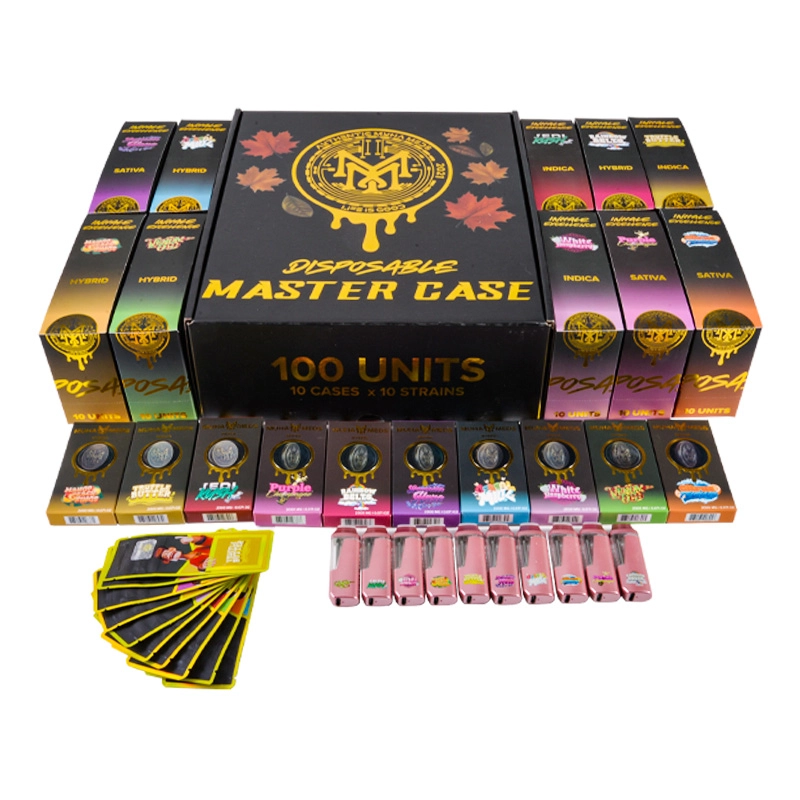
If you work with Muha Meds–style devices or you are a distributor serving that audience, you have more options now than just a single 1 gram pen. The Muha ecosystem on Vapetech420 includes 1 g disposables, 2 g high-capacity devices, 1 g+1 g dual-chamber formats, and upgraded shells with LED effects and 2024–2025 designs. Choosing between these options is mainly a hardware and supply-chain decision: capacity, battery, charging, and safety standards.
Who should think about Muha disposable hardware options?
Existing Muha users and brand fans
If your end-customers already like Muha Meds–style devices, they are familiar with compact all-in-one pens and clear branding on the shell. For them, the main questions are:
- Do they prefer a smaller 1 g pen or a longer-lasting 2 g device?
- Do they want simple single-strain pens or flexible dual-chamber and LED options?
- Do they care more about pocketability, or do they like a “statement” device with a light-up body?
The hardware you choose should make it easy for your partners to fill and test while still feeling familiar in the hand for Muha Meds fans.
Labs, fillers, and white-label brands
For labs and white-label brands, Muha-style empty disposables are first and foremost a tooling choice:
- Oil compatibility: matching coil resistance, intake-hole size, and tank geometry to your live resin, distillate, or rosin.
- Process compatibility: being able to run 1 g and 2 g shells on similar filling fixtures and QC protocols.
- Compliance & documentation: getting proper spec sheets and battery test reports from suppliers.
A good Muha-style hardware platform should let labs standardize on a small set of shells and then scale production without constantly re-validating new devices.
Retailers and resellers
Retailers and B2B distributors care about:
- Having a clear price ladder between 1 g, 2 g, and dual-chamber options.
- Inventory that is easy to explain to budtenders or store staff.
- Box sizes and packaging that fit current shelves and planograms.
For this group, the most useful information is which hardware format works best for their typical basket size and how quickly each option turns on the shelf once it has been filled by their partner labs.
Main disposable hardware formats for Muha Meds users
Vapetech420 carries several Muha Meds–style hardware families. Below is a hardware-first look at the main options. Product names here are examples; always refer to the actual product pages for final specs and availability.
1 g Muha Meds empty disposable devices
A 1 g empty disposable is the classic Muha format: compact, pocket-friendly, and ideal for test markets or “starter” price points. On Vapetech420, 1 g families such as the USA Muha Meds 1 g empty disposable typically feature around 1 ml tank volume and a battery in the ~280 mAh range, designed to comfortably support the full fill volume under normal use.
Because 1 g pens are physically smaller, they:
- Fit easily into most existing retail displays.
- Use less packaging material per unit.
- Work well for new strains, new formulas, or conservative consumers.
| Format | Typical tank volume | Typical use case |
|---|---|---|
| 1 g Muha-style disposable | ~1 ml | New SKUs, trial packs, entry-level pricing |
Note: Actual capacity, battery size, and materials depend on the specific 1 g Muha product you select. Always check the technical specification section on the product page and confirm with your supplier.
2 g Muha Meds empty disposables (high-capacity shells)
2 g Muha Meds–style shells are designed for customers who prefer longer sessions and fewer replacements. A typical 2 g configuration such as the 2024 Muha Meds 2 g empty disposable uses:
- Tank volume around 2 ml.
- Battery capacity around 240 mAh.
- Intake oil holes such as 2 × 1.8 mm.
- Ceramic coil with resistance around 1.4 Ω.
That combination is commonly used in the industry to balance wicking for thicker oils with good battery life and consistent vapor output. For brands, 2 g shells are attractive because the cost per ml of hardware usually drops compared with 1 g, even though the unit price is higher.
1 g+1 g dual-chamber Muha Meds disposables
Dual-chamber Muha Meds empty disposables split the device into two independent 1 g chambers, often with a toggle or selector that lets the user switch sides. This hardware is popular for:
- Pairing two different oil formulas in one device.
- Letting users alternate between daytime and nighttime blends without carrying two pens.
- Promotional or seasonal packs that combine two limited-edition formulas.
For labs and fillers, a dual-chamber 1 g+1 g shell behaves like two matched 1 g cartridges inside one housing. Filling procedures are usually similar to 1 g singles; QC just needs to verify both sides individually.
LED and upgraded shell options (2024–2025 Muha Meds hardware)
The Muha Meds catalog on Vapetech420 also includes LED and “with light” 2 g shells, as well as updated 2025 designs. These hardware options keep the basic tank and coil architecture but add:
- LED effects that light up on draw.
- More refined housing, colors, and finishes.
- Battery and charging layouts optimized for higher-capacity use.
These devices are often used as “hero” or premium SKUs in a Muha-style line: the same oil that might be offered in a simple 1 g pen can be positioned as a flagship product when loaded into a 2 g LED shell.
How to choose the right Muha Meds empty disposable hardware
Match hardware to oil viscosity and formulation
Live resin, distillate, rosin, and blended oils behave differently under heat. When choosing Muha-style shells:
- Confirm the coil resistance (for example, around 1.2–1.4 Ω ceramic) and recommended power range.
- Check intake-hole size and count (e.g., 2 × 1.8 mm or 4 smaller inlets).
- Ask the supplier whether the same internal core is used for both 1 g and 2 g variants.
Using the same internal platform across capacities makes it easier for labs to validate a single set of filling and storage parameters, and then apply them across multiple SKUs.
Budget, MOQs, and order size
From a cost perspective:
- 1 g shells usually carry a lower unit cost and lower minimum order quantity.
- 2 g and dual-chamber devices often offer better cost per ml, but require higher upfront capital.
- LED and upgraded shells sit at the top of the price ladder and make the most sense for high-rotation SKUs.
Many B2B buyers start with a mix (for example, 70% of the volume in 1 g, 30% in 2 g or LED devices) and then re-balance based on sales and feedback.
Retail channel and customer profile
For retail-heavy channels:
- Use 1 g Muha-style devices as entry-level or “trial” SKUs.
- Reserve 2 g and LED shells for returning customers and brand-loyal segments.
- Deploy dual-chamber hardware where customers are already familiar with strain blending and want variety.
For medical or highly regulated channels, always let local rules and licensed processors guide which capacities and housings are appropriate.
Safety, standards, and documentation for Muha-style disposables
Even though Muha Meds devices are small, they still contain lithium batteries, heating elements, and electronic circuits. Serious brands now treat hardware safety and documentation as a non-negotiable requirement.
Electrical and battery safety (UL 8139)
UL 8139 is a widely recognized safety standard that evaluates the electrical systems of electronic cigarettes and vaping devices, including the battery, heating element, and charging system. Devices built and tested to UL 8139 are designed to reduce risks such as short circuits, thermal runaway, and charging failures.
When you choose Muha-style empty disposables, ask:
- Whether the battery type and configuration are compatible with UL 8139 testing.
- Whether your supplier or OEM can provide evidence of testing by a third-party lab.
Transport safety for lithium batteries (UN 38.3)
Before lithium batteries can be shipped internationally, they are expected to pass a series of tests under UN 38.3. These tests simulate extreme conditions such as altitude, temperature cycling, vibration, shock, short circuit, and over-charge during transport. Devices that use compliant batteries are less likely to cause incidents in transit and are easier to move through global logistics networks.
For Muha-style disposables shipped in bulk:
- Request a UN 38.3 test summary from your hardware supplier or battery vendor.
- Keep these records on file to support logistics partners and regulators if needed.
Material and chemical regulations (RoHS, REACH and others)
Beyond electrical and transport safety, many markets reference:
- RoHS – EU rules that restrict certain hazardous substances in electrical and electronic equipment, to protect human health and the environment.
- REACH – the EU regulation governing registration, evaluation, and restriction of chemicals, used to manage chemical risks across supply chains.
- ISTA 3A and similar packaging tests – to check whether fully packed devices can withstand drops, vibration, and shipping stresses.
For brands shipping filled Muha-style devices into RoHS/REACH markets, selecting hardware that was designed with these frameworks in mind makes future compliance and documentation much easier.
Sourcing and authenticity checklist for Muha disposable hardware
Key specification points to confirm
Before you commit to any 1 g, 2 g, or dual-chamber Muha Meds–style device, make sure you have a consistent spec sheet that covers:
- Tank volume and capacity (e.g., 1 ml, 2 ml, 1 g+1 g).
- Battery capacity and chemistry (with UN 38.3 test information available).
- Coil type and resistance (ceramic vs. other materials, Ω value).
- Intake-hole configuration and recommended oil viscosity range.
- Charging method (USB-C, micro-USB, or non-rechargeable).
- Housing materials and seals, especially for leak prevention.
Using unified spec templates across all your Muha-style SKUs will reduce confusion internally and help downstream partners standardize their handling procedures.
Authenticity, traceability, and QR codes
Because Muha Meds is a popular style in the market, counterfeit packaging and unverified hardware are common. When you source empty shells:
- Work with suppliers that provide batch-level serials or QR codes on master cartons and packaging.
- Use QR codes or lot numbers to connect each batch back to test reports and spec sheets.
- Avoid “no-name” shells that cannot be traced to a specific factory or production run.
For finished, filled products, end users should always follow their local rules and purchase only from licensed, regulated channels. As a hardware wholesaler, you can support that trust by keeping your own documentation in order.
Supplier vetting tips
Basic vetting steps for any Muha-style hardware supplier:
- Ask for recent photos and videos of their actual Muha-style production lines.
- Start with small trial orders and perform incoming-goods inspection on each batch.
- Check that packaging, printing quality, and seals match the approved artwork.
- Verify that contact windows, battery contacts, and airflow paths are consistent across samples.
FAQ: disposable vape options for Muha Meds users
Are Muha Meds disposables on Vapetech420 sold empty or pre-filled?
The Muha Meds–style products on Vapetech420 are listed and sold as empty disposable hardware for B2B buyers. Labs and brands that are properly licensed in their jurisdiction can fill these shells with their own formulations. Vapetech420 does not supply THC, CBD, or any other active oil.
What is the practical difference between 1 g and 2 g Muha Meds hardware?
A 1 g pen is smaller and easier to position as a trial or entry-level SKU, while a 2 g shell offers more capacity per device and is better suited to loyal or heavy users. On the hardware side, 2 g devices use a larger tank and are paired with batteries sized to support that extra volume. From a supply-chain point of view, 2 g reduces the number of units you move for the same amount of oil.
When does it make sense to use dual-chamber Muha Meds shells?
Dual-chamber 1 g+1 g shells are most valuable when you already have a strong audience that understands multiple formulas or flavor families. They are ideal for:
- Pairing complementary oil types in one device.
- Seasonal or “day & night” bundles.
- Retailers who want to offer more variety without adding extra SKUs on the shelf.
Can end users refill a Muha Meds disposable pen?
Muha Meds–style disposables are designed as single-use devices at the consumer level. While labs and brands fill them during manufacturing, they are not intended to be re-opened and re-filled by end users. Trying to disassemble and reuse a disposable shell can damage seals, compromise the battery, and increase safety risks.
What should I ask a supplier before placing a large order for Muha Meds-style hardware?
At a minimum, request:
- A complete spec sheet for each 1 g, 2 g, dual-chamber, or LED device you plan to buy.
- UN 38.3 test information for the batteries and any available safety reports.
- Details on warranty, defect-rate policies, and how they handle DOA or leakage claims.
- Clear lead times, MOQs, and price breaks for initial and repeat orders.
With these basics covered, you can build a Muha-style hardware program that is safer, more compliant, and easier to scale over time.
If you want to more vape wholesale pls go through these pages:muha meds wholesale|muha meds dual chamber|muha meds master case wholesale
0 Comments