
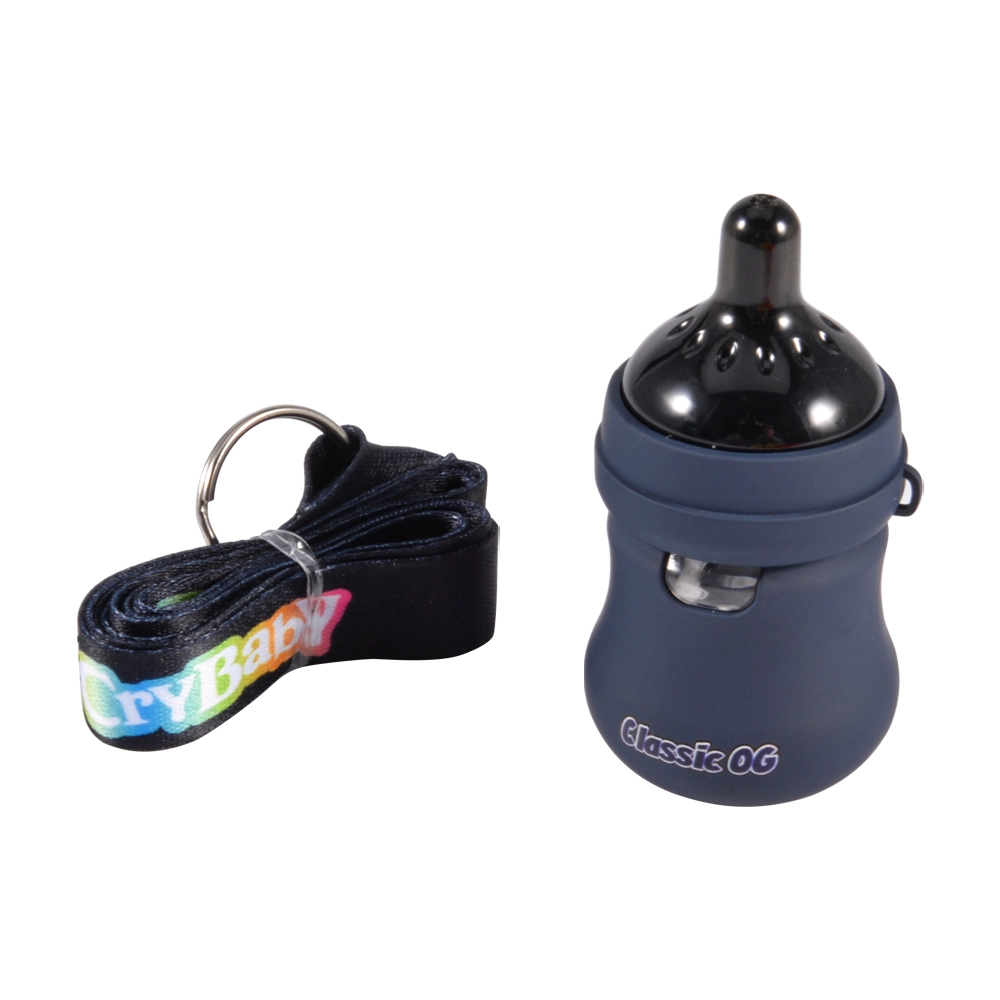
Crybaby Disposable 2g Baby Bottle Empty Hardware: Sourcing Guide
Scope & audience (empty hardware only)
Who this guide is for (B2B wholesale, distributors, OEM/ODM)
This guide is written for wholesale buyers, distributors, and OEM/ODM teams who source empty disposable hardware and need a repeatable process to reduce version drift, DOA, and receiving disputes.
What “empty hardware” includes (shell, battery, heater, airflow, packaging)
“Empty hardware” in this article refers to the physical device and its commercial pack-out only, including:
-
Housing/shell, mouthpiece, seals and gaskets
-
Battery, charging interface, protections, indicator lights/screen (if present)
-
Heating core/atomizer/heater assembly (hardware specification and stability expectations)
-
Airflow path and activation mechanism (button/draw-activation)
-
Packaging: unit box, inserts, master carton, carton marks, lot codes
What this guide does not cover (no filled products, no effects, no filling workflows)
This guide does not discuss any filled products, contents, potency, effects, flavors, or any filling/processing workflows. Brand/model names are used strictly for listing identification and procurement discussions.
Quick sourcing summary (what to verify before you ask for a quote)
The 60-second spec checklist (must-have fields)
Before you request pricing, confirm you can obtain these fields in writing:
-
Model name + “2g baby bottle” designation as used in your listing system
-
Hardware type: draw-activated or button, indicator/screen yes/no
-
Charging: interface type, charge behavior (while charging allowed or not), protections
-
Battery capacity (mAh) and stated protection features (overcharge/overcurrent/short protection)
-
Heater/atomizer identifier (type + target resistance range if supplier provides it)
-
Materials/finish (housing, mouthpiece, seal material)
-
Packaging configuration (unit box + master carton qty)
-
Traceability: lot/batch code format + where it’s printed
If the supplier cannot provide these cleanly, you will likely see “same name, different hardware” issues later.
The 3 most common sourcing mistakes (and how to avoid them)
-
Name-only sourcing (buying by a product name without a version code)
Fix: require SKU governance—a version identifier and a locked spec sheet per SKU. -
No receiving rules (no DOA definition, no evidence chain)
Fix: define DOA window, evidence requirements, and remedy terms in the PO. -
Packaging drift (cartons arrive with weak marks or mixed variants)
Fix: enforce carton marks, inner segregation, and lot coding that matches your receiving SOP.
What “2g” means in listings (capacity label consistency and version control)
In wholesale sourcing, “2g” is often used as a commercial listing label. Your risk is inconsistency: the same “2g” label may be applied to different internal hardware versions. Treat “2g” as a listing field—and lock the real procurement control points (version code, packaging marks, and QC gates).
SKU governance and naming control (prevent version drift)
Recommended SKU naming format for “2g baby bottle” variants
Use a naming convention that forces uniqueness and makes receiving unambiguous. Example format:
CRY-BB-2G | [Activation] | [Charge Port] | [Indicator] | [Finish] | RevX
Example (internal):
CRY-BB-2G | Draw | USB-C | RingLight | MatteWhite | RevB
Your website title can remain marketing-friendly; your purchasing SKU must be operationally strict.
Version identifiers: what to request (batch/lot, revision, production date)
Require one of the following (preferably two):
-
Revision code (Rev A/B/C) tied to the spec sheet and BOM changes
-
Lot/batch code indicating production run
-
Production date code (YYYYMMDD or YYWW) printed on unit box and master carton
Image pack requirements (angles, ports, packaging photos, markings)
Ask for a standardized image pack before sampling:
-
Front/back/side device photos (high-res)
-
Close-ups: charging port, indicator/screen, airflow intake, bottom/contacts
-
Packaging photos: unit box (all sides), inserts, master carton marks
-
Photos of lot code placement (box + carton)
This prevents “photo substitution” and gives your team objective receiving references.
RFQ template (request-for-quote) that reduces back-and-forth)
Quote fields you must require (price, MOQ, lead time, Incoterms)
Include these fields in every RFQ:
-
Unit price by quantity tiers (e.g., 100 / 500 / 1000 / 2000 / 5000)
-
MOQ per SKU and per packaging configuration
-
Lead time (sample, pilot, mass production) + capacity constraints
-
Incoterms (EXW/FOB/CIF/DDP—use what your process supports)
-
Payment terms (deposit/balance milestones)
-
Box/carton specs (qty per carton; carton dimensions; gross weight)
Sample policy fields (sample cost, credit-back, sampling timeline)
-
Sample price + shipping method
-
Credit-back policy (deduct from first PO once quantity threshold is met)
-
Sample timeline and what constitutes “approved sample”
-
Whether samples come from production line or lab/pre-production
Warranty/DOA terms to lock before payment
-
DOA window (e.g., receiving + initial power-on window)
-
Definition of DOA (see RMA section below)
-
Remedy: replacement, credit, or reship criteria
-
Evidence requirements (what you must provide; what supplier must accept)
Hardware specifications to lock (the non-negotiables)
Battery (capacity, charging interface, protections, charge behavior)
Lock these points in the spec sheet:
-
Battery capacity (mAh) and battery supplier class (if disclosed)
-
Charging interface (e.g., USB-C) and indicator behavior
-
Protection features (short-circuit, overcharge, overcurrent)
-
Charging behavior policy (some buyers require “no use while charging” or specific LED behavior—define yours)
Heating core / atomizer (type, resistance range, stability expectations)
Even for empty hardware, procurement needs stability requirements:
-
Heater type identifier (as supplier defines it)
-
Target resistance range (if supplier provides) and tolerance expectations
-
Stability expectation: consistent activation, no abnormal heat spikes, no burnt odor from dry operation testing procedures (keep testing non-content-based)
Airflow & draw (adjustability, sealing points, tolerance risk)
-
Airflow path type and whether adjustable
-
Draw-activation sensitivity range (supplier should specify in measurable terms if possible)
-
Sealing points and tolerance risk areas (mouthpiece seals, bottom seals, port seal alignment)
Materials & finish (housing, mouthpiece, seals, odor/taint risk)
-
Housing material + finish (paint, UV, matte, soft-touch)
-
Mouthpiece material and surface requirements
-
Seal materials (silicone type if provided)
-
Odor/taint control requirement for packaging materials (common receiving complaint)
Packaging and compliance documentation (B2B-ready)
Packaging configuration (unit box, master carton, inserts)
Define pack-out like an engineering spec:
-
Unit box dimensions and artwork/version code
-
Insert type (foam, tray, blister—if any)
-
Master carton quantity, dividers, and internal segregation rules (no mixed variants unless explicitly allowed)
Required documentation set (packing list, carton marks, lot traceability)
At minimum:
-
Commercial invoice + packing list with SKU-level quantities
-
Master carton marks (SKU, qty, gross/net weight, carton number, lot code)
-
Lot traceability statement: how lot codes map to production runs
Label field consistency (model name, capacity label, variant codes)
Your website listing fields must match the physical package marks:
-
Model name and internal SKU
-
“2g baby bottle” label (as a listing field)
-
Variant code (finish/indicator/charge port)
-
Lot code format and placement
Plan: sample → pilot → mass production (gates and metrics)
Incoming inspection checklist (visual, fit, finish, leakage prevention)
Receiving inspection (hardware-only) should include:
-
Cosmetic: scratches, paint defects, misalignment
-
Fit: mouthpiece seating, port alignment, no loose rattles
-
Seal integrity indicators: consistent gaps, no warped gaskets, no visible adhesive overflow
-
Packaging integrity: crushed boxes, incorrect inserts, mixed variants
Functional testing checklist (power, draw activation, charging)
-
Power-on/indicator behavior: consistent activation response
-
Draw-activation consistency: sensitivity within your accepted range
-
Charging: port fit, charge initiation, indicator response
-
Basic safety sanity checks: no abnormal heating behavior during controlled dry functional checks (no content-based testing)
AQL / sampling approach (how to set pass/fail rules in PO terms)
Set a sampling plan that scales:
-
Samples: 100% check or high sampling, strict cosmetic and functional criteria
-
Pilot run: defined sample size with documented results and rework rules
-
Mass production: agreed AQL-like approach plus critical defect zero-tolerance categories (safety, charging faults, activation failures)
Common failure modes and root-cause signals (hardware-side)
-
Charging failures: port alignment, solder issues, protection circuit faults
-
Intermittent activation: sensor sensitivity drift, airflow path obstruction
-
Cosmetic drift: paint process inconsistency, tooling wear
-
Packaging mix-ups: carton marking errors, line segregation failures
Logistics and transit protections (reduce damage and mix-ups)
Carton spec and inner protection (drop/pressure considerations)
-
Require dividers/inner trays if devices are prone to scuffing
-
Define carton stacking limits and outer carton strength expectations
-
Use clear carton numbering (1/N … N/N) to prevent missing cartons
Moisture/temperature handling notes (storage and transport)
Even empty hardware can be impacted by:
-
High heat (adhesives/finishes)
-
Moisture (packaging deformation)
Define storage limits for your warehouse and request supplier packaging that reduces risk.
Warehouse receiving SOP (scan fields, photo proof, quarantine flow)
Create a simple receiving flow:
-
Scan carton marks → verify SKU/lot/qty
-
Photo carton marks + random unit box marks
-
Quarantine if mismatch found
-
Sample functional checks per lot
-
Release to inventory only after pass
Traceability and lot tracking (make disputes resolvable)
Lot/serial strategy (what to print and where)
Minimum viable traceability:
-
Lot code on unit box and master carton
-
Optional: device-level marking if your customers require it
Evidence chain: what to keep (photos, test logs, sample retention)
For each lot, retain:
-
Photos of carton marks and unit box marks
-
Receiving test log (date, tester, sample size, pass/fail)
-
Sample retention units (small controlled quantity for dispute resolution)
Change-control triggers (when a “new version” must get a new SKU)
Treat any of these as a new revision/SKU:
-
Charging port type changes
-
Indicator/screen behavior changes
-
Tooling changes affecting fit/finish
-
Packaging configuration changes that affect receiving or damage rates
Pricing, MOQ, and negotiation levers (without breaking QC)
Where price usually moves (packaging, finish, testing depth, lead time)
Price changes often come from:
-
Premium finishes or extra cosmetic requirements
-
Upgraded packaging (better inserts, dividers, thicker cartons)
-
Additional QC steps and tighter pass/fail thresholds
-
Short lead times and production scheduling priority
MOQ tiers and what they typically change (variants, colors, printing)
MOQs increase as you add:
-
More finish variants
-
Custom packaging print runs
-
Unique carton mark requirements per SKU
Negotiate fewer variants first, then expand after a stable revision is proven.
How to negotiate safely (lock specs before pushing price)
Sequence matters:
-
Lock spec sheet + image pack + lot coding
-
Approve sample
-
Run pilot with QC log
-
Only then negotiate price at scale with clear “no-change” terms
Supplier due diligence and red flags (avoid sourcing traps)
Verification steps (company info, factory capability signals, references)
-
Confirm the supplier can produce a consistent spec sheet and revision control
-
Request documented QC approach and sample-to-mass consistency
-
Ask for references in a similar procurement model (hardware-only B2B)
Red flags in listings (inconsistent photos/specs, shifting names)
-
Same product name with multiple conflicting photos
-
Supplier avoids providing lot coding or refuses carton marks
-
Specs change between sample and PO without formal revision notice
Contract red flags (no DOA terms, vague spec sheet, no lot tracking)
-
“As per sample” with no written spec sheet
-
No defined DOA window or remedy terms
-
No acceptance criteria for cosmetic/functional tests
RMA/DOA policy design (reduce returns, speed resolution)
DOA definition and time window (receiving + first power-on)
Define DOA precisely, for example:
-
“Device fails to activate under defined receiving test conditions”
-
“Charging fails to initiate under defined test method”
Set a receiving window (e.g., X days from delivery) and keep it consistent.
Evidence requirements (video/photo, lot code, sample units)
Require:
-
Lot code + carton number
-
Short video showing failure under your test method
-
Photos of packaging marks
-
Return of a small number of failed units if needed for analysis (define who pays freight)
Replacement/credit rules (what is fair and enforceable)
-
Under threshold: credit on next order
-
Above threshold: replacement shipment or negotiated credit
-
Chronic issues: revision review and change-control process
FAQ (B2B buyers)
What should I request first: spec sheet or sample?
Request the spec sheet and image pack first, then sample. If you sample without governance, you may approve a unit that later shifts in production.
How do I prevent “same name, different hardware” shipments?
Use strict SKU naming + revision codes + lot coding on both unit boxes and master cartons, and reject shipments that lack these marks.
What’s a reasonable DOA rate and how do I enforce it in a PO?
Do not rely on generic benchmarks. Define your own acceptance criteria, sample size, and remedy rules in the PO, based on your receiving SOP and customer expectations.
Which packaging fields are essential for warehouse receiving?
SKU, qty, carton number (X/N), lot code, gross weight, and a clear version/revision identifier that ties back to your approved spec sheet.
How do I set up lot tracking if the supplier has none?
Start with the minimum: require lot codes printed on unit boxes and master cartons, and keep receiving logs + photo evidence per lot. Expand to device-level marking only if your channel requires it.
If you want more vape wholesale, you can go through those pages: thc vape pen|2 gram disposable
0 Comments