
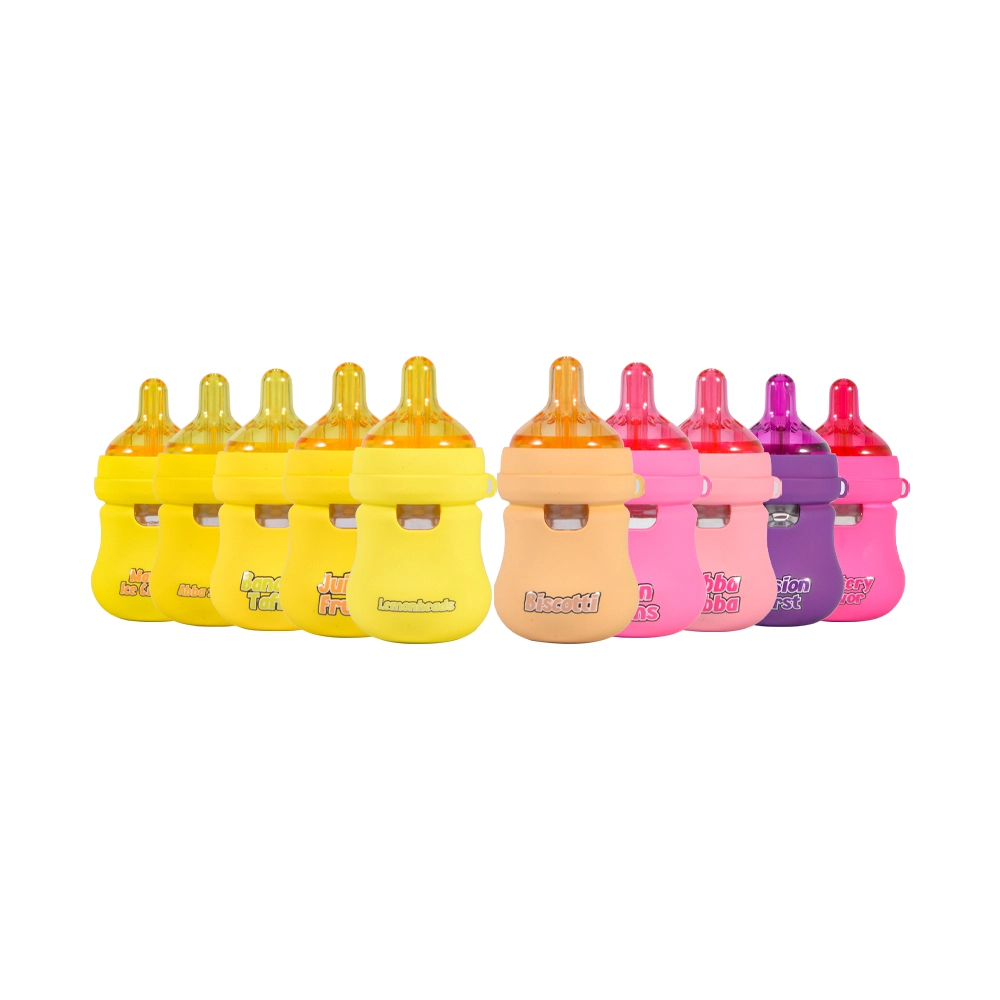
Crybaby 2ml Empty Disposable Specs & Buyer Checklist
Updated: 2026-01-23 · Audience: B2B buyers, sourcing teams, and compliance/QC stakeholders
Scope (empty only): This article covers empty “crybaby 2ml” disposable hardware specifications, listing fields, QC checkpoints, and a buyer checklist for wholesale procurement. It does not discuss oils/liquids, filling workflows, potency/effects, or any use with controlled substances. Always follow destination-market regulations and age-restriction requirements.
What this spec-and-checklist is for
The phrase crybaby 2ml empty disposable is commonly used in wholesale catalogs to describe an empty, single-use form-factor device shell designed around a nominal 2 ml reservoir footprint and a standardized set of listing fields (capacity, mouthpiece style, airflow, materials, charging interface, branding surface, packaging options). For procurement, your goal is not “marketing copy” — it is repeatable acceptance: correct SKU mapping, predictable incoming QC, and documentation that supports compliant distribution.
Specs snapshot (listing fields you should standardize)
Treat the table below as a purchase-order appendix. Even if your supplier offers “standard configuration,” you should lock these fields to prevent SKU drift across batches.
| Spec field | What to define | Why it matters (buyer impact) |
|---|---|---|
| Capacity class | Nominal reservoir footprint: 2 ml (label/packaging class) | Prevents listing mismatch; supports consistent packaging/label fields |
| Form factor | Disposable-style shell; single-unit hardware SKU | Ensures buyers don’t confuse with pod systems or cartridge-only SKUs |
| Mouthpiece / top style | Specify mouthpiece geometry (e.g., flat/duckbill/rounded) and material | Fit/finish consistency; reduces user complaints and returns tied to ergonomics |
| Airflow | Fixed airflow vs. adjustable (and adjustment mechanism if present) | Affects perceived draw; also a common failure point if poorly assembled |
| Materials | Outer housing material (plastic/metal), inner reservoir material, seals/gaskets type | Durability, odor migration risk, cosmetic defects, and acceptance criteria |
| Charging interface | Port type (e.g., USB-C) and placement; include tolerance for port alignment | Reduces RMA claims and dock/charger fit issues |
| Branding surface | Print method (silk/UV/laser), print zone dimensions, color tolerances | Controls reprint costs and “off-brand” appearance across lots |
| Packaging | Unit box + master carton spec; label fields; barcode format if applicable | Warehouse scanning reliability; reduces receiving errors |
| Compliance docs | Supplier declarations, material disclosures, QC report format, traceability fields | Supports importer/distributor due diligence and audit readiness |
Important note on “2 ml”
In B2B catalogs, “2 ml” is often used as a capacity class / listing label. For purchasing, define whether “2 ml” is (a) a nominal class used for packaging/market rules, and/or (b) a dimensional reservoir footprint. Your acceptance criteria should be based on documented spec + QC results rather than informal naming.
SKU control: naming rules to avoid warehouse confusion
Most procurement friction comes from SKU drift. To stabilize sourcing, build a SKU naming convention that includes: capacity class (2 ml), shell revision (if your supplier runs iterations), mouthpiece type, airflow type, charging port, and finish/branding.
Example SKU schema (adapt to your system)
- CRYB-2ML / Mouthpiece: DB (duckbill) / Airflow: FIX / Port: C / Finish: MATTE / Print: UV
- Use a visible revision code (R1, R2, etc.) if your supplier has tooling updates.
QC checkpoints (incoming inspection you can enforce)
The objective is to detect the defects that cause the majority of DOA/returns: cosmetic damage, port misalignment, loose components, airflow failures, and seal integrity issues. Keep QC measurements dry and non-content based.
Sampling method
- Define an AQL sampling plan (or an equivalent statistically grounded sampling rule) per shipment lot.
- Require the supplier to provide a lot ID and QC report tied to that lot ID.
Visual & cosmetic inspection
- Housing: scratches, dents, discoloration, seam gaps, misaligned panels
- Branding: print clarity, color shift tolerance, smudging, off-center placement
- Port cutout: clean edges, consistent placement, no tilt
Mechanical integrity
- Mouthpiece fit: no rocking, no loose movement, no sharp edges
- Button/switch (if present): consistent actuation feel, no rattling
- Airflow: consistent draw across sampled units; no blocked airflow
Seal & leak-risk screening (dry test)
- Dry air pressure hold or vacuum hold (as agreed with supplier) to screen for poor sealing
- Check gasket placement and uniform compression in assembly photos or line QC notes
Electrical baseline (non-content)
- Basic continuity/power-on check (where applicable) and port stability (no loose port)
- Reject criteria: intermittent connection, excessive heat during brief check, or unstable indicators
Acceptance criteria: Write defects in “objective language” (e.g., seam gap > X mm, print offset > Y mm, port tilt visible at Z angle) and attach reference photos. This makes disputes resolvable and repeatable.
Buyer checklist (wholesale procurement)
1) Supplier verification
- Company identity: registration details, factory address, production capability evidence
- Past performance: references, repeat-buyer proof, documented DOA/return handling
- Traceability: lot IDs, carton labels, and QC report linkage
2) Sampling and pre-production alignment
- Request a golden sample and lock a signed spec sheet before mass production.
- Confirm print files, branding zones, and packaging dielines.
- Confirm tolerance expectations for fit/finish (photos + measurable thresholds).
3) PO terms that prevent surprises
- Define: MOQ, lead time, lot size, shipment split rules, and revision-control requirements.
- Define a DOA policy: inspection window, replacement/credit process, evidence standards.
- Include change-control: supplier cannot alter materials/components without written approval.
4) Compliance and labeling (market-dependent)
- Confirm destination-market restrictions on capacity labeling, warnings, and packaging fields.
- Require consistent carton and unit-box identifiers (SKU, lot ID, quantity, date code).
- Keep claims minimal and verifiable; avoid unsubstantiated performance claims in packaging.
5) Packaging and logistics readiness
- Confirm unit packaging spec (box type, inserts, seals) and master carton strength.
- Confirm labeling format (barcodes if needed) for warehouse scanning.
- Document carton count per master carton and palletization preference (if applicable).
6) Your receiving workflow
- Set an incoming inspection SOP: AQL plan, defect photos, and lot-level quarantine rules.
- Define “stop-ship” triggers (e.g., systemic port defects, widespread cosmetic failures, missing lot IDs).
- Track defect rates by supplier lot to inform reorders and negotiations.
Common failure modes and how to write preventive requirements
Port misalignment and weak port seating
Preventive requirement: specify port type and a port-alignment tolerance, plus a “no wobble” standard during inspection. Ask for assembly process controls (jigs/fixtures) evidence.
Airflow inconsistency
Preventive requirement: define whether airflow is fixed or adjustable, and add an incoming test: “sampled units must pass a consistent draw check.” If adjustable, define the allowed range and reject conditions for loose/damaged adjusters.
Cosmetic drift across batches
Preventive requirement: lock the finish type, color reference, and print method. Require pre-production photos or first-article approval. Cosmetic drift is a major cause of buyer dissatisfaction even when units are functional.
Seal integrity variance
Preventive requirement: specify gasket materials (or at least gasket type) and require dry leak-risk screening at supplier QC plus incoming QC. Tie failures to lot ID for rapid corrective action.
Outline-ready section set (for your blog editor)
If your editor requires a standardized outline block, you can use the following section labels directly (H2/H3 preserved):
- What this spec-and-checklist is for
- Specs snapshot (listing fields you should standardize)
- Important note on “2 ml”
- SKU control: naming rules to avoid warehouse confusion
- Example SKU schema (adapt to your system)
- QC checkpoints (incoming inspection you can enforce)
- Sampling method
- Visual & cosmetic inspection
- Mechanical integrity
- Seal & leak-risk screening (dry test)
- Electrical baseline (non-content)
- Buyer checklist (wholesale procurement)
- Supplier verification
- Sampling and pre-production alignment
- PO terms that prevent surprises
- Compliance and labeling (market-dependent)
- Packaging and logistics readiness
- Your receiving workflow
- Common failure modes and how to write preventive requirements
- FAQ
FAQ (buyer-focused)
What MOQ should I expect for a crybaby 2ml empty disposable?
MOQ depends on whether you are buying a standard shell (lower MOQ) versus custom branding/packaging (higher MOQ). The procurement best practice is to separate your first order into pilot MOQ (validation) and scale MOQ (after defect-rate confidence).
What should be included in the sample request?
Request: unit samples, unit packaging sample, print/finish reference, and a draft QC report template. Confirm the lot/revision identification format so your sample matches later production.
How do I reduce DOA risk on arrival?
Use a defined sampling plan, objective defect criteria with photo references, and a DOA policy that specifies timelines and evidence standards. Also enforce revision control so components are not swapped without notice.
Which listing fields matter most for marketplaces?
Capacity class, form factor, mouthpiece style, airflow type, charging interface, finish/print method, and packaging identifiers (SKU/lot ID) are the fields most likely to cause confusion or returns if inconsistent.
Next steps (implementation)
- Convert the “Specs snapshot” table into a supplier-facing spec sheet and attach it to your PO.
- Write a one-page incoming QC SOP that references the checkpoints above and includes photo examples.
- Create a simple revision-control rule: no changes without written approval and a new revision code.
- Add a “Related resources” block in your CMS (shipping policy, DOA policy, contact page) once you confirm the exact URLs on vapetech420.com.
If you want more vape wholesale, you can go through those pages: thc vape pen|2 gram disposable
0 Comments