
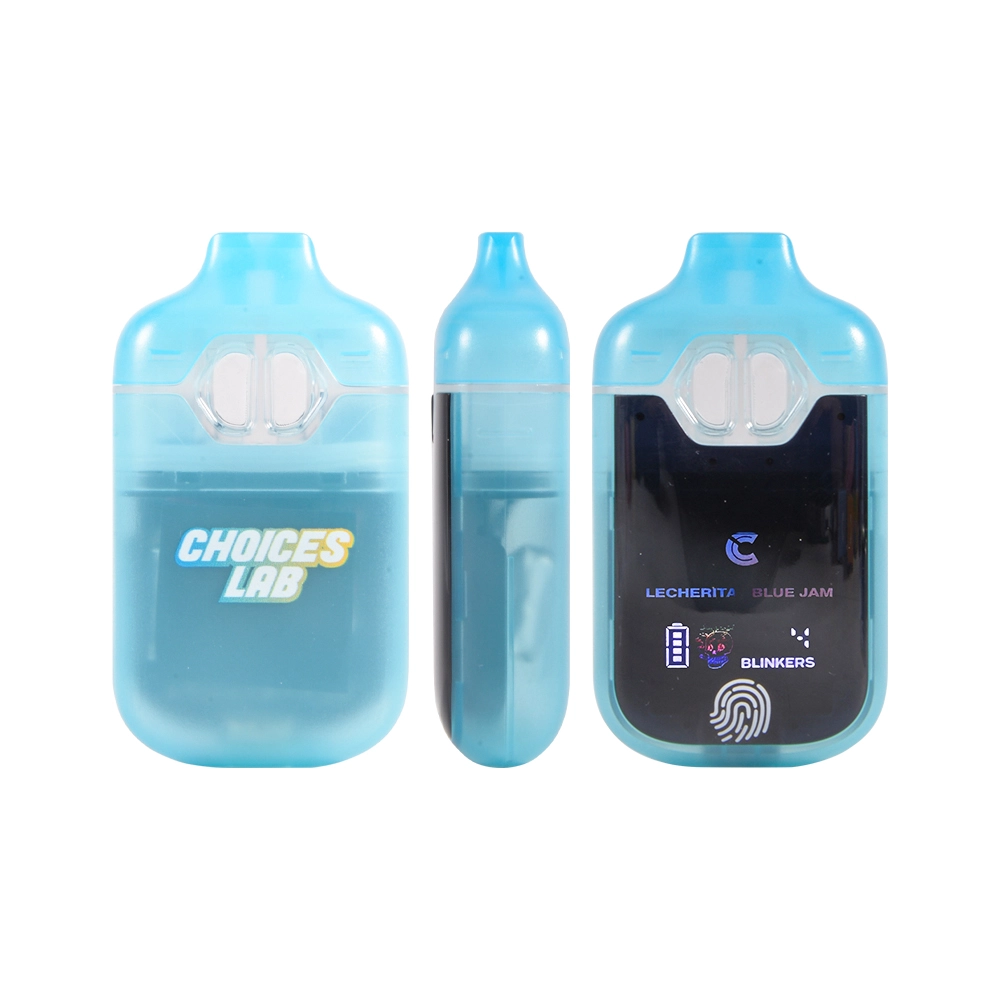
Choices Lab Real vs Fake for Wholesale Buyers: Verification Without Guesswork
Updated: 2026-01-22 · Category: Information/Education · Brand names are used for identification only; this page is not affiliated with any brand owner.
Scope (what this is): This article focuses on wholesale verification workflows for empty Choices Lab–style hardware and packaging. It helps B2B buyers reduce counterfeit, fraud, and SKU-mix-up risk through documentation, receiving controls, and evidence-based decision rules.
Scope (what this is not): We do not discuss oil/liquid contents, potency, effects, dosing, or any filling/modification instructions. We also do not provide guidance for copying branding, packaging, labels, codes, or other brand identifiers.
1) What this guide covers (and what it doesn’t)
Who this is for
- Licensed brands, labs, distributors, wholesalers, and OEM/white-label programs buying empty devices + packaging at scale.
- Procurement and warehouse teams that need repeatable, auditable acceptance criteria—not “gut feel.”
What “real vs fake” means in B2B practice
For wholesale, “real vs fake” is rarely a single binary. You typically need to separate three buckets before you can make a clean decision:
- Official/authorized supply chain: the seller can produce written authorization and a traceable, auditable chain of custody.
- Compatible empty hardware: empty hardware that may resemble popular market formats, but is sold as generic/OEM hardware (no brand authorization claims).
- High-risk counterfeit / fraudulent supply: false claims, mismatched documentation, inconsistent lot behavior, or suspicious code/label signals combined with refusal to provide evidence.
Non-negotiable content exclusions
- No oil or nicotine content discussion; no “how to fill,” “how to modify,” or “how to make it look authentic.”
- No step-by-step details that enable copying labels, codes, QR destinations, or packaging features.
2) The Choices Lab “empty hardware” ecosystem: what buyers actually receive
Start by defining the “deliverable” you will accept
Before you assess authenticity, define what “correct” looks like for your order. At minimum, the PO should specify:
- Variant (e.g., single vs dual chamber; screen variant; exterior finish).
- Packaging level (unit boxes, inserts, stickers, master cartons) and what is included vs optional.
- Lot structure (how many lots in the shipment; whether mixed-lot cartons are allowed).
- Acceptance criteria (AQL/DOA thresholds, cosmetic limits, functional checks, documentation requirements).
Why SKU/variant control is the biggest “fake” look-alike
Many “fake vs real” disputes are actually variant mix-ups: a correct-looking device arrives, but it’s the wrong screen version, wrong chamber configuration, or wrong packaging set. Your verification workflow must detect variant mismatch early—at receiving—before units enter pick/pack.
3) Why authenticity matters for wholesale: risk, compliance, returns
Counterfeit trade is large, persistent, and operationally costly
OECD and EUIPO reporting based on the latest comprehensive data estimate global trade in counterfeit goods at about USD 467 billion in 2021, underscoring how widely counterfeit supply chains can intersect with mainstream logistics.
Safety and legal exposure are not theoretical
U.S. Customs and Border Protection and ICE/HSI repeatedly warn that counterfeit goods can be produced with substandard components and can create health and safety hazards—and that importing counterfeit goods can carry legal consequences.
Wholesale impact: chargebacks, platform risk, and margin destruction
For B2B buyers, the core cost centers are predictable:
- DOA/defect spikes that force replacement shipments and expedite fees.
- Returns and disputes caused by variant mismatch or undocumented substitutions.
- Compliance and IP risk if claims about authorization cannot be substantiated.
- Reputation risk with downstream partners who require traceability and QC documentation.
4) Visual & packaging checks (first-pass screening)
Important: Visual checks are screening, not proof. Counterfeit operations can mimic surface features. Your goal is to quickly identify shipments that require quarantine and document review.
What to check
- Consistency within a lot: units from the same lot should look and feel consistent (print alignment, color tone, finish).
- Packaging completeness: unit box/inserts/stickers match the PO and packing list (no “surprise” substitutions).
- Tamper signals: seals and carton closures are intact and consistent across cartons.
- Label-field sanity: key fields exist and follow a stable pattern (SKU name, lot/batch ID, carton ID, quantity).
Evidence to request
- Pre-ship photo set (cartons + a small sample of unit packaging) with visible carton IDs.
- Packing list that includes carton counts and lot IDs (not just total quantity).
- Declared variant list (screen version / chamber configuration / packaging set).
How to record
- Create an Inbound Evidence Folder per PO: photos, video walk-through, packing list, and an inspection sheet.
- Require photos that include carton ID + date + PO number in-frame.
- Log all observations as objective facts (what was missing/mismatched), not conclusions (“fake”).
Red flags & actions
- Mixed-lot cartons when your PO disallows it → quarantine and demand corrected lot mapping.
- Field omissions (no lot IDs anywhere) → treat as high risk unless the supplier can produce a verifiable lot ledger.
- Last-minute packaging swaps → pause acceptance until you receive written approval and updated documents.
5) Code / QR / serial signals (safe verification workflow)
Principle: QR codes and “verification pages” can be spoofed. Your goal is not to chase a single “magic code,” but to confirm that code behavior aligns with documented supply chain evidence.
What to check
- Where the code sends you: confirm the destination domain looks legitimate and does not bounce through multiple redirects.
- Consistency: codes from the same carton/lot should behave consistently (same destination pattern, no random variations).
- Privacy/safety cues: avoid pages requesting logins, downloads, or personal data as “verification.”
Evidence to request
- A written explanation of the supplier’s code issuance rules (high level) and how codes map to lots (no need for “how to generate codes”).
- Supplier confirmation of who owns/controls the verification endpoint (and contact method for disputes).
How to record
- Scan a small, representative sample across multiple cartons and record results in a simple log (carton ID → outcome).
- Screenshot the verification outcome and store it with the PO evidence packet.
Red flags & actions
- Redirect chains, suspicious domains, or inconsistent scan results → quarantine the lot and require supplier clarification in writing.
- Supplier refusal to explain code ownership or lot mapping at a high level → treat as elevated risk.
6) Supplier-level verification (paper trail you can audit)
This is where “without guesswork” becomes real. A legitimate wholesale partner can support basic claims with documentation and repeatable operations.
What to check
- Identity and accountability: the contracting entity matches the payee and shipper, or there is a documented relationship.
- Capability signals: stable QC process, consistent packaging specs, willingness to define acceptance criteria.
- Authorization claims: if a supplier claims “official/authorized,” demand written proof; otherwise treat the claim as unverified.
Evidence to request (minimum viable verification packet)
- Business registration (where applicable), company address, and official contact channels.
- Proforma invoice + PO + packing list + carton/lot list.
- A short QC SOP summary (what they check, when, and how defects are handled).
- DOA/replacement terms in writing (time window, required evidence, responsibilities).
How to record
- Create a Supplier Profile document: entity name(s), payee, shipping origin, prior PO performance, DOA rates, dispute outcomes.
- Maintain a Lot Ledger: PO number → lots → carton IDs → receiving outcome → downstream allocation.
Red flags & actions
- “Pay fast or lose the deal” pressure + refusal to provide a verification packet → pause and escalate.
- Split payments to unrelated entities without documentation → treat as fraud risk.
- “Trust me” instead of written terms → require contract addendum before release of balance.
7) Pricing, terms & contract red flags (fraud patterns)
What to check
- Price anomalies that are inconsistent with market reality and the supplier’s own prior quotes.
- Hidden substitutions: vague “equivalent model” language that allows silent variant changes.
- Terms mismatch: aggressive prepayment demands paired with weak DOA/return language.
Evidence to request
- Written confirmation that no substitutions are allowed without buyer approval.
- A clear inspection window and what evidence is required to file a claim.
- Explicit definition of DOA vs cosmetic defects vs shipping damage.
How to record
- Attach acceptance criteria and defect definitions to the PO.
- Use a standardized “terms summary” sheet signed/acknowledged by the supplier.
Red flags & actions
- Supplier rejects written acceptance criteria → do not scale volume.
- Supplier refuses an inspection window → treat as high risk for disputes.
8) Receiving & QC workflow: quarantine, sampling, documentation
Your receiving process is where risk becomes controllable. The goal is to prevent questionable lots from entering sellable inventory.
What to check
- Carton integrity and carton ID match to packing list.
- Lot segregation: lots are not mixed unless explicitly allowed and documented.
- Variant correctness: packaging fields and physical cues match the PO variant definition.
Evidence to request
- Supplier acknowledgment of the lot list and any shipment exceptions.
- Written instructions for claims (where to send evidence, who approves, timeline).
How to record (a practical workflow)
- Quarantine first: receive into a “HOLD” location until documentation + sampling are complete.
- Sample across cartons: do not sample only from the “best-looking” carton.
- Document with IDs: every photo/video must show carton ID and date.
- Classify defects: DOA, functional, cosmetic, and packaging/documentation mismatches.
- Release by lot: move only approved lots into sellable inventory.
Red flags & actions
- Documentation gaps (no lot mapping) → hold inventory; require supplier correction before release.
- QC outliers (defect spike) → expand sampling; negotiate replacement or return before further distribution.
9) Decision model: Green / Yellow / Red + documentation checklist
This section is designed to remove emotion from disputes. Use it as an internal SOP.
Green (approve / release)
- Verification packet complete (PO + packing list + lot list + pre-ship evidence).
- Receiving matches documents (carton IDs, lot segregation, variant correctness).
- Sampling results within agreed acceptance thresholds.
Yellow (conditional / hold partial)
- Minor documentation gaps that are correctable (e.g., missing pre-ship photos) and sampling is strong.
- Variant ambiguity that can be resolved with supplier written confirmation and updated lot mapping.
- Action: hold the lot until the evidence packet is complete; release only after correction.
Red (reject / return / escalate)
- Supplier refuses to provide lot mapping or written terms.
- Inconsistent code/QR behavior combined with document refusal or contradictions.
- Mixed-lot cartons, silent substitutions, or repeated “pressure tactics” to bypass inspection.
- Action: maintain quarantine, notify supplier in writing, and follow your contract dispute path.
One-page documentation checklist (copy/paste)
- PO number + supplier legal entity + payee + shipper
- Variant definition (screen/chamber/finish) + packaging set definition
- Packing list + carton IDs + lot IDs (lot ledger)
- Pre-ship photos (cartons + unit packaging sample)
- Receiving photos/videos with carton IDs + date
- Sampling plan + defect taxonomy + QC summary
- DOA/RMA terms in writing + claim submission channel
Note on page clarity: If you publish this as a SOP page, keep a single main title (H1) and make headings visually distinct so readers and search engines clearly understand the structure. :contentReference[oaicite:2]{index=2}
10) FAQ for wholesale buyers
Does a QR code guarantee authenticity?
No. Codes can be copied or redirected. Treat QR results as one signal among many. The stronger proof is a complete verification packet (lot mapping, documented terms, and consistent receiving outcomes).
What’s the fastest way to reduce “fake vs real” disputes?
Stop debating “looks real” and require an evidence packet on every PO: lot list, carton IDs, pre-ship photos, and written DOA/RMA terms. Then enforce quarantine until the packet is complete.
What if the shipment looks fine but documents are missing?
That’s a Yellow at best. Missing lot mapping and unclear authorization claims are common dispute drivers. Hold the lot, request correction in writing, and only release after documentation aligns with physical inventory.
How do I prevent variant mix-ups (screen/chamber/version)?
Define the variant precisely on the PO, require a lot list that includes variant names, sample across cartons, and release inventory by lot. Most “fake” complaints are actually “wrong variant” problems.
Why do government agencies focus so much on counterfeit risk?
Because counterfeits can introduce safety hazards and legal exposure, and they remain a large, persistent share of global trade. OECD/EUIPO estimate counterfeit goods at about USD 467B in 2021, and CBP/ICE emphasize health, safety, and legal risks.
Is this legal advice?
No. This is an operational risk-control guide for B2B procurement and warehouse execution. Consult qualified counsel for legal interpretations in your destination market.
0 Comments