
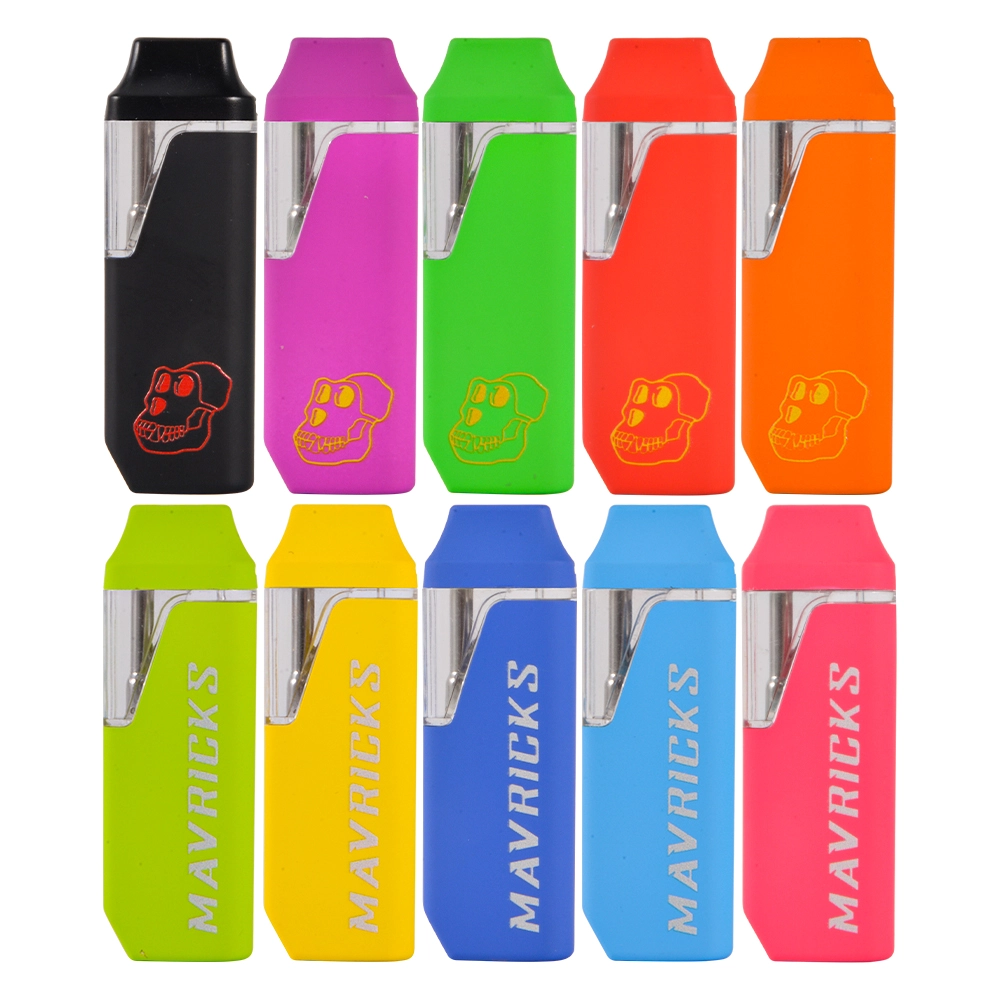
Are Muha Meds Empty Disposables Tested for Lead, Cadmium, Arsenic, and Mercury?
Short answer: They can be — and they should be. For any “Muha-style” empty disposable (hardware only, no oil), reputable suppliers validate two things before shipping: (1) material content meets electronics safety rules like RoHS for lead (Pb), cadmium (Cd), and mercury (Hg); and (2) migration risk is low, via extractables/leachables or aerosol-metals screening that simulates real-world use. If your plan is to fill in a regulated market (e.g., California), the finished, filled product must also pass the state’s heavy-metals limits for inhalable cannabis goods.
Why metals matter in vape hardware (even when it ships empty)
Independent studies have found metallic elements in some e-cigarette aerosols, underscoring why brands and OEMs proactively screen hardware. While results vary by device and method, recent public-health research reported unsafe levels of certain metals in some aerosols, reinforcing the need for robust supplier QA and third-party lab testing.
TOFU takeaway: As a buyer at the very top of the funnel, you don’t need to be a lab expert — but you do need to know which certificates and test methods to ask for. The sections below give you a practical checklist.
What rules actually apply to empty vape hardware?
1) Material content limits (EU RoHS)
Most responsible factories certify hardware to EU RoHS (Restriction of Hazardous Substances). RoHS restricts heavy metals in each homogeneous material of the device to: Pb ≤0.1% (1000 ppm), Cd ≤0.01% (100 ppm), Hg ≤0.1% (1000 ppm). Verification typically follows IEC 62321 analytical methods (XRF screening + ICP-MS confirmation). Ask for a recent RoHS report listing Pb/Cd/Hg results per part (mouthpiece, tank, battery tabs, solder, wiring, etc.).
2) Exposure-based warnings (California Prop 65)
California’s Prop 65 requires warnings if user exposure exceeds “safe harbor” limits. For lead, the reproductive-toxicity limit (MADL) is 0.5 µg/day; if a product’s foreseeable use could expose a consumer above that, a warning is required. Prop 65 is about exposure, not just what’s inside the materials, so many brands assess potential leachable metals to decide whether a Prop 65 warning is prudent.
3) Finished, filled cannabis products (California DCC)
If you will fill the empty device with cannabis oil and sell in California, the final, inhalable product must pass the state’s heavy-metal action levels (µg/g): Cd 0.2; Pb 0.5; As 0.2; Hg 0.1. These limits are applied at the COA stage on the finished goods — not on empty shells — but starting with clean hardware reduces risk of batch failures after filling.
Note: U.S. federal nicotine ENDS go through FDA PMTA; while that’s a different pathway, FDA guidance discusses extractables/leachables and aerosol-metals as part of a comprehensive safety case — the same technical logic many cannabis brands voluntarily adopt.
What good heavy-metal testing looks like for empties
A credible supplier can show you a test plan covering content, migration, and use:
-
RoHS content testing (materials)
-
XRF screening per IEC 62321-3-1 to quickly flag Pb/Cd/Hg in plastics, solders, wires, and metal parts.
-
ICP-MS confirmation per IEC 62321-4/5 on any parts that screen high or are risk-critical (solder joints, battery tabs, heaters).
-
Deliverable: RoHS report naming each tested sub-component with measured ppm and lab accreditation details.
-
-
Extractables / leachables (migration)
-
Simulate contact with common formulations (e.g., PG/VG or ethanol) under exaggerated conditions (e.g., 40–60 °C, 24–72 h).
-
Analyze Pb, Cd, As, Hg by ICP-MS; include other metals (Ni, Cr, Sn) as a best practice.
-
Why it matters: Prop 65 and general safety focus on what could migrate to the user, not just what’s inside the plastic or metal. (Regulators and quality bodies increasingly point to formal E&L frameworks — see FDA and ICH Q3E draft guidance.)
-
Puff a filled device on a machine using CORESTA RM 81 conditions and capture aerosol for metal analysis; metals in e-liquid can be measured via CORESTA RM 98.
-
This confirms that real-world use isn’t transferring metals above your internal targets or state action levels.
-
What about UL 8139 and IEC 62133-2?
These standards are important — but they don’t measure heavy metals.
-
UL 8139 evaluates the electrical/heating/battery and charging systems of e-cigarettes for fire, shock, and battery hazards.
-
IEC 62133-2 governs rechargeable lithium-ion cell/battery safety (abuse, short-circuit, thermal, etc.).
They complement chemical testing and are often required by retailers and insurers, but you still need RoHS/E&L/aerosol-metals for the chemistry side.
Buyer’s 7-point checklist for Muha-style empty disposables
-
Recent RoHS report (within 12 months), listing Pb/Cd/Hg per part and referencing IEC 62321.
-
Extractables/leachables metals (Pb, Cd, As, Hg; ideally Ni, Cr, Sn) by ICP-MS, with solvents/temps/time stated.
-
Aerosol-metals screen (if you plan regulated channels), using CORESTA RM 81/98 methods.
-
Prop 65 assessment memo noting exposure assumptions; for lead, compare to 0.5 µg/day MADL.
-
California readiness note if you sell in CA: finished goods must meet Cd 0.2 / Pb 0.5 / As 0.2 / Hg 0.1 µg/g.
-
UL 8139 report (device safety) and IEC 62133-2 (cell safety) for rechargeable formats.
-
Supply-chain transparency: solder alloy spec (lead-free), heater material (e.g., FeCrAl vs. Ni-Cr), and plating/coating details that minimize metal transfer. (Backed by recent literature on metal origins in aerosols.)
Bottom line for TOFU readers
-
Are Muha Meds empty disposables “tested for metals”?
There’s no single global “vape-hardware heavy-metals certificate.” Instead, best-in-class suppliers demonstrate a stack of evidence: RoHS content compliance, extractables/leachables metals by ICP-MS, and (where relevant) aerosol-metals checks — plus UL 8139/IEC 62133-2 for electrical/battery safety. -
If you’ll fill and sell in California: your finished product must meet the state’s heavy-metal action levels for inhalables (Cd 0.2, Pb 0.5, As 0.2, Hg 0.1 µg/g). Starting with clean hardware reduces failure risk and rework.
-
What to ask today: a current RoHS/IEC 62321 COA, an E&L metals report (Pb/Cd/As/Hg at or below lab LOQs), and (if applicable) a recent aerosol-metals screen run to CORESTA conditions.
If you want to more vape wholesale pls go through these pages:muha meds wholesale|muha meds dual chamber|muha meds master case wholesale
0 Comments