
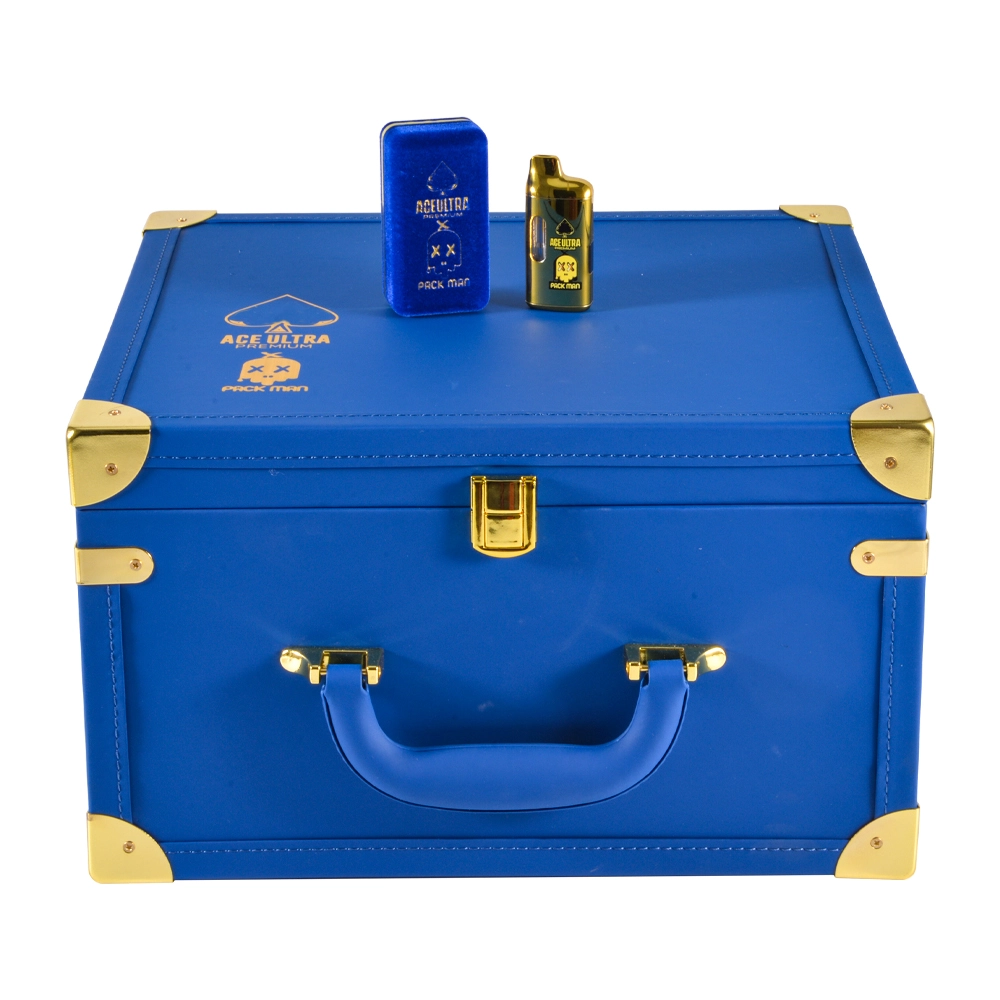
Ace x Packman Empty Disposable (Hardware Only): B2B Buyer Guide, QC & Docs (2025)
Buyers searching “ace x packman empty dispisable” (yes, the common misspelling) usually want the same thing: a premium, brand-ready empty hardware disposable form factor—often with display-screen styling—sold for bulk programs. In B2B, the win isn’t just “finding stock.” It’s preventing DOA units, leak claims, shipping delays, and returns after you scale.
What “Ace x Packman” Empty Disposables Typically Refer To
In the wholesale ecosystem, “Ace x Packman” most commonly describes a collaboration-style shell and packaging system. Many listings in this segment emphasize 1g/2g classes, “V2” revisions, and screen-forward designs. The important part for your business is not the hype—it’s making your product page and receiving process measurable: specs, documentation, and traceability.
Why this form factor sells (from a retailer’s perspective)
- Premium shelf signal: screen/finish cues make the device feel “higher tier” at first glance.
- Faster decision: customers buy “the one that looks premium” when strain/flavor isn’t the decision driver.
- Better upsell path: retailers can ladder from basic hardware to “display” hardware without long explanations.
Specs to Demand (So Your Listings Don’t Turn into Support Tickets)
1) Power & charging (non-negotiable)
- Battery capacity (mAh) and a stated protection set: over-charge, over-discharge, short protection.
- Charging port type (USB-C is the common expectation in 2025) and charging current range.
- If it has a screen: what triggers screen-on, what it displays (battery %, puff counter, etc.), and auto-off behavior.
2) Heater + airflow (your “returns” hotspot)
- Heater type (e.g., ceramic) and nominal resistance with tolerance.
- Airflow path description (high-level) and whether the intake is protected against pocket lint/dust.
3) Tank path materials (compatibility + stability)
- Tank/wetted path materials and seal material grade.
- Assembly method (press-fit vs ultrasonics vs adhesive) as it impacts leak risk in heat cycles.
Authenticity & Dispute Prevention (Without Helping Counterfeiters)
Two things you can safely standardize
- Chain-of-custody documents: PO, invoice, carton IDs, and receiving photos.
- Verification workflow: if the brand program uses QR/serial verification, document the results as screenshots.
Safe QR practices (critical for staff)
QR codes can hide harmful links and lead to spoofed websites. Your SOP should require staff to scan only via official apps/pages, verify URLs before entering anything, and never type credentials after scanning.
The Paperwork Stack That Prevents Shipping Delays (2025)
UN 38.3 + Lithium Battery Test Summary (TS)
If your Ace x Packman empty disposable includes a lithium battery (typical for this category), you should request UN 38.3 testing evidence and a lithium battery test summary. U.S. PHMSA explains that lithium batteries must be subjected to UN 38.3 design tests and provides guidance on implementing the test summary requirement (with updates reflecting the May 10, 2024 revision).
IEC 62133-2 (cell/battery safety evidence)
IEC 62133-2:2017 specifies requirements and tests for the safe operation of portable sealed secondary lithium cells and batteries under intended use and reasonably foreseeable misuse. In vendor vetting, this functions as a credibility signal that the battery path has been evaluated against a recognized safety standard.
UL 8139 (device electrical system safety expectations)
UL describes UL 8139 testing as evaluating the safety of the electrical, heating, battery, and charging systems of e-cigarettes and vaping devices. Even if you’re selling “hardware only,” buyers and logistics partners increasingly expect you to be able to speak clearly about safety documentation.
Packaging That Survives Real Parcel Shipping
ISTA 3A as a packaging reference point
ISTA describes Procedure 3A as a test for individual packaged-products shipped through a parcel delivery system and appropriate for standard/small/flat/elongated packages distributed as individual packages (air or ground). If you ship bulk cartons to multiple retailers, the retail box + shipper combination matters as much as the device.
Simple packaging checks U.S. B2B teams can run
- Rattle test: no device movement in the inner tray.
- Carton ID mapping: carton labels that map to your receiving log.
- Seal consistency: standard placement so receiving can spot tampering quickly.
Receiving & QC SOP (Built for Scale)
Step 1 — Intake: count, photo, log
- Photograph sealed cartons on arrival before opening.
- Log PO #, supplier, carton IDs, and receiver initials.
- Open one “pilot carton” first; don’t break down the full shipment until it passes.
Step 2 — Sample checks (expand on any exception)
- Cosmetic + assembly: alignment, cracks, loose mouthpieces, screen window integrity.
- Charging behavior: port fit, indicator response, and consistent charging across sampled units.
- Draw/power consistency: predictable activation (if applicable) and stable power output (no random cutoffs).
QC table: what to check and what “fail” looks like
| Checkpoint | Pass signals (simple) | Fail signals (quarantine trigger) | What to record |
|---|---|---|---|
| Packaging integrity | Consistent box, stable inner tray, no crushing | Crushed corners, loose tray, missing carton IDs | Photos (sealed + opened) |
| USB-C port & charge | Firm cable fit, normal indicator response | Loose port, inconsistent indicators, heat/odor | Video + notes |
| Screen function (if present) | Wakes consistently, readable display | Dead pixels, intermittent power-on | Screenshot/photo |
| Assembly & seals | No gaps, clean seams | Visible gaps, residue, repeated loose parts | Macro photos |
| Carton-to-lot traceability | Carton IDs match paperwork | Mismatched paperwork, missing IDs | Receiving log row |
Step 3 — Quarantine rules (non-negotiable)
- Any repeated safety or charging anomaly in multiple sampled units
- Any paperwork mismatch (PO vs carton vs invoice)
- Any verification exceptions (fail/used/unknown) if an auth system is part of the program
FAQ
1) Is “Ace x Packman empty disposable” the same as “ace x packman empty dispisable”?
Yes—“dispisable” is a common misspelling. Treat them as the same buyer intent and include the typo once in your copy for capture.
2) What should we put on the product page to reduce returns?
Specs (battery, charging, screen behavior), clear “hardware only” scope, documentation availability, and your QC/DOA policy.
3) What documents matter most for shipping?
For lithium-battery devices, keep UN 38.3 and the lithium battery test summary (TS) accessible, plus any IEC/UL evidence you can provide on request.
4) Should we rely on QR verification alone?
No—pair verification with chain-of-custody docs, receiving photos, and a quarantine SOP. Also train staff to scan QR codes safely.
5) How many units should we sample per shipment?
Use a risk-based plan: light sampling for trusted vendors; stricter sampling for new vendors, new versions, or after any exception appears.
6) What’s the fastest way to stop chargebacks?
Make disputes boring: keep evidence packs (photos + logs + screenshots + paperwork) and enforce “quarantine before resale” on exceptions.
Next Step: Turn This into a 1-Page Warehouse SOP
If you sell multiple “collab-style” shells, build one master receiving checklist and swap only the spec fields (battery, screen, heater). That’s how you scale without scaling returns.
Tip: Add a downloadable receiving log template and a “docs available on request” block to your PDP for better B2B conversion.
References (authoritative)
- PHMSA — Lithium Battery Test Summaries (UN 38.3 + TS requirement guidance)
- PHMSA — Lithium Battery Test Summaries (Revised July 2024 PDF)
- UL — UL 8139 vape battery & electrical certification overview
- IEC — IEC 62133-2:2017 scope (portable lithium battery safety)
- ISTA — Procedure 3A parcel shipment description
- FTC — QR codes can hide harmful links (safe scanning)
- FDA — ENDS includes components and parts (context)
- Market examples (for positioning only): Ace x Packman “V2/2g/screen” style listings can be found across wholesale catalogs.
If you want to know more vape wholesale , pls go through these pages:
0 Comments