
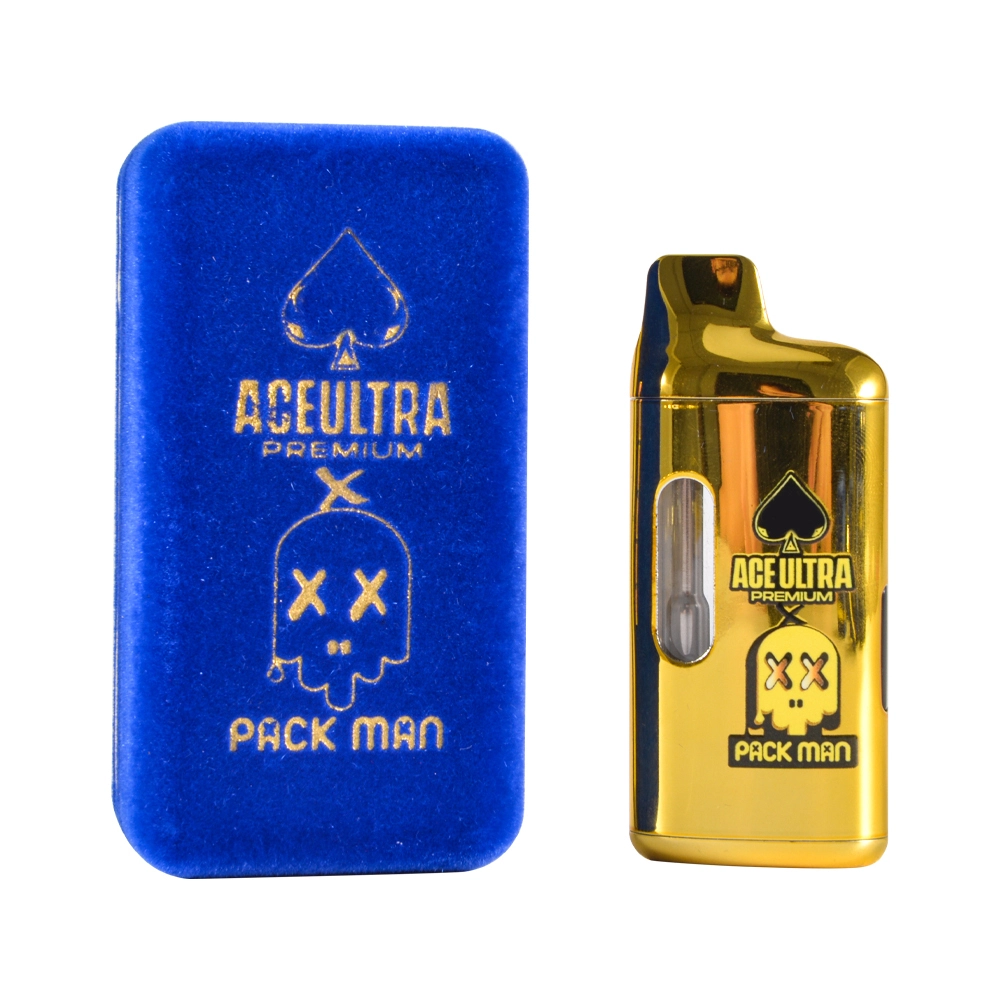
Ace X Packman Hardware Review: What to Verify Before Scaling Orders
Audience: B2B wholesale buyers, distributors, and OEM/ODM procurement teams.
Scope (required): This article is about empty hardware only—shell, battery, coil, airflow, packaging, and documentation. It does not discuss oils, effects, nicotine, or controlled substances, and it does not provide filling instructions. Vapetech420 positions Ace X Packman as empty AIO shells for licensed filling partners and compliant facilities.
When buyers scale an “Ace X Packman” program, the failure mode is rarely “bad marketing.” It’s usually one of three operational gaps:
-
The SKU definition drifts (V2 vs V1, screen vs no-screen, different battery lots).
-
Battery/transport documentation is missing or mismatched to the actual cell/pack.
-
Receiving QC isn’t measurable—so DOA, damage, and later leak claims spike after volume ramps.
This review follows Vapetech420’s practical order: verify the SKU → verify documents → verify transport packaging → verify incoming QC → scale in gates.
1) Scope and assumptions you must lock before testing
Hardware-only means “verify what arrives in cartons”
On Vapetech420, Ace X Packman commonly refers to a 2 mL class empty AIO platform shipped “hardware only” (no contents).
That scope is important because your risk profile changes: you are validating mechanical + electrical reliability, not retail performance claims.
“2g-class” is not a measurement—treat it as a marketing class
Vapetech420’s US-stock listing explicitly frames 2 mL tank volume as “2 gram class once filled, depending on oil density.”
For scaling orders, this means you should govern capacity and labeling in mL (hardware fact), and treat “2g” as a downstream SKU class that can vary.
The objective of this review
Your goal is to answer one question before you place a large PO: Can this exact SKU be received, documented, shipped, and processed repeatedly without support-ticket chaos?
2) SKU governance: stop “name drift” before it starts
Define the exact SKU in writing (not in chat)
Vapetech420’s bulk-buying guide calls out SKU governance and version control as a first step—because “Ace X Packman” can be used loosely across variants.
Create a one-page SKU definition that lives in your procurement system:
-
Official SKU name (must match quote, invoice, carton marks).
-
Photo pack (front/back/side + port area + mouthpiece close-up).
-
Key dimensions and ports (USB-C position, screen location if present).
-
“Empty hardware only” statement.
Lock a “spec baseline” that cannot change silently
For the US-stock workhorse configuration, Vapetech420 lists concrete anchor specs (2 mL, 260 mAh, 4×1.8 mm inlets, ~1.4Ω ceramic core, USB-C, PGTC housing, and packaging stack).
If your supplier proposes a substitution (battery lot, housing plastic, coil), treat it as a new revision that must re-pass gates.
Add change control to your PO
Put a simple clause in your PO language: any hardware revision requires pre-approval with updated spec sheet + photos. This is the cheapest way to prevent mixed lots.
3) Key specs to verify on arrival (and how to verify them)
Tank volume (mL) and physical headspace
For the US-stock listing, “nominal tank volume: 2 mL” is explicit.
Verification action (hardware-only): confirm the supplier’s dimension sheet matches the delivered unit and packaging labels; record any discrepancies as “revision drift.”
Battery and charging system (what you can validate without lab gear)
Vapetech420 specifies a 260 mAh rechargeable lithium cell and USB-C for the US-stock configuration.
Receiving checks that scale:
-
Charge acceptance (unit recognizes power consistently).
-
Port fit (USB-C plug retention; no loose ports).
-
Basic power stability (no random resets during normal draw cycles).
Coil resistance + inlet geometry (where “returns” often start)
The same US-stock listing calls out 1.4Ω ceramic core and 4×1.8 mm intake holes.
At scale, you need repeatability: resistance drift and inlet tolerance issues show up as downstream clogging or inconsistent performance once filled by licensed partners.
Housing materials and packaging stack
Vapetech420 notes PGTC housing and a packaging stack of small boxes + master boxes + stickers.
Treat packaging as part of the product: carton crush and internal abrasion create “cosmetic DOA” that turns into support tickets.
4) Battery safety and documentation: what to demand before scale
UN 38.3 is the baseline expectation for transport
U.S. hazmat rules require lithium cells/batteries to be of a type proven to meet UN 38.3 criteria, and they impose documentation and recordkeeping expectations.
Test Summary (TS): don’t accept “we passed” without a traceable record
PHMSA explains the purpose of the lithium battery test summary requirement and notes updates (effective Jan 1, 2022; revised May 10, 2024).
eCFR 49 CFR 173.185 also specifies that manufacturers and subsequent distributors must make a test summary available for applicable batteries, and lists required fields (manufacturer info, lab info, unique test report ID, date, description including Wh rating/lithium content, tests conducted, etc.).
Procurement rule: no scale PO until you have a TS that matches the actual cell/pack configuration used in your lot.
Marking requirements that affect real logistics
As of May 10, 2024, eCFR states that each lithium ion battery must be marked with the Watt-hour rating on the outside case.
This matters because missing or incorrect markings can delay shipments, trigger relabeling costs, or cause carriers to reject tender.
UL 8139 and IEC 62133-2: not always required, but strong risk controls
-
UL 8139 evaluates the safety of electrical, heating, battery, and charging systems for vaping devices.
-
IEC 62133-2 specifies safety requirements and tests for portable sealed secondary lithium cells and batteries under intended use and reasonably foreseeable misuse.
If your supplier can provide these (or equivalent third-party evidence), you reduce “unknown unknowns” before you scale.
5) Transport readiness: marks, overpacks, and air constraints
Lithium battery marks and overpack rules can create avoidable delays
eCFR 173.185 includes detailed marking rules, including transition language (legacy mark formats may continue until December 31, 2026) and requirements that overpacks be marked “OVERPACK” when applicable.
Operational takeaway: make your forwarder and supplier agree—before pickup—on who owns labeling/marking accuracy.
Air/express: understand the constraints your forwarder will apply
IATA’s 2025 lithium battery guidance states that lithium-ion batteries shipped by themselves under certain packing instructions must be at a state of charge not exceeding 30%.
It also notes a practical compliance method for TS availability: hosting the TS online and providing a QR code or URL with the battery/packaging/transport documentation.
Even if your units are shipped as “batteries contained in equipment,” you still want your documentation stack to be carrier-ready.
6) Packaging durability: use an ISTA 3A mindset (even if you don’t certify)
Why packaging still matters for empty hardware
Vapetech420 explicitly references conditions similar to ISTA 3A parcel testing (drops, vibration) when discussing the US-stock packaging stack.
Empty shells don’t leak oil in transit—but they do crack, dent, and arrive cosmetically damaged, which becomes a returns and reputation problem.
What ISTA 3A represents in practice
ISTA describes Procedure 3A as a test for individual packaged-products shipped through a parcel delivery system.
Use this as a framework for questions to your supplier:
-
How are units immobilized inside the small box?
-
Are master cartons partitioned to prevent corner crush transfer?
-
What is the evidence of drop/vibration survivability for your exact packaging configuration?
Your pilot requirement: “packaging audit” before volume
Before scaling, run a pilot shipment and score:
-
Carton integrity on arrival
-
Unit cosmetic defect rate
-
Internal packaging shifts and abrasion points
Then revise packaging spec—not after you’ve shipped thousands.
7) Incoming QC: an AQL-style receiving SOP that actually scales
Build a quarantine-first workflow
Vapetech420’s bulk-buying outline emphasizes QC gates and SOP discipline because scale failures compound.
Receiving flow that works:
-
Quarantine the lot on arrival (no commingling).
-
Sample by carton layers (top/middle/bottom).
-
Record results and decide: accept / rework / reject.
Minimum functional tests for every sampled unit
-
Charge recognition (USB-C).
-
Power-on stability / screen behavior (if applicable).
-
Draw activation consistency.
Minimum physical inspections for every sampled unit
-
Housing corners, seams, and mouthpiece fit
-
Port alignment and retention
-
Packaging print + stickers match SKU definition
-
Lot codes/carton marks are present and consistent (traceability)
Evidence capture: your “future dispute kit”
For scale orders, insist on:
-
Inbound photo set (carton marks, master carton, inner boxes, random units).
-
A receiving log that ties issues to carton/lot identifiers.
8) Compatibility validation in compliant facilities (without turning this into a “how-to”)
Define pass/fail criteria before any pilot run
Vapetech420 recommends running compatibility checks with your own formulation in controlled conditions, but the scalable lesson is: define what “good” means before you pilot.
Use business-safe criteria such as:
-
Defect rate thresholds (DOA, cosmetic, electrical)
-
Stability thresholds after storage/temperature exposure
-
RMA trigger rules (what failures qualify as supplier-responsible)
Treat failures as categories, not anecdotes
When issues appear, classify them consistently:
-
Electrical (charging, power instability)
-
Mechanical (housing cracks, mouthpiece fit)
-
Tolerance-related (inlets, resistance drift)
-
Packaging-related (crush, abrasion)
This is how you keep “support noise” from becoming “program failure.”
9) Scale-up workflow: Sample → Pilot → Pre-scale → Scale PO
Gate 1: Sample lot (prove the SKU is real)
-
SKU definition signed off
-
Spec audit pass (key dimensions, charging, resistance spot-check)
-
TS received (and matches the configuration)
Gate 2: Pilot lot (prove logistics + packaging)
-
Packaging audit pass under real carrier handling
-
Incoming QC SOP produces repeatable results
-
Defect rates are stable across cartons (not just a “good box”)
Gate 3: Pre-scale (prove consistency)
-
Second lot matches first lot without “revision drift”
-
Document stack is unchanged and reusable (TS links/QR if used)
Gate 4: Scale PO (prove the system, not a batch)
-
Change-control clause enforced
-
RMA rules defined and accepted
-
KPI dashboard established (DOA %, cosmetic %, transport damage %, doc completeness)
10) One-page checklist and FAQ
One-page checklist (copy/paste for procurement)
SKU governance
-
SKU name, photos, dimensions, and “empty hardware only” statement locked
Specs audit (verify-by-inspection)
-
2 mL class tank confirmed
-
Battery capacity verified (record the declared mAh for this SKU)
-
USB-C charging consistency check
-
Coil/resistance spot-check; inlet geometry spot-check
Docs & compliance
-
UN 38.3 Test Summary obtained and matches cell/pack configuration
-
Wh rating marking confirmed per current requirements
-
Optional evidence: UL 8139 / IEC 62133-2 if available
Transport & packaging
-
Lithium battery marks/overpack rules aligned with forwarder
-
Packaging stack validated; pilot shipment packaging audit completed
Incoming QC
-
Quarantine + AQL-style sampling defined
-
Evidence kit captured (photos + logs + lot linkage)
Scale gates
-
Sample → Pilot → Pre-scale → Scale PO approval rules documented
FAQ (procurement + scale)
Q1: What’s the fastest way to reduce “revision drift” risk?
Lock the SKU definition with photos/spec sheet, and put change control in your PO so substitutions trigger re-approval.
Q2: What document most often blocks shipping at scale?
Missing or mismatched lithium battery documentation—especially an incomplete or non-traceable test summary for the actual cell/pack used.
Q3: Can I accept a screenshot that says “UN38.3 passed”?
For scaling orders, treat that as insufficient. Request the TS record with identifiers that tie to the battery configuration.
Q4: Why does packaging matter if units ship empty?
Transit damage still creates DOA/cosmetic returns and can introduce micro-damage that becomes a downstream reliability issue.
Q5: What’s the practical reason to ask for UL 8139 or IEC 62133-2 evidence?
They indicate the device’s electrical system and the cell/battery safety have been evaluated against recognized safety requirements, reducing unknown safety and warranty risk.
If you want to know more about empty disposable vape pls go through these pages:empty disposable vape| ace x packman wholesale|ace x packman disposable wholesale
0 Comments