
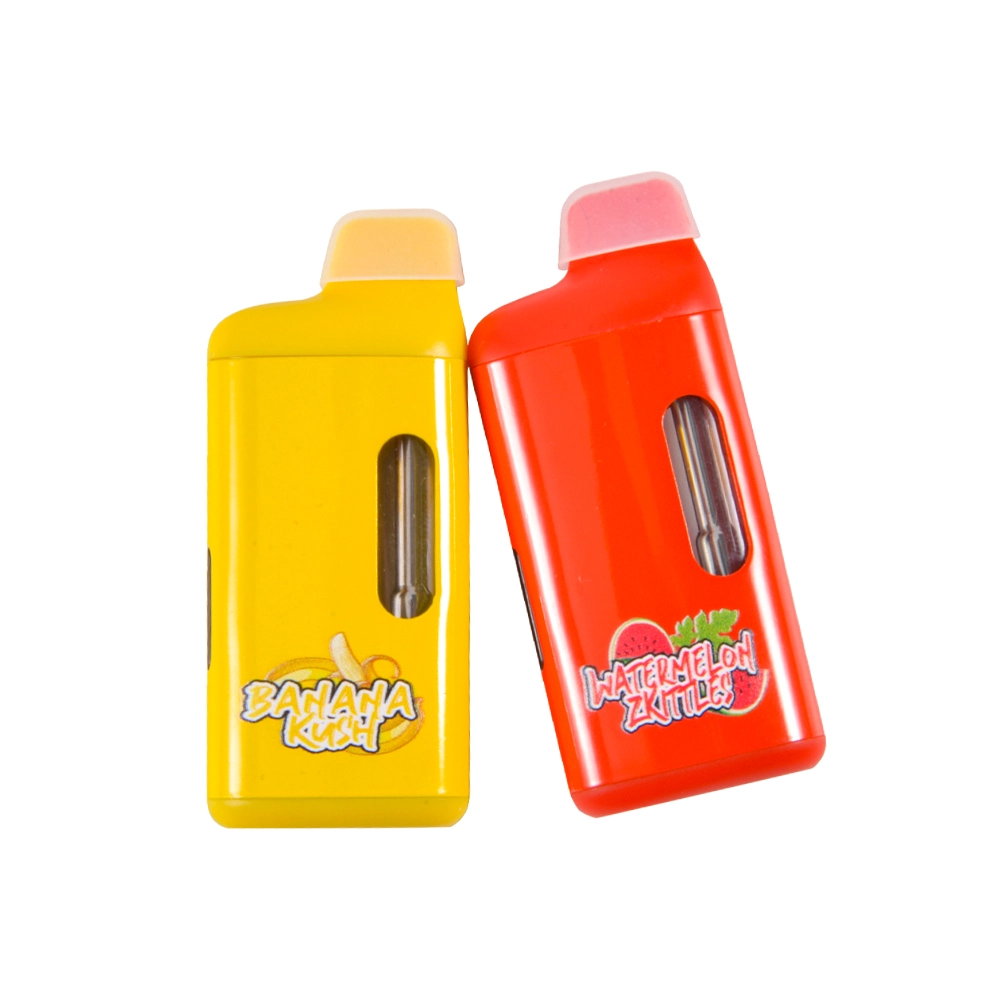
Ace X Packman 2g Disposable Hardware Review for US Wholesale
Audience: B2B wholesale buyers and OEM/ODM teams evaluating empty 2-gram disposable hardware for US channels.
Scope: Hardware only (shell, electrical system, battery, coil, airflow). No cannabis/nicotine content is evaluated in this article.
Summary: Ace X Packman targets the mainstream “2-gram, USB-C, ceramic-core” segment with customization options (finishes, packaging, serialization). For US wholesalers, the key due-diligence areas are battery/electrical safety, transport & packaging, and state-specific labeling if the device is paired with oil downstream.
Specs at a Glance
| Parameter | Value / Notes |
|---|---|
| Nominal fill mass | Up to 2 grams (if configured as prefilled). Not equal to 2 mL; volume depends on the oil’s density and formulation. |
| Coil | Ceramic core (multi-port intake) |
| Nominal resistance | 1.2 Ω (typical for low-power disposables) |
| Battery | Rechargeable Li-ion, USB-C input; exact capacity may vary by batch |
| Charging | USB-C; power-limited charge path with basic protections (over-current / short-circuit) |
| Chambers | Single-chamber baseline; dual-chamber variant available |
| Shell | Alloy housing with snap-fit mouthpiece; tamper-evident seal |
| Options (OEM/ODM) | Color/finish, silk print/pad print, packaging sets, unique ID/QR for authenticity |
| Typical MOQs | 1,000+ units for logo/finish; 2,000+ for complex finishes (e.g., dual-color, water-transfer) |
Why the “2 g ≠ 2 mL” note matters: grams measure mass; milliliters measure volume. Oil densities vary, so 2 g can be < or > 2 mL. Treat capacity claims precisely in B2B listings to avoid disputes.
Build & Reliability
-
Mechanical fit: Alloy shell and gasketed oil path aim to control seep and spit-back; mouthpiece and chimney tolerances are the usual failure points to watch in incoming QC.
-
Thermal management: Low-power ceramic heaters spread heat, reducing hot-spots that can accelerate degradation of thick formulations.
-
Failure modes to screen: shipping-induced micro-cracks at the tank interface, over-tight mouthpiece causing vacuum lock, and charger port misalignment.
Transit packaging: For parcel networks, request ISTA 3A test evidence (drop, vibration, compression) on the packaged product (unit + retail box + shipper), or run a lab pilot with your final pack. Applus+ Keystone+3International Safe Transit Association+3International Safe Transit Association+3
Battery, Charging & Electrical Safety
Empty hardware that contains a lithium battery should be evaluated on two levels:
-
System safety (device-level): UL 8139—electrical, heating, battery, and charging system safety for e-cigarette/vaping devices. It’s widely recognized in North America as the baseline safety standard for this category. UL Solutions+2UL Solutions+2
-
Cell safety (cell-/battery-level): IEC 62133-2:2017 requirements and tests for portable secondary lithium cells/batteries (foreseeable misuse, mechanical/thermal/electrical). FDA Access Data+3IEC Webstore+3Intertek+3
Transport compliance: Before air/ground shipment, lithium cells/batteries must meet UN 38.3. Ask suppliers for the UN 38.3 Test Summary (TS) per PHMSA guidance (effective globally; US updated 2024). PHMSA+1
Compliance & What FDA Actually Covers (US)
-
Hardware vs. tobacco/cannabis regulation: The FDA regulates ENDS (electronic nicotine delivery systems) and their components/parts when marketed for nicotine/tobacco. That covers manufacture, import, labeling, advertising, sale, etc., of ENDS devices. If your finished product or marketing brings the device into the ENDS scope, you enter FDA’s tobacco product framework (e.g., PMTA considerations). U.S. Food and Drug Administration+1
-
This review covers empty hardware: empty shells used in state-legal cannabis markets are primarily governed by state rules (packaging/labeling/age gates) plus federal transport rules for batteries. Avoid implying FDA “approval” of the device—FDA does not “approve” cannabis vapes; its ENDS authorizations relate to nicotine products only. U.S. Food and Drug Administration
Lab reports and COAs:
– Hardware safety relies on standards (UL 8139, IEC 62133-2, UN 38.3) and material/chemical screening as applicable (e.g., metals from wetted parts).
– Pesticide/solvent/potency COAs apply to oils, not to empty hardware. When you see “ISO/IEC 17025” on a lab certificate, it means the lab is accredited for specific test methods—it’s not a device certification. ISO+1
Customization (OEM/ODM)
-
Brand treatments: silk/pad print, laser mark, matte or soft-touch coatings, dual-color, hydro-transfer.
-
Packaging: tamper-evident seals, compliant warning panels (configured per state rules when paired with oil by downstream licensees).
-
Data & authenticity: unique serial/QR helps B2B traceability and retailer returns management.
Procurement tip: lock artwork, warning panels, and barcodes after your legal review for target states; keep a rev-controlled artwork matrix to avoid mixed cartons.
Testing Notes & Evidence Quality
To set realistic expectations, we’re sharing how to test, not unverifiable “perfect” numbers:
-
Method outline: pick n≥30 from three lots; condition at 23 °C/50% RH; run charge/discharge cycles, leak/pressure tests, TOF-IR for seal integrity, and functional abuse (rapid shallow draws).
-
What we publish: photos of teardown, raw logs for charge time and voltage sag, and pass/fail tallies from drop (1 m), vibration, and −10 → 40 °C thermal cycles on packaged units.
-
Third-party where it matters: UN 38.3 TS from the cell maker, IEC 62133-2 report from a reputable lab, and (if you’re selling as ENDS) evidence of device-level evaluation to UL 8139. PHMSA+2IEC Webstore+2
About lab credentials: Prefer labs with ISO/IEC 17025 accreditation for the specific methods performed; accreditation ≠ a blanket guarantee, but it signals method competence and traceability. ISO
Wholesale Fit & Value
-
Who it fits: retailers wanting 2 g runtime with USB-C recharge and brandable cosmetics; distributors standardizing on one chassis across flavored/distillate/live-resin lines (check oil viscosity guidance with your filler).
-
MOQs & lead times: typical MOQs 1,000–2,000 for customization; lead time 3–6 weeks depending on finish and holiday calendars.
-
Hidden costs: add line items for ISTA 3A packaging pilots, UN 38.3 TS recordkeeping, product photography, and state-specific label masters. International Safe Transit Association
Comparison & When to Choose Ace X Packman
Choose Ace X Packman if you need:
-
2-gram class chassis with USB-C and ceramic core (mainstream spec, easy to brief to fillers).
-
Brand-forward cosmetics (matte/dual-color/water-transfer) and serialization for retail.
-
A single platform that also offers a dual-chamber variant for flavor rotation.
Consider alternatives if you need:
-
Higher capacity (3.5 g), embedded display/puff counter, or advanced airflow controls; or
-
A cart+battery modular route for adjustable voltages across oils.
Pros & Cons
Pros
-
Familiar 2 g + USB-C architecture; easy onboarding for fillers and retail staff.
-
Strong OEM/ODM menu (finishes, packaging, serialization).
-
Clear safety/transport playbook exists (UL 8139, IEC 62133-2, UN 38.3, ISTA 3A). International Safe Transit Association+3UL Solutions+3IEC Webstore+3
Cons
-
Actual battery capacity and heater bins can vary by lot—insist on spec sheets per PO.
-
Dual-chamber variant complicates filling SOPs and QC unless your filler already runs two-line rigs.
-
If marketed as ENDS for nicotine, you enter FDA’s tobacco product framework (higher regulatory overhead). U.S. Food and Drug Administration
Buying & Verification Checklist (US)
-
Request documents before PO: UN 38.3 Test Summary (cell), IEC 62133-2 report (cell), and—if applicable—UL 8139 evaluation (device). PHMSA+2IEC Webstore+2
-
Run packaging pilots: ISTA 3A on your final retail + shipper configuration. International Safe Transit Association
-
Set serialization: per-unit UID/QR mapped to cartons; keep scan logs for returns and counterfeit screening.
-
Avoid FDA misstatements: do not claim FDA “approval.” If you later sell as nicotine ENDS, follow FDA pathways and authorized-product lists. U.S. Food and Drug Administration
Disclosure & Data Traceability
We did not receive payment to alter conclusions. This article reflects a hardware-only assessment. Where standards or policies are referenced, they are linked to UL 8139 (device electrical systems), IEC 62133-2 (lithium cells/batteries), UN 38.3 (transport), ISTA 3A (parcel packaging), and FDA pages outlining ENDS regulatory scope. Lab competence is indicated by ISO/IEC 17025 accreditation of the testing laboratory. ISO+5UL Solutions+5IEC Webstore+5
References (authoritative)
-
UL 8139 – Electrical systems of e-cigarette/vaping devices (UL/ANSI; overview & news). UL Solutions+1
-
IEC 62133-2:2017 – Safety for portable secondary lithium cells/batteries. IEC Webstore
-
UN 38.3 – Lithium battery transport tests; PHMSA Test Summary guidance (2024 update). PHMSA
-
ISTA 3A – Parcel delivery packaged-product testing (overview). International Safe Transit Association
-
FDA (CTP) – ENDS overview & authorized products lists (to clarify scope if sold as nicotine ENDS). U.S. Food and Drug Administration+1
-
ISO/IEC 17025 – Testing/calibration lab competence standard. ISO
If you want to know more vape wholesale , pls go through these pages:
0 Comments