
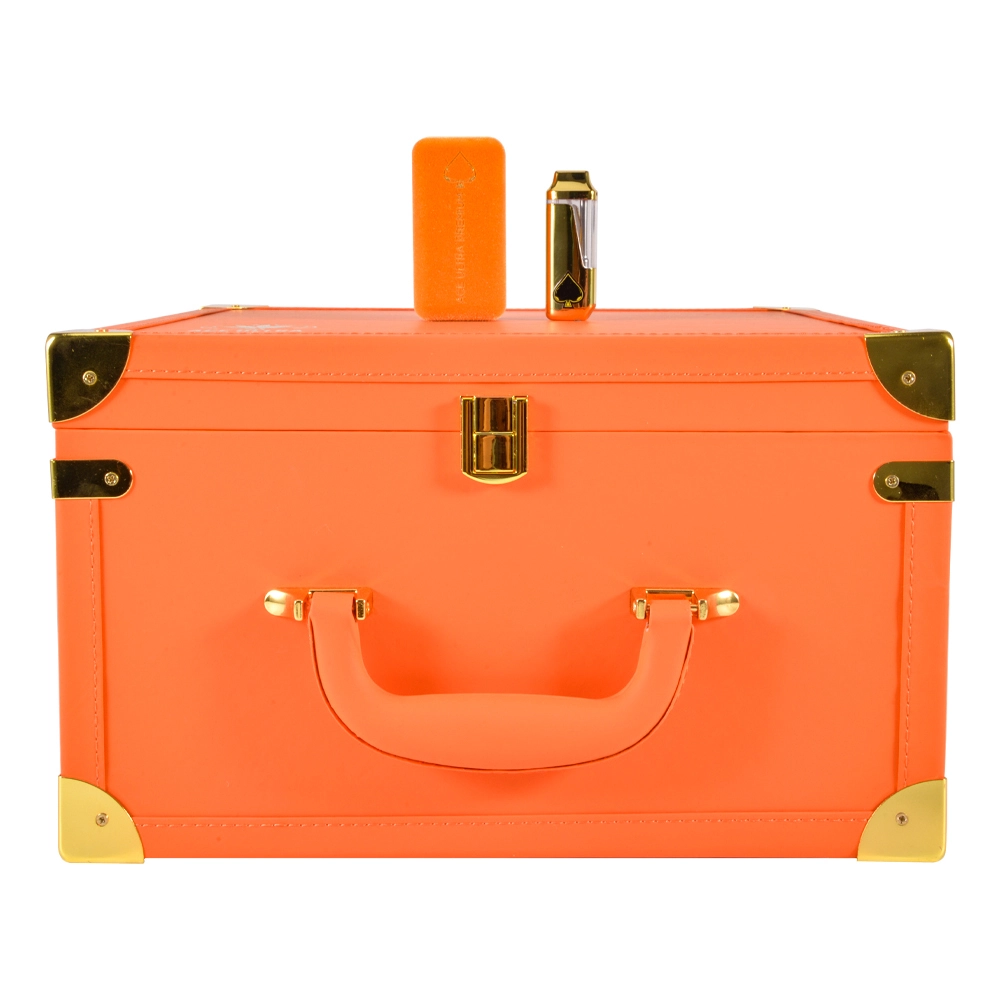
Ace Ultra Premium Review: Performance Tested (2025)
“Performance tested” should mean more than vibe-based opinions. For wholesale, it means you can repeat the checks, document the conditions, and convert findings into a receiving workflow that reduces returns (leaks, clogs, weak draw) and lowers counterfeit exposure.
1) What we tested (and what we didn’t)
This review is written for wholesalers who need a fast “go / no-go” on a premium device and a repeatable process for incoming inspection. Our hands-on notes for Ace Ultra Premium focus on the same failure modes that drive returns: draw restriction (clog-like behavior), leaks, inconsistent output over sessions, and charging behavior. For a product definition overview, see What is Ace Ultra Premium Disposable Vape?.
We do not provide any instructions that help counterfeiters copy packaging, codes, or verification steps. Everything in this article is framed as “how to verify” and “how to quarantine” from a buyer’s perspective.
2) Test setup: declared puff regime + sample definition
2.1 Sample definition (wholesale-relevant)
- Units: aim for 5+ units for a quick screening; 10+ if you’re setting a baseline for a recurring vendor.
- Lots/batches: if possible, pull units from 2+ lots so you can detect lot-to-lot drift early.
- Documentation: record box markings, take photos of outer/inner packaging, and assign each unit a simple Unit ID.
2.2 Declared puff regime (so “performance tested” is reproducible)
If you have access to machine testing, the most widely referenced baseline regime for e-cigarette aerosol collection is a 55 mL puff, 3 seconds duration, starting every 30 seconds, with a rectangular puff profile. If you don’t have a machine, you can still borrow the structure: keep duration/interval consistent and log checkpoints.
2.3 Test matrix (table you can reuse for every inbound lot)
| Unit ID | Lot/Box Marking | Regime Used | Checkpoints | Notes (draw/clog/leak/charge) |
|---|---|---|---|---|
| AUP-01 | ____ | 55 mL / 3 s / 30 s (or consistent manual draw) | 0 / 25 / 50 / 100 / 150 | ____ |
| AUP-02 | ____ | Same as above | 0 / 25 / 50 / 100 / 150 | ____ |
Note: some modern device designs can behave differently under standardized regimes. If you adjust conditions, document why (airflow/power/thermal behavior) so results remain comparable over time.
3) Build & design inspection
In our Ace Ultra Premium hands-on notes, the device presents as a “luxury-tier” build: a premium-feeling chassis, comfortable mouthpiece seal, and a firm USB-C port fit. That matters in wholesale because it correlates with fewer “cheap-feel” complaints and fewer port-related support messages. (Related reading: Ace Ultra Premium Review – Flavor, Battery Life, and Performance Tested.)
3.1 Quick inbound visual checklist (5 minutes per unit)
- Seams: gaps, uneven joins, glue marks
- Mouthpiece: wobble, poor seal, sharp edges
- Intake holes: blocked, asymmetric, burrs
- USB-C port: loose seating, misalignment, “wiggle” under cable load
- Finish: scuffs, coating defects (classify cosmetic vs functional)
4) Flavor & coil behavior (stability)
The core value proposition in our notes is coil stability: Ace Ultra Premium is commonly marketed with a ceramic multi-core coil, and the practical outcome is more consistent flavor across repeated draws with less harshness when the user paces pulls. When flavor seems muted after heavy use, a short rest window (about a minute) can restore clarity—an operational detail that reduces “it’s burnt” complaints that are really “it’s overheated from chaining.”
4.1 Stability checks to log
- Cold start: first 10 draws (note harshness, off-notes, “flat” profile)
- Warm state: after a longer session (does it stay clean or get edgy?)
- Recovery: does a 60–90 second rest restore the profile?
5) Draw consistency & clog benchmarks
For wholesale, the goal isn’t perfection—it’s predictability. You want to know whether “tight draw” appears as isolated units (individual defects) or clusters (lot risk). Our daily-carry notes describe a smooth, controlled draw style that reads as intentional rather than whistly or airy, which typically produces fewer user complaints when expectations are set correctly.
5.1 Define “clog” in one line
A clog event = restricted or intermittent draw across 3 attempts, persisting after a brief rest. Log it as “recovered” only if normal draw returns without aggressive handling.
5.2 Draw + clog tracking table
| Unit ID | Checkpoint | Draw Score (1–5) | Clog Events (#) | Recovered? (Y/N) | Notes |
|---|---|---|---|---|---|
| AUP-01 | 0–50 | __ | __ | __ | __ |
| AUP-01 | 51–150 | __ | __ | __ | __ |
5.3 Optional (recommended): AQL-style inbound sampling for bulk lots
When cartons scale, consider acceptance sampling rather than 100% checks. ISO 2859-1 is indexed by AQL and is designed for attribute inspection (pass/fail defect categories). Practical setup:
- Critical defects: safety signals, severe leaks, DOA (target 0)
- Major defects: persistent clog, unstable draw, charging failure
- Minor defects: cosmetic scuffs, small print shifts
6) Battery & charging notes (runtime logic + safety)
Rechargeability is a wholesale advantage because it reduces “battery died early” complaints typical of higher-capacity devices. Our Ace Ultra Premium notes highlight USB-C practicality and emphasize sensible charging: certified cable, avoid heat, and don’t leave charging unattended. In the same notes, stable performance through recharges is described as a contributor to consistent taste over time.
6.1 Runtime logic (use formulas, not guesses)
- If your supplier provides a battery spec, keep it in your lot record and tie it to a lot ID.
- If specs are not verifiable, publish observations (charging behavior, user complaints) instead of inventing numbers.
7) Leak checks & carry tests
7.1 Fast leak screen
- Inspect mouthpiece + seams for visible residue
- Wipe test (white tissue) at seams after a short session
- Carry simulation: pocket carry 30–60 minutes; recheck seams and airflow
7.2 Quarantine triggers
- 2+ leak events in the same lot sample
- Repeated tight-draw complaints in the same lot sample
- Packaging/code anomalies or documentation mismatch (see authenticity section)
8) Results scorecard (tables)
Use this scorecard to summarize findings in a way your purchasing team can act on. Keep it evidence-backed: one sentence per score tied to your log sheets.
| Category | Score (A–F) | Evidence note (1 line) | Wholesale impact |
|---|---|---|---|
| Build quality | __ | Premium chassis feel; firm port fit; consistent assembly | Fewer “cheap-feel” complaints |
| Flavor stability | __ | Strong clarity; recovery after short rest during heavy use | Lower “burnt” support tickets |
| Draw consistency | __ | Smooth, controlled draw; log tight-draw events by lot | Predictable CX |
| Leak risk | __ | Track seam/mouthpiece residue by lot sample | Return-rate driver |
| Charging behavior | __ | USB-C top-ups support full-use of capacity | Less “dead early” churn |
9) COA, authenticity & counterfeit risk controls
Counterfeit exposure is not theoretical—global counterfeit trade remains a large and persistent problem. For wholesalers, the best defense is a documented verification path (supplier vetting + lot traceability + cautious code handling). For a buyer-facing checklist, see How to Spot a Fake Ace Ultra Disposable – 7 Key Signs.
9.1 COA / document pack checklist (per lot)
- Invoice + supplier contact + purchase channel recorded
- Lot/box marking photos (outer + inner)
- COA ties to the same lot/batch identifiers (no mismatched paperwork)
- Lab credibility check (look for competence frameworks such as ISO/IEC 17025 where applicable)
- Incoming inspection logs attached (draw/clog/leak/charge)
9.2 QR / code safe-scanning callout (mandatory)
Treat QR codes like links. Don’t scan codes from unexpected messages or packages, and preview URLs for misspellings or spoofed domains. If you need to verify a brand, use official channels you already trust rather than clicking a random code.
9.3 Accept / Quarantine / Reject decision table
| Condition | Action | Evidence to capture | Supplier request |
|---|---|---|---|
| All checks pass; no defect clustering | Accept | Photos + log sheets | Store as approved lot baseline |
| Doc mismatch, code anomalies, or repeated major defects | Quarantine | Lot photos + defect counts | Request lot clarification / replacement plan |
| Safety-critical issues or high incidence of major defects | Reject | Full photo set + unit IDs | Refund/return authorization + corrective action |
10) B2B merchandising tips (reduce support tickets)
- Set expectation: premium draw profile is controlled; teach “pace your pulls” to avoid overheating complaints.
- Make charging guidance visible: “USB-C, use a certified cable, avoid heat, don’t charge unattended.”
- Use lot discipline: if one lot shows higher clog/leak events, isolate it—don’t mix lots in the same fulfillment run.
- Stock planning: if you’re comparing premium tiers, use High-End Disposable Vapes in 2025 (Ace Ultra vs. Competitors) and Ace Ultra vs 1g Disposables – Is the 2g Upgrade Worth It? to align pricing with buyer expectations.
FAQ
What does “Performance Tested” mean in this review?
It means test conditions are declared (sample definition + puff regime structure + checkpoints) and results are logged in tables so the same checks can be repeated on the next lot.
Which tests matter most for wholesale risk?
Start with draw/clog incidence, leak screens, and charging behavior—because those map directly to returns and support tickets.
Should we 100% inspect every unit?
For small orders, maybe. For recurring carton quantities, a documented sampling plan (with clear defect categories) is usually more scalable.
How should we handle authenticity checks safely?
Use official channels you already trust, keep lot traceability, and be cautious with QR codes/links. When in doubt, quarantine the lot until verified.
What’s the fastest way to lower “burnt taste” complaints?
Add simple pacing guidance (“brief pauses between longer pulls”) and charge-safety guidance at point of sale or in the box insert.
References
- CORESTA CRM No. 81 (standard puff regime baseline)
- CORESTA: comparison of puffing regimes
- OECD: Mapping Global Trade in Fakes 2025
- FTC: QR codes can hide harmful links
- FTC: Scam alert on QR codes in unexpected packages
- ISO/IEC 17025 (lab competence overview)
- ISO 2859-1 (acceptance sampling by attributes, AQL-indexed)
- Google Search: Reviews system
If you want more vape for sale, you can go through those pages: thc vape pen|2g vape| ace ultra premium vape|ace ultra premium disposable vape pens
0 Comments