
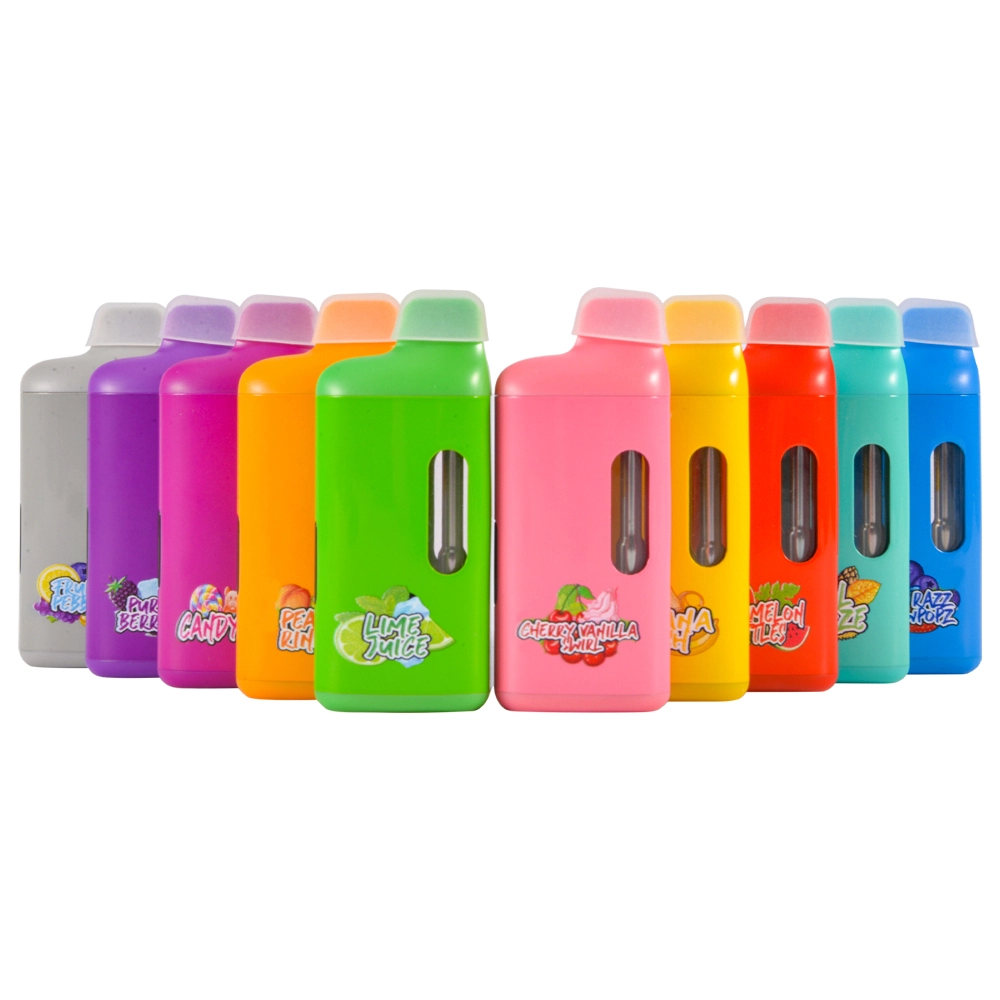
The disposable vape category has exploded over the last few years, and big, rechargeable devices that look and feel like Ace or Packman designs have become a familiar sight to end users. Behind that consumer trend is a rapidly expanding global market: recent research estimates the global e-cigarette and vape market at about 33.4 billion US dollars in 2024, with forecasts that it could exceed 105 billion US dollars by 2035 if current growth continues. Within that wider ecosystem, cannabis vaporizers are one of the fastest-growing niches. Fresh industry analysis suggests the cannabis vaporizer segment will rise from around 6.3 billion US dollars in 2024 to roughly 25.2 billion US dollars by 2034, a compound annual growth rate of more than 14 percent.
For licensed processors, white-label brands and filling labs, this creates a very specific hardware challenge. You need devices that deliver the powerful, high-capacity experience people associate with Ace and Packman style disposables, but you also need full control over oil, compliance and branding. That is exactly where the idea of an Ace Packman empty disposable vape comes in: a device that looks and performs like those popular formats, but ships as hardware only, with no oil, nicotine or THC inside. You receive clean shells ready to be filled, capped and packaged in your own licensed facility.
In practice, Ace Packman empty disposable vape hardware usually means a fairly large all-in-one body with room for one or two grams of oil, a ceramic-core atomizer, an internal rechargeable lithium-ion battery and a simple, intuitive airflow path. From the consumer’s perspective, the benefit is straightforward. They get a device that can run longer between refills because it is not meant to be refilled at all; it is filled once by the brand, then vaped until empty. For a B2B buyer, the benefit is that you can take that familiar silhouette and tune everything around it: strain mix, terpene profile, potency band, limited-edition drops and compliant packaging in each jurisdiction you operate in.
The big difference between buying finished Ace or Packman branded pens and sourcing Ace Packman empty disposable vape shells is control. When you buy empties, you are not locked into another company’s supply chain, testing standards or marketing claims. You specify the oil inputs, verify your own lab results, decide on your own hardware colorways and apply your own QR codes, authenticity seals and track-and-trace labels. In a market that is getting more regulated each year, that separation is valuable. Regulators can clearly see which entity made the hardware and which licensed operator filled and labeled it, and your internal documentation can reflect that split for audits.
Technically, there are a few things serious buyers now assume as baseline in this category. The tank inside an Ace Packman empty disposable vape is expected to handle thick distillate, live resin or rosin without clogging prematurely. That usually means a porous ceramic heating core, engineered to wick higher-viscosity oils reliably and keep flavor consistent across the full life of the device. Coil resistance is commonly tuned around the one-ohm range so the pen can produce dense but controlled vapor without overheating the oil or stressing the cell. The airflow path is designed so that even long draws feel smooth rather than turbulent, which matters for customers who tend to “rip” disposables hard.
The battery inside is just as important. Modern disposable vapes use compact rechargeable lithium-ion cells, which are now treated worldwide as a Class 9 dangerous good in transport because of fire risk if they are poorly designed or manufactured. To be shipped by air, sea, rail or road, lithium batteries are expected to comply with the UN Manual of Tests and Criteria, section 38.3, usually referred to as UN 38.3. The US pipeline and hazardous materials safety agency explains that these design-level tests—altitude, thermal cycling, vibration, shock, external short circuit and more—were made mandatory so that only batteries proven safe under harsh conditions can enter global transport streams. Since January 2022, and reinforced in guidance updated through 2024–2025, manufacturers and distributors must provide a UN 38.3 test summary for each cell or battery type they ship.
For you as a B2B buyer of Ace Packman empty disposables, that means you should not just accept “battery safe” on a brochure. You should be asking which cell model is inside the device and requesting the UN 38.3 test summary so your own logistics team—and any freight forwarders you use—can prove compliance if airlines, customs or regulators come asking.
Beyond UN 38.3, there is the question of battery design standards. IEC 62133-2:2017, with its 2021 amendment, is one of the best-known safety standards for sealed secondary lithium cells and batteries used in portable equipment, covering requirements for safe operation under intended use and reasonably foreseeable misuse. In North America, UL 62133 is harmonized with this IEC standard and widely referenced in safety documentation. When your Ace Packman empty disposable vape supplier can show that the cells they use have been tested against IEC 62133-2 or UL 62133, it tells you that a recognized third-party lab has already looked at issues like internal short-circuit behavior, crush resistance and thermal runaway under abuse conditions.
All of this is happening while regulators and public-health agencies put more pressure on the entire vape category. The World Health Organization recently estimated that at least 15 million teenagers aged 13–15 are using e-cigarettes worldwide and that more than 100 million people overall now vape, even as global tobacco use slowly declines. Governments are reacting with tighter controls, flavor restrictions, enforcement campaigns against unauthorized devices and higher expectations around producer responsibility. In the United States, for example, enforcement actions in 2025 included the US Postal Service blocking shipments from certain distributors accused of moving unauthorized flavored vapes that bypass FDA authorization and local flavor bans, highlighting the legal risk of operating in gray areas of the market.
For cannabis-focused brands working with empty devices, that enforcement climate sends a clear signal. First, your Ace Packman empty disposable vape hardware should be engineered and documented like a legitimate consumer electronics product, not a throwaway gadget. Second, you need a clean story for regulators: the hardware you use is UN 38.3 tested, the cells follow recognized safety standards, the oil inside is produced and tested under a valid license and every finished unit complies with packaging, labeling and marketing rules in your state or country. When you set things up that way, your Ace Packman style line is not just another clone device; it is an engineered platform you can attach your long-term brand to.
From a commercial angle, the payoff is that you can plug this hardware into different product strategies. One line might focus on distillate blends with familiar strain names for entry-level consumers. Another might target connoisseurs with live resin or rosin in limited-edition drops. Because the Ace Packman empty disposable vape format has enough internal volume, you can support higher total cannabinoid content per unit while still respecting local serving and package limits. As long as your hardware can survive shipping, long-term storage and normal handling without leaks, cracks or swelling, it becomes a reliable vessel for whatever formulations your R&D and compliance teams sign off on.
Over time, that kind of spec-driven approach tends to matter more than whatever design is trending on social media this month. Trends will shift, but shipping documentation, safety test reports and return rates will follow you in every market you operate in. When you evaluate Ace Packman empty disposable vape options for your catalog, it is worth treating coil design, battery safety standards, UN 38.3 paperwork and packaging QA as core selection criteria rather than afterthoughts.
FAQ: Ace Packman Empty Disposable Vape
Q: Does Ace Packman empty disposable vape hardware come pre-filled with oil or THC?
A: In a B2B context, “Ace Packman empty” should mean the devices are shipped as bare hardware with no oil, nicotine or THC inside. You fill, cap and package them yourself in a licensed facility under your own brand and in line with local cannabis regulations.
Q: How much capacity do Ace Packman style empty disposables usually offer?
A: Most Ace Packman style shells are engineered around one-gram or two-gram oil loads, with internal geometry optimized for thicker cannabis extracts. Before placing a large order, ask your supplier for exact tank volume and any filling test data they can share so you can match the device to your formulations.
Q: What safety documentation should I request from my Ace Packman empty hardware supplier?
A: At minimum, you should request the UN 38.3 test summary for the specific lithium cell used in the device and any available test reports or certificates referencing IEC 62133-2 or UL 62133. These documents help your logistics partners move the product legally and give regulators evidence that the battery system has been evaluated against recognized safety standards.
Q: How does choosing better Ace Packman empty disposable vape hardware help with compliance?
A: High-quality hardware with proper battery testing, reliable seals and clear documentation reduces leak complaints, device failures and transport issues. That, in turn, makes it easier for you to show regulators that both the hardware and the oil inside are being handled responsibly, which is increasingly important as governments tighten controls on all types of vapes.
0 Comments