
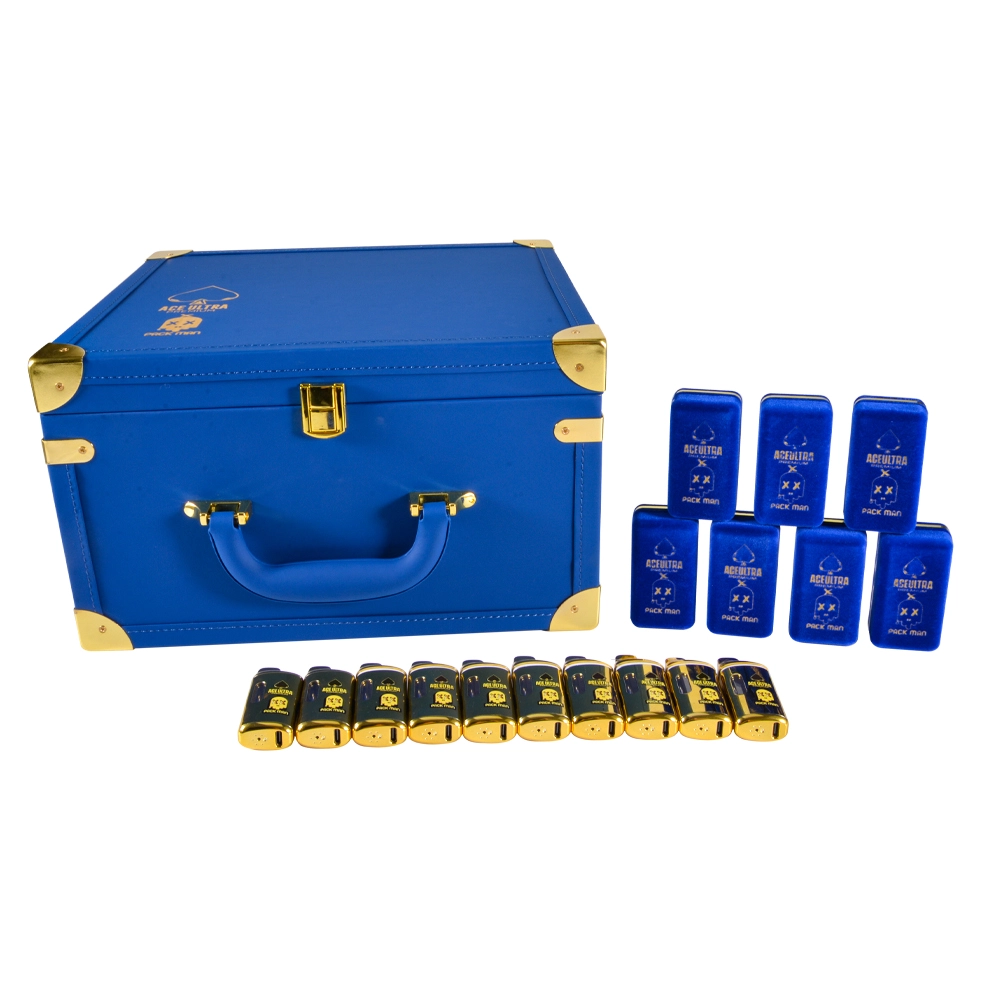
Ace Packman Empty Disposable Vape: 1g vs 2g Shell Selection For Brands
Adults 21+ | Hardware Only
This article focuses on ace packman empty disposable vape shells for OEM, white-label, and wholesale buyers. It does not cover filled nicotine or THC products and is not legal, medical, or compliance advice. Always follow local regulations and your lab’s testing standards.
Choosing between 1g and 2g Ace Packman empty shells is not just a “how much oil” question. It affects your brand positioning, cost per ml, supply-chain design, and how easy it is for your lab to keep SKUs under control. In this guide, we’ll break down the practical differences between 1g and 2g shells and show how brands can build a smart portfolio around both sizes.
Who this Ace Packman shell selection guide is for
This guide is written for B2B decision-makers, not end-users:
-
White-label and house brands planning an Ace x Packman–style hardware line.
-
Filling labs and contract manufacturers that must choose a small number of compatible shells for many client formulas.
-
Distributors and wholesalers who want to stock Ace Packman–style empty devices in the right mix of capacities.
We’ll focus on the questions that matter when you’re signing POs and planning launches:
How does 1g vs 2g change margins, shelf presence, consumer perception, and logistics?
How do you avoid confusing your customers while still using the strengths of both sizes?
1g vs 2g Ace Packman empty shells: core hardware differences
Form factor, ergonomics, and branding real estate
In general:
-
1g shells are shorter and more compact. They feel closer to a “classic” disposable form factor and are easy to pocket or carry in bulk.
-
2g shells are taller and visually heavier, but they give you more surface area for logos, regulatory text, and QR codes.
On Vapetech420, for example, the 2g ACE X Packman V2 Empty Disposable Vapes are listed as 2ml ACE Ultra Packman V2 disposables, designed specifically as an empty hardware line with clear size and branding surfaces for OEM clients.
If your brand identity leans into bold visuals and strong shelf impact, 2g shells give you more room for both brand design and mandatory warnings, while 1g shells win on “sleek, compact, no-nonsense” ergonomics.
Tank volume, battery capacity, and session length
The most obvious difference is volume:
-
1g (~1ml) is typically used for test SKUs, premium or craft lines, and conservative markets.
-
2g (~2ml) is used where heavier users and “better value per dollar” messaging dominate.
On Vapetech420, the acex packman is a 2g configuration with:
-
Tank volume: 2ml
-
Battery capacity: 260mAh
-
Intake oil hole: 4 × 1.8mm
-
Resistance: 1.4Ω
-
Charging: Type-C
Those specs are typical of modern 2g empty disposables: enough battery to fully empty the tank at modest power levels, with intake and resistance tuned for viscous oil.
As a rule of thumb, if the battery is undersized relative to tank volume, users will complain about dead devices with oil still inside. For 2g shells, you want to see balanced tank and battery specs that are realistic for your target oil type and puff style.
Coil, intake holes, and oil behavior at different fills
Most modern oil hardware relies on high-resistance ceramic coils in the ~1.2–1.4Ω range for efficient mouth-to-lung (MTL) style use. Combined with multiple intake holes (such as 4 × 1.6–1.8mm), this gives a usable balance between wicking speed and leak resistance for medium-to-thick oils.
For Ace Packman–style shells, brands should confirm:
-
Coil resistance (e.g., 1.4Ω ceramic) and whether it’s identical across the 1g and 2g variants.
-
Intake-hole count and diameter, and whether the supplier can show test data for high-viscosity oils.
-
How the device behaves when nearly empty vs completely full (no dry hits, no flooding).
Ideally, your 1g and 2g shells share the same internal core so labs can reuse validated parameters and SOPs instead of treating each capacity as a new device.
Cost-per-milliliter and pricing strategy
Unit price will almost always be higher on a 2g shell, but cost per ml is usually lower:
-
Example pattern (illustrative):
-
1g shell cost = X; cost per ml = X / 1
-
2g shell cost ≈ 1.6–1.8X; cost per ml ≈ 0.8–0.9X
-
That means:
-
1g is a strong choice for low-risk testing, small-batch or higher-margin SKUs.
-
2g is better for high-turnover strains and “value” positioning where users expect more volume and are okay paying more upfront.
From a portfolio point of view, choosing 1g vs 2g is not about right vs wrong; it’s about where each size sits in your good/better/best ladder.
When brands should lead with 1g Ace Packman empty disposables
New SKUs, test markets, and risk control
If you’re launching:
-
A new brand,
-
Stable brand but new strain families or flavor lines, or
-
Entering new states/countries,
1g shells give you less exposure if something underperforms. You commit less oil, packaging, and shelf space per SKU, and you can adjust lineup faster based on early feedback.
For labs and fillers, 1g runs also mean smaller batch sizes and smoother QC tuning before scaling into larger 2g programs.
Shelf constraints, regulations, and packaging rules
Many retailers operate with tight shelf plans and limited space for each brand. Smaller 1g Ace Packman shells:
-
Fit easily into legacy displays, drawers, and counter racks;
-
Give merchandisers more flexibility to show a wider variety without redoing the entire planogram.
In some jurisdictions, packaging rules indirectly pressure brands toward moderate sizes: more warnings, more language variants, and more compliance icons competing for space on each box. A 1g line can act as your “compliance-first” format while you figure out how regulators view higher-capacity disposables in that market.
Retail positioning and price psychology
From the consumer side:
-
1g works well as the entry ticket—lower absolute price, less commitment for first-time buyers, easy to try multiple SKUs.
-
2g becomes the “value upgrade” once a customer knows your brand and trusts your oil.
If your Ace Packman program is brand-new, leading with 1g lets retailers stack you into existing price ladders without having to defend a high sticker price to early adopters.
When 2g Ace Packman empty shells make more sense
Mature lines, heavy users, and “value” positioning
If your 1g products already:
-
Sell consistently,
-
Have clear winner SKUs, and
-
Attract heavier users or repeat customers,
then 2g Ace Packman shells are a natural extension.
They:
-
Reduce how often heavy users need to repurchase,
-
Reinforce “value per purchase” messaging, and
-
Create a clear step-up option for your best-performing SKUs.
This is especially effective with Ace Packman’s co-branded visual language—2g shells just look more substantial in-hand and on social content.
Warehouse, logistics, and channel economics
For wholesalers and distributors, 2g shells can streamline logistics:
-
Fewer units to move for the same amount of oil pushed into the market;
-
Less frequent replenishment for high-turnover accounts;
-
Better economics on freight and handling per ml.
On Vapetech420, the ace packman SKU explicitly positions itself as “Wholesale Ace Packman 2g Empty Vape Pens” with USA warehouse inventory—designed to support exactly this kind of fast-turn B2B demand.
If you know certain SKUs will move aggressively, 2g shells backed by local warehouse stock can reduce your risk of stock-outs and emergency air shipments.
Using LED-screen or V2 shells as hero SKUs
Among 2g options, some Ace Packman variants (like V2 or digital-screen models) are ideal hero SKUs:
-
Larger bodies + more advanced UI (LED screen, puff counters, battery indicators) give you storytelling material for campaigns.
-
They justify a premium tier: “flagship” devices in the Ace x Packman line.
The same 2g empty shell can be deployed across multiple strains or blends as your top tier, while 1g shells cover entry and mid tiers.
Designing a mixed 1g/2g Ace Packman portfolio for your brand
Good / better / best lineups with 1g and 2g
One practical way to use both capacities:
-
Good: 1g Ace Packman base line—core SKUs, approachable price for new users.
-
Better: 1g in upgraded packaging or limited editions; or early 2g versions of top SKUs.
-
Best: 2g Ace Packman V2 / digital-screen shells as hero devices with strongest demand strains.
This keeps your SKU architecture clean: capacity is tied to perceived value and loyalty level, not random per strain.
Cross-compatibility for labs and fillers
To keep operations sane:
-
Standardize as much as possible on one internal platform (coil, intake diameter, materials) spanning both 1g and 2g Ace Packman shells.
-
Let the lab validate one set of parameters (fill level, pre-heat profile, storage guidance) that applies to both capacities with minor tweaks.
Launch roadmaps: when to add 2g after 1g
A simple roadmap:
-
Phase 1 – 1g-only launch:
-
Validate brand, artwork, and top 3–5 SKUs in 1g Ace Packman hardware.
-
-
Phase 2 – focused 2g rollout:
-
Promote 2g Ace Packman versions of your best performers only, not every strain.
-
-
Phase 3 – refine mix:
-
If certain strains over-index in heavy user segments, gradually shift orders toward 2g shells for those SKUs; keep 1g for “trial” or limited editions.
-
By staggering capacity expansion this way, you avoid over-committing to 2g inventory before your brand and distribution are stable.
Practical sourcing checklist for Ace Packman empty shells
Spec sheet comparison: 1g vs 2g
Before signing off on a supplier, insist on a side-by-side spec sheet for the 1g and 2g Ace Packman options you plan to use, including:
-
Tank volume (1ml vs 2ml).
-
Battery capacity (mAh).
-
Coil resistance and material.
-
Intake hole count and diameter (e.g., 4 × 1.6–1.8mm).
-
Pod materials.
-
Packaging: unit box, master carton, sticker/QR layout.
Small details like intake-hole size and resistance matter. For example, many 1g/2g empty oil devices on the market standardize around a 1.4Ω ceramic coil with 4 × 1.6mm oil inlets as a balanced configuration for high-viscosity oils.
OEM/ODM questions for brand teams
Your creative and compliance teams should align on at least these points:
-
Which body colors and finishes are available across both 1g and 2g shells?
-
How much printable space is reserved for logos vs regulatory text?
-
Can the supplier keep label and cut-line positions identical between 1g and 2g packaging to simplify artwork?
-
What are MOQs and price breaks for OEM runs across sizes?
-
What lead times are realistic for first run vs reorders?
For deeper OEM/ODM strategy around this hardware family, Vapetech420 already has a dedicated piece on the ace x packman, which focuses on how this shell supports collaboration branding and private-label programs.
QC, sampling, and A/B testing between sizes
Before fully standardizing on 1g vs 2g Ace Packman shells:
-
Sample both capacities from the same production batch.
-
Run lab-level tests: leak checks, thermal behavior, puff count estimates, flavor stability over time.
-
Conduct small-scale A/B tests in one or two markets:
-
Track complaints about device life vs tank size.
-
Monitor which capacity converts more repeat buyers at specific price points.
-
-
Lock in your baseline mix (for example, 70% order volume in 1g, 30% in 2g) and revisit quarterly.
A structured QC and sampling process will keep capacity decisions tied to data, not guesses.
FAQ: Ace Packman 1g vs 2g empty disposable vape for brands
Is Ace Packman empty disposable hardware available in both 1g and 2g formats?
Yes. In the broader Ace x Packman ecosystem you’ll see both 1g and 2g empty shells, including variants with digital screens and V2 body designs. On Vapetech420, the Ace Packman range includes 2g-focused categories and multi-SKU families built around 2ml devices; in other regions and catalogs, you’ll also see 1g Ace x Packman shells used where smaller capacities are preferred.
Which is better for a new brand launch: 1g or 2g Ace Packman shells?
For most new brands, 1g is the safer starting point:
-
Lower absolute retail price makes it easier for new customers to try your oil.
-
Lower inventory risk if certain SKUs underperform.
-
More flexible shelf placement and display options.
Once a handful of SKUs prove themselves, you can add 2g Ace Packman variants as upgrades rather than launching everything at 2g from day one.
Do 2g Ace Packman empty disposables require different oil formulations?
Not necessarily—but they do require more validation. If your formulation was dialed in for 1g devices with a 1.4Ω ceramic core and 4-hole intake, it will usually behave similarly in a 2g shell using the same internal hardware.
However, because 2g devices stay in use longer:
-
Long-term stability, color shift, and viscosity changes matter more.
-
You should test for degradation over more cycles and in different storage conditions.
In other words, the same recipe can often be used, but QC and shelf-life testing must be more conservative on 2g.
How should we price 1g vs 2g Ace Packman products to avoid confusing customers?
A simple rule:
-
Maintain a clear but fair price ladder:
-
2g should obviously cost more than 1g,
-
but the per-ml price on 2g should feel like a true value upgrade, not a trick.
-
For example (numbers for illustration only):
-
1g: $X
-
2g: between 1.6X and 1.9X
That way:
-
Entry buyers gravitate to 1g,
-
Heavy users naturally move to 2g without feeling the brand is squeezing them.
What documents should we ask for when sourcing Ace Packman empty shells in bulk?
At minimum, brands and labs should collect:
-
Battery transport documentation, usually showing UN 38.3 compliance for lithium cells used in the device;
-
Material data and safety information for plastics, metals, and seals;
-
Spec sheets for tank volume, coil resistance, intake hole size, and battery capacity;
-
Packaging spec sheets (unit box, master carton, label zones).
If you want to know more about ace x packman wholesale pls go through these pages:ace packman disposable bulk|wholesale ace packman disposable 2g|packman x ace 2g wholesale|ace packman 1g wholesale
0 Comments