
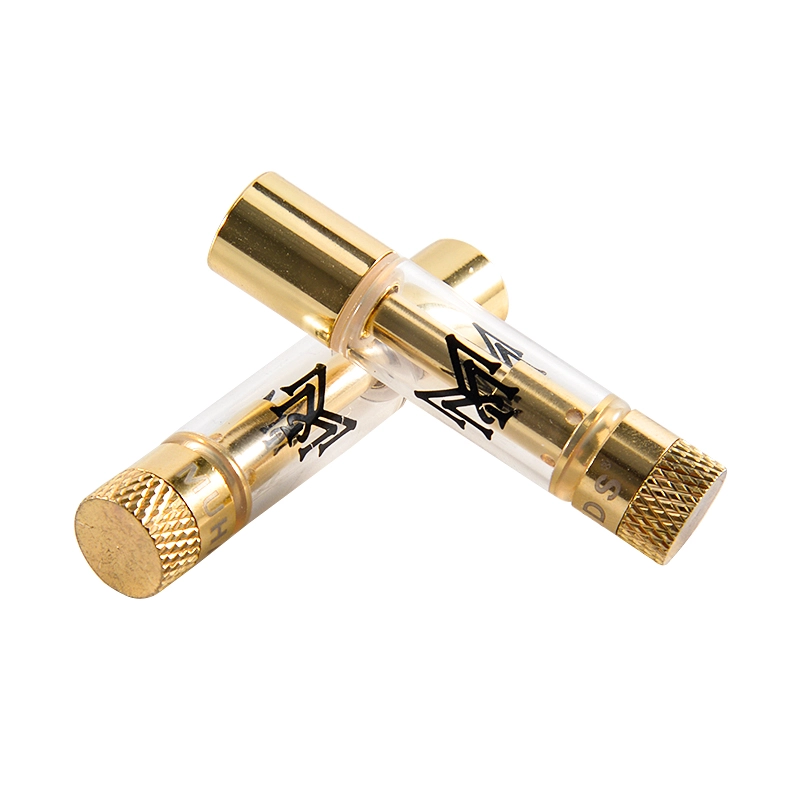
3 Gram Empty Cart (510): What It Is, Who It’s For, and How to Choose in 2025
Quick take: A 3-gram (≈3 mL class) empty 510 cartridge is a high-capacity, refill-ready cart shell designed for thicker oils, longer runtimes, and fewer change-outs. If you’re scaling personal projects or preparing B2B trials, capacity and construction quality matter as much as thread compatibility and packaging compliance.
What “3 Gram Empty Cart” Actually Means
- “3 g” = fill mass/volume class commonly marketed as ~3 mL capacity. Grams reference oil mass, not the physical weight of the cart. Viscosity and formulation can change the exact mL you achieve per gram.
- Empty = no oil included. You’re buying the hardware only (tank, center post, coil/atomizer, mouthpiece, seals). No consumable content is supplied.
- Typical interface: 510 thread for use with compatible batteries/mods, or integrated “all-in-one” formats (less common for pure “cart” form factor).
Who Benefits from 3 g vs 1 g / 2 g
| Size | Main Upside | Trade-offs | Good Fit |
|---|---|---|---|
| 1 g | Lowest cost per unit; broadest battery compatibility | More frequent swaps/refills | First-time testers, small batches |
| 2 g | Balance of runtime and size; common today | Heavier than 1 g | Everyday users, standard SKUs |
| 3 g | Longest runtime; fewer change-outs; good for thicker oils (paired with right coil) | Largest/heaviest; stricter wicking & QC needed | Heavy users, field demos, B2B pilots |
Build Choices That Matter
- Tank materials: Borosilicate glass or medical-grade polymer (for impact resistance). Glass gives neutral taste; polymers reduce shatter risk. Ask for material declarations.
- Center post & metal wet-parts: Look for corrosion-resistant alloys and robust plating. Request supplier disclosures and third-party screening where applicable.
- Ceramic atomizer core: Modern ceramic cores aim for even heat distribution and consistent wicking. Note that “ceramic” describes the heater matrix—it is not a compliance guarantee by itself. Seek device-level safety validation, not marketing claims.
- Seal design: Multiple O-rings, tight tolerances, and controlled oil-intake apertures (e.g., 4×1.8 mm) help with leak and spit-back control in higher-capacity carts.
- Mouthpiece form: Press-fit or threaded with tamper-evident features; wide-bore tips can improve draw on thicker formulations.
Compatibility & Filling (High-Level Guidance)
- Thread: 510 threading remains the default. Verify your battery’s output (voltage range, preheat option) aligns with the cart’s coil spec.
- Oil class: Match viscosity to intake size and coil type. Thicker oils generally need larger intake holes and reliable preheat routines.
- Filling: Use manufacturer-recommended syringes/fillers, temperature windows, and rest/soak times. Over-filling or skipping soak-in can cause flooding, dry hits, or early failures.
Safety note: This article discusses empty hardware only. Always follow your device maker’s instructions. Do not operate damaged batteries or hardware.
Baseline Safety & Compliance Touchpoints (US, 2025)
Even for empty carts, buyers increasingly ask vendors for supporting documentation and device-level safety practices:
- Device electrical safety: UL 8139 is the North American baseline standard focused on e-cigarette/vape electrical systems—battery, charging, protection circuits, and fire/shock hazards. Ask whether the finished device (or family) has been evaluated to UL 8139; certification for the complete electrical system is more meaningful than component-only claims.
- Battery transport: If you purchase carts bundled with batteries (e.g., integrated AIOs), shippers should provide a UN 38.3 test summary and follow current IATA/PHMSA lithium rules (UN3481 for “in equipment,” PI 965–970 labeling/marking as applicable). :contentReference[oaicite:1]{index=1}
- Child-resistant (CR) & tamper-evident (TE) packaging: The US PPPA defines child-resistant performance criteria (16 CFR 1700). While many state cannabis labeling rules apply only to filled/retail goods, wholesale buyers often require CR/TE features on empty hardware or outer cartons as a best practice.
- California DCC labels (context): The DCC’s labeling checklist applies to finished, packaged cannabis goods in final form—not empty hardware. It’s still a useful reference to design toward downstream compliance if your filled product will be sold in CA. :contentReference[oaicite:3]{index=3}
- QR code hygiene: If your hardware or outer box uses QR for batch info or authenticity, follow FTC guidance and avoid scanning unsolicited codes or codes on tampered packaging (“quishing” risk).
Specification Checklist for 3 g Carts
| Spec | Typical 3 g Range | What to Ask Your Vendor |
|---|---|---|
| Capacity | ~3.0 mL class | Usable fill volume (mL) at target viscosity; overfill headroom |
| Coil | Ceramic heater | Atomizer material disclosures; intake size; recommended voltage |
| Resistance | ~1.0–1.4 Ω | Control strategy (constant-voltage vs. mod), preheat support |
| Materials | Glass/poly tank, alloy post | Material declarations; heavy-metal screening policy |
| Seals | Multi O-ring | Leak-rate QA, pressure/vacuum tests, altitude tests |
| Mouthpiece | Press-fit / threaded | Tamper-evident feature, child-resistant options |
| Thread | 510 | Torque spec; compatibility notes; warranty terms |
| Docs | — | UL 8139 status (device-level), UN 38.3 (if battery in kit), PPPA claims |
Common Buying Mistakes (and Easy Fixes)
- Equating “ceramic” with compliance. Ceramic heaters can improve thermal uniformity, but device safety is validated at the system level (think: UL 8139), not by heater material alone.
- Ignoring shipping paperwork for battery-in-kit bundles. If the SKU includes a battery, ask for the UN 38.3 test summary and applicable IATA packing instruction references on the air waybill.
- Scanning unknown QR codes. Verify the destination domain and packaging integrity before scanning.
- Mixing up “g” and “mL.” Vendors market both; confirm usable volume for your formulation’s viscosity.
When to Choose a 3 g Empty Cart
Pick a 3 g when you want longer sessions, fewer swaps in the field, or you’re validating thicker formulations in extended trials. If stealth size or the lightest carry is your priority, a 1 g/2 g may still be the sweet spot.
Responsible Use & Disposal (General)
Follow manufacturer instructions for filling, capping, and resting. Operate only with undamaged batteries and proper chargers. For finished, used devices and spent batteries, follow local rules—many jurisdictions treat them as e-waste or hazardous waste; don’t discard in household trash. California, for example, mandates specific labeling on finished products to discourage improper disposal.
If you want to more Vape Carts Wholesale pls go through these pages:1000mg vape cartridge|500mg cartridge|metal cartridge
0 Comments