
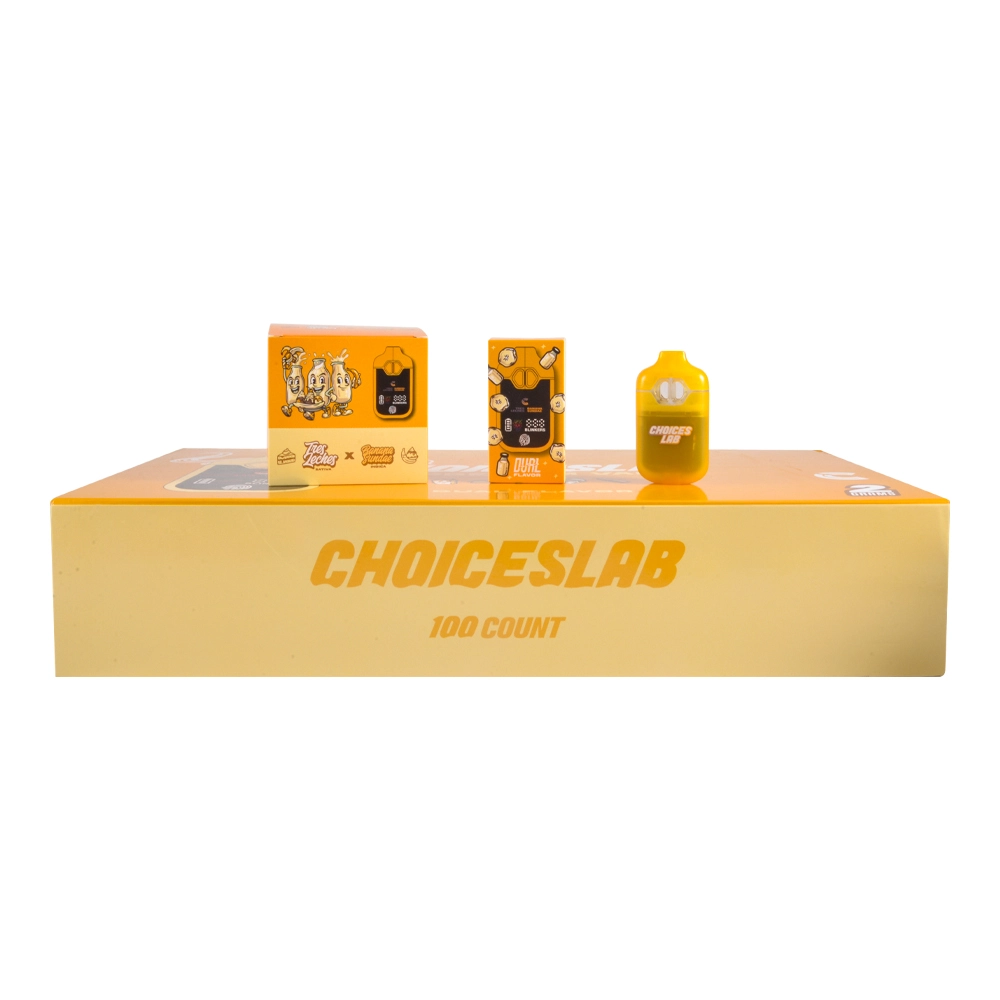
280mAh + Type-C Explained: Why Choices Lab Fingerprint Empty Disposables Scale Better
Scope note: This article is strictly about empty disposable hardware (hardware only; no oil/THC/nicotine included). It’s written for B2B buyers—distributors, wholesalers, and filling partners—who care about consistency, QC, and warehouse execution.
Who this guide is for (and what “empty hardware only” means)
B2B readers, not end-user strain shoppers
If you’re sourcing a “Choices Lab Fingerprint” style device at scale, you’re not really buying a vibe—you’re buying a repeatable platform: battery stability, charging support, inlet geometry, and packaging that survives pick-pack and transit. On Vapetech420, the product is presented as an “empty dispo” with defined hardware specs and wholesale packaging format. :contentReference[oaicite:0]{index=0}
Empty means the hardware is the product
“Empty disposable” in this context means the shell is designed to be filled by authorized partners later; your procurement risk is mostly hardware failure risk: DOA units, leaks after fill, clog rates, and batch-to-batch variance—not “flavor.” :contentReference[oaicite:1]{index=1}
Quick specs snapshot (from the Vapetech420 product page)
Core platform
- Tank volume: 2ml
- Battery capacity: 280mAh
- Charging: Type-C
- Resistance: 1.4Ω
- Intake oil hole: 4 × 1.6mm
- Pod material: PGTC
- MOQ: 500pcs
- Packaging: small boxes + master boxes + stickers
All of the above are listed directly on the “USA 2g Choices Lab Fringerprint Empty Dispo With Large Screen” page. :contentReference[oaicite:2]{index=2}
Why 280mAh matters for a 2ml empty disposable (scaling logic, not hype)
Battery-to-tank balance is a returns problem
At scale, “battery capacity” is less about marketing and more about customer outcomes: you’re trying to reduce the percentage of users who say “the device got weak” or “it died before the tank was finished.” This platform is positioned as 2ml with a 280mAh battery—so your job is to validate that this pairing holds up under your real usage profile and your partners’ formulations. :contentReference[oaicite:3]{index=3}
Stability beats peaks
For wholesalers, the “best” battery is the one that behaves consistently across lots. Consistency reduces disputes, re-shipments, and the quiet killer of B2B margin: support time. When a SKU becomes a repeat-order staple, stability is what makes it scalable.
Type-C charging as a B2B advantage (not just a feature)
Type-C is a mature, standardized ecosystem
USB Type-C is an industry standard connector with broad device and cable availability, and the USB-IF maintains the Type-C cable/connector specification. :contentReference[oaicite:4]{index=4} In practical B2B terms: fewer “I don’t have the right cable” moments translates to fewer complaints and fewer returns.
Optional headroom via USB Power Delivery
Type-C also supports USB Power Delivery (PD) negotiation where implemented; USB-IF documents the USB PD specs and updates. :contentReference[oaicite:5]{index=5} Your device may not need high wattage, but the point is: Type-C is a forward-compatible charging interface that’s easier for buyers to live with.
1.4Ω explained: heat profile, smoothness, and risk control
Resistance is a “complaint rate” lever
Vapetech420 lists this shell at 1.4Ω. :contentReference[oaicite:6]{index=6} In sourcing terms, resistance is a proxy for how aggressively the device will run (heat) under its programmed output—too hot and you increase scorched-hit complaints; too cool and you risk weak vapor perception. Your pilot test should focus on the complaint patterns you care about, not just “does it fire.”
4×1.6mm intake holes: wicking capacity vs. flooding risk
Inlet geometry is where clog vs. leak is decided
The page specifies 4 × 1.6mm intake oil holes. :contentReference[oaicite:7]{index=7} More inlet area can help thicker formulations feed reliably, but poor tolerance control (or mismatched oil) can swing you toward flooding, gurgle, or condensation in the airway. This is why “looks the same” shells can perform very differently across factories and batches.
Scaling = lower failure rates: the four metrics you must track by batch
1) DOA rate
Units that won’t fire or charge out of the box are the fastest way to lose repeat orders—track DOA by lot code and warehouse receipt date.
2) Leak rate (post-fill + post-transit)
Track leaks in three windows: after filling, after 24–48 hours rest, and after a shipping simulation. Leaks that only appear after transit are often packaging/tolerance issues.
3) Clog/condensation rate
Some “clogs” are actually condensation plus narrow airpath design. Track complaint language carefully (gurgle, spitback, tight draw, intermittent hits).
4) Consistency variance
One great sample proves nothing. Scaling requires that the median batch performs—and that outliers are rare.
QC checklist for Choices Lab Fingerprint empty disposables (minimum standard)
Incoming inspection (cosmetics + assembly)
- Shell seams: gaps, rocking, misalignment
- Mouthpiece fit: wobble, sharp edges, loose press-fit
- Airflow feel: consistent draw unit-to-unit
- Screen/large-display face: scratches, alignment, dead segments (if applicable)
Electrical checks
- Fire test: consistent activation and cut-off behavior
- Charge test: Type-C port engagement, stable charging behavior (no intermittent disconnect)
Tank/airpath checks (pre-fill)
- Seal integrity: no visible gaps around tank interfaces
- Airpath cleanliness: no debris that could trigger early clog complaints
If you’re shipping lithium-powered devices internationally, ensure your supply chain can produce the relevant transport documentation. UN 38.3 testing is tied to the UN Manual of Tests and Criteria; regulators and carriers commonly reference these requirements. :contentReference[oaicite:8]{index=8}
How to run a small pre-production validation before you place a big PO
Pilot size: big enough to reveal variance
Order enough units to test across cartons, not just a “top layer.” Your goal is to detect batch variance early: mixed assembly torque, inconsistent seals, or port alignment issues that only show up deeper into a lot.
Basic stress simulation
Simulate handling: minor drops, vibration, temperature swings, and repeated charging cycles. For air transport and general logistics, lithium battery guidance materials used in shipping contexts emphasize the importance of tested, compliant cells. :contentReference[oaicite:9]{index=9}
Decision rules
Define pass/fail thresholds before you test. If your acceptable DOA is “near zero,” write it down. If leaks above a tiny fraction trigger a supplier corrective action, write that too. Scaling is mostly about enforcing these rules consistently.
Warehouse pick-pack & packaging rules that keep wholesale clean
Packaging format matters because humans pick orders
Vapetech420 lists the packaging format as small boxes + master boxes + stickers. :contentReference[oaicite:10]{index=10} This is exactly what wholesalers want when they’re doing high-throughput fulfillment: small boxes protect the device and present well for retail, master cartons simplify counting, and stickers are a fast way to control SKU identity without reprinting everything.
Label fields to standardize
- SKU name + version (“Fingerprint / Large Screen”)
- Tank size (2ml) + battery (280mAh) + charge type (Type-C)
- Lot/batch code + production month
- Carton count and warehouse location
The site also notes multiple warehouse locations (including USA states) for shipping operations. Use that to your advantage: keep the chassis consistent and vary only packaging/labels when possible to reduce pick errors across warehouses. :contentReference[oaicite:11]{index=11}
How to brief a supplier so you get the right version (and avoid spec drift)
Write the non-negotiables into the PO
For this platform, explicitly lock: 2ml, 280mAh, Type-C, 1.4Ω, 4×1.6mm intake holes, and your packaging configuration. :contentReference[oaicite:12]{index=12} “Spec drift” (silent component changes) is one of the most common reasons a previously good SKU suddenly starts generating complaints.
Ask for transport and safety support
For lithium batteries, UN 38.3 is widely referenced for transport readiness, and documentation like lithium battery test summaries is used to support downstream shippers and stakeholders. :contentReference[oaicite:13]{index=13} Treat documentation availability as part of “supplier quality,” not as an afterthought.
FAQ (B2B, hardware-only)
Does 280mAh reliably finish a 2ml tank?
It can—if the oil profile, airflow, and output strategy are matched. The reason you pilot test is to confirm that this 2ml + 280mAh pairing works under your real conditions. :contentReference[oaicite:14]{index=14}
Why is Type-C worth it for wholesale?
Type-C is standardized and common, reducing cable friction and enabling a smoother customer experience at scale. :contentReference[oaicite:15]{index=15}
What’s the practical role of 1.4Ω?
It’s a tuning point that influences heat and consistency; you validate it by tracking complaint patterns (burnt hits vs. weak output) after your pilot. :contentReference[oaicite:16]{index=16}
Do 4×1.6mm intakes reduce clogs?
They can improve feed for thicker oils, but geometry and tolerances decide whether you get “smooth wicking” or “flooding/condensation.” :contentReference[oaicite:17]{index=17}
What documentation should we care about for shipping?
For lithium batteries, UN 38.3 is a common transport testing reference, and test summary documentation is widely discussed in shipping guidance contexts. :contentReference[oaicite:18]{index=18}
What’s the simplest way to reduce wholesale returns?
Lock specs in writing, pilot test to expose variance, track DOA/leak/clog rates by batch, and standardize packaging labels so warehouses don’t create “wrong SKU” returns.
0 Comments