
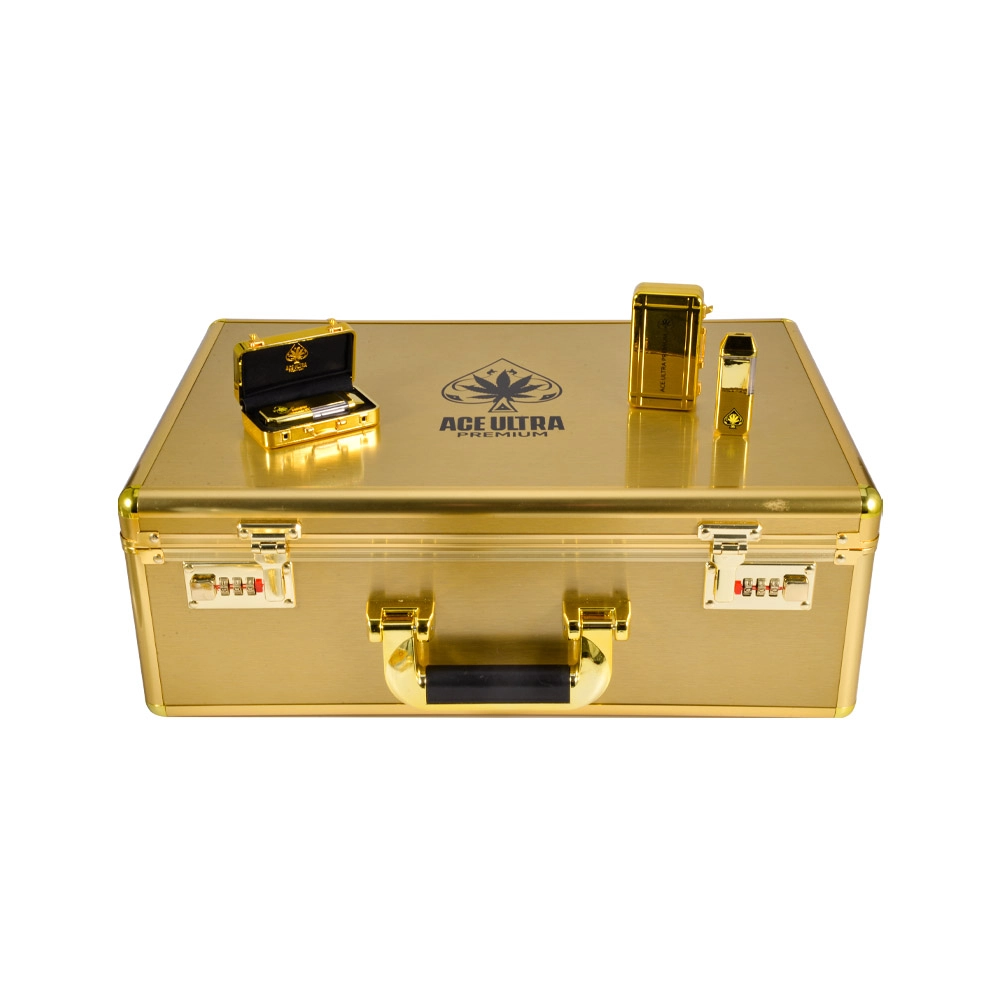
2026 Ace Ultra Premium NFC Verification Guide: Anti-Counterfeit SOP for Wholesale Buyers
Scope (B2B / hardware only): This guide is for empty, unfilled devices and packaging control—not for any consumable contents.
Why NFC verification matters in 2026
Counterfeit trade is still enormous: an OECD–EUIPO analysis estimated USD 467 billion in global trade in counterfeit goods in 2021, with ongoing risks to consumers and supply chains. In the EU, the same OECD–EUIPO work cites counterfeit imports valued around USD 117 billion (4.7% of total EU imports).
For 2026 packaging, several “Ace Ultra Premium / Signature Gold Collection” pages explicitly position NFC verification as the authentication layer alongside redesigned packaging/device updates.
NFC verification, explained in buyer terms
NFC is useful for anti-counterfeit because a tap can trigger authentication + traceability with less friction than manual codes. The NFC Forum highlights NFC’s role in combating counterfeiting, emphasizing that security and interoperability are critical for trustworthy deployments.
The “good” implementations don’t rely on a static URL alone. They use cryptographic tag authentication (so the tap can’t be trivially cloned). For example, NXP’s NTAG “DNA” family describes cryptographic protection (e.g., AES) and features designed to make authentication taps effectively unclonable (depending on how the backend is implemented).
Threat model: what counterfeiters actually do
Your SOP should assume counterfeiters may:
-
Copy visuals (box print, holograms, inserts) convincingly.
-
Clone static QR codes / URLs and point to spoof sites.
-
Use look-alike domains so the “verify” page looks real.
-
Exploit user behavior: getting staff to scan random codes and enter credentials. The FTC warns QR codes can lead to spoofed sites or even malware installs.
NFC reduces some QR risks (less “sticker over sticker”), but the tap still opens a link—so the domain and verification flow must be controlled.
The Anti-Counterfeit SOP (Wholesale / Receiving / QA)
1) Supplier onboarding checks (before money moves)
A. Identity + provenance
-
Verify business registration, physical location, and a consistent business footprint (not just WhatsApp + a landing page).
-
Require a written version spec: packaging version, NFC verification method, and what “PASS” looks like.
B. Verification channel control
-
Ask which official domain the NFC verification resolves to (exact spelling).
-
Require confirmation that verification uses HTTPS and a stable domain policy (no rotating “temporary” domains).
C. Documentation bundle
-
Master carton labeling spec (batch/lot, version).
-
A one-page “how to verify” sheet for your receiving staff.
2) Inbound receiving SOP (fast, repeatable, auditable)
Step 1 — Visual gate (30 seconds per sampled unit)
Look for:
-
Tamper evidence (seal integrity, no re-glue, no misaligned labels).
-
Print consistency (font spacing, gold foils/hologram alignment, serial placements—whatever your approved sample establishes).
Treat visual checks as a screening step, not proof. The real control is the verification result + logging.
Step 2 — NFC verification (the “two-phone rule”)
For each sampled unit:
-
Use a dedicated “receiving phone” with NFC enabled.
-
Tap and open the verification result.
-
Repeat on a second phone (different device/OS if possible).
Pass criteria (practical):
-
The tap resolves to the expected official domain (exact match, no extra subdomains you didn’t approve).
-
The page returns a clear Valid/Verified outcome and displays consistent product identifiers (model/edition/batch logic).
-
Re-tapping doesn’t produce suspiciously generic pages (e.g., “Congratulations, authentic!” with no unique context).
Step 3 — Red-flag rules (auto-fail)
Fail the batch sample immediately if you see any of these:
-
Tap redirects through multiple unrelated domains before landing.
-
Verification asks staff to log in, enter credentials, or install an unknown app.
-
Many units resolve to the same exact ID/result (duplicate tokens) when your expectation is uniqueness.
-
“Verify” page is reachable only through http or has obvious certificate warnings.
(This aligns with FTC guidance that codes can route to spoof sites or malware—treat any request for credentials/apps as a major red flag.)
3) Data capture (what you should log every time)
Log these fields for every verification scan you perform:
-
Date/time, warehouse, operator
-
Supplier + PO + carton ID
-
Unit serial/batch print (photo)
-
NFC scan outcome (PASS/FAIL)
-
Landing domain that opened (exact)
-
Screenshot of the verification result
This creates “proof of diligence” and makes it much easier to dispute chargebacks, returns, or supplier claims.
4) Escalation workflow (when results don’t match)
-
Quarantine the carton(s).
-
Increase sampling on the same batch.
-
Notify supplier with: photos, domains, timestamps, failure patterns.
-
Require written explanation + corrective action plan (CAPA) before release.
5) “Make NFC actually work” (what to ask suppliers for)
If you want a verification system that’s harder to fake, push for:
-
Cryptographic NFC tags (not a static URL tag).
-
A backend that detects anomalies (e.g., too many verifications from different regions in a short window).
-
A “first scan / nth scan” policy (some brands flag excessive scans as suspicious).
The NFC Forum notes NFC’s anti-counterfeit value depends on security and reliability, which in practice means strong tag+backend design—not just “there’s an NFC chip.”
A simple sampling rule you can use today
-
Arrival scan: 1 master carton per batch → scan 5–10 units.
-
Scale scan: if any anomaly appears, expand to 20–30 units across multiple cartons.
-
Ongoing: keep a small monthly “surveillance scan” on fast-moving SKUs.
This keeps labor low while still catching the most common counterfeit patterns (domain spoofing, duplicated IDs, mixed batches).
If you want more vape in USA, you can go through those pages: empty disposable vape|2ml disposable|ace ultra premium vape|ace disposables
0 Comments