
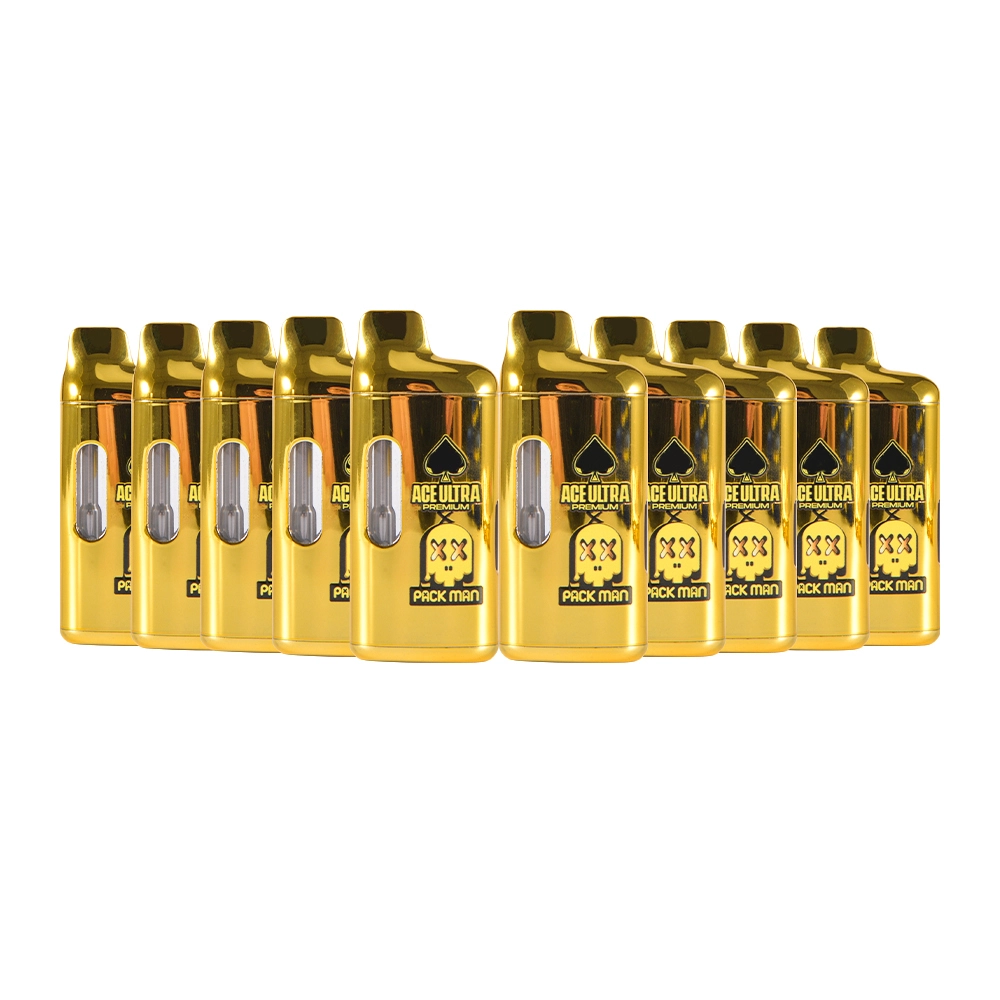
2025 Guide | Ace X Packman | B2B Buyer Checklist & Reorder Flow
Scope & Audience (Read First)
Hardware-only scope
This guide is written for B2B buyers managing hardware-only Ace X Packman empty disposable inventory. It does not provide filling instructions and does not describe controlled-substance use. Always follow applicable local rules for labeling, retail presentation, shipping, and documentation.
Who this is for
Procurement and operations teams at distributors, retailers, and compliant manufacturing/filling partners who need repeatable reorders with stable specs, predictable lead times, and lower DOA/return rates.
What “smooth reorders” means
- Fewer surprise spec changes between batches (version control)
- Less SKU confusion across warehouses (inventory governance)
- Lower DOA and fewer disputes (QC gates + evidence)
- Faster issue resolution (lot tracking + RMA rules)
Quick Buyer Takeaways (TL;DR)
The 5 checks that prevent most reorder failures
- Lock a SKU definition (version + packaging + warehouse tag) before the first reorder.
- Require a written spec sheet with a revision/date and “no-change without approval” language.
- Run QC gates: sample → pilot → bulk, with clear accept/reject thresholds.
- Track lots at receiving—batch confusion is the silent return-rate killer.
- Define DOA/RMA rules and evidence requirements before you ship anything to customers.
The 3 metrics to watch weekly
- DOA rate (DOA units / units received)
- Return rate (returns / units sold), segmented by lot and warehouse
- On-time-in-full (OTIF) for each reorder
SKU Governance for Ace X Packman
Define what a “sellable SKU” means in your system
Don’t let “Ace X Packman” be the SKU. Your SKU should encode the version/revision, the packaging variant, and the warehouse lane (for example, US stock vs non-US stock). This prevents accidental mixing that looks identical on a shelf but behaves differently in the field.
Version control: treat every spec change as a new revision
Your goal is to eliminate “same SKU, different internals.” Require a spec sheet that carries a revision and date, and hold suppliers to change-control (no changes without written approval).
Table placeholder: SKU Master & Version Control
| SKU Name | Internal Code | Rev | Key Spec Lock | Packaging | Warehouse | Launch | Notes |
|---|---|---|---|---|---|---|---|
| (example) | AXP-____ | R1 | (lock fields) | (variant) | (lane) | (date) | (rules) |
Pre-PO Buyer Checklist (Before You Pay)
Supplier verification (reduce reorder risk at the source)
- Confirm the legal business identity and consistent contact channels.
- Ask how they manage revision changes and lot traceability (a good supplier answers clearly).
- Require a documented defect policy (DOA definition, time window, evidence rules).
Spec confirmation (what must be written, not “chat-confirmed”)
Your purchase order should reference a spec sheet revision/date, packaging configuration, and any agreed inspection gates. This turns “expectations” into enforceable deliverables.
Table placeholder: Pre-PO Checklist
| Check Item | Evidence Required | Owner | Pass/Fail | Notes |
|---|---|---|---|---|
| Spec sheet locked (Rev/Date) | PDF + PO reference | Ops | ||
| Golden sample stored | Photo + ID label | QC | ||
| RMA terms agreed | Signed policy | Procurement |
The Reorder Flow (A Repeatable SOP)
Use reorder points (ROP) instead of gut feel
Build a simple trigger: ROP = (avg weekly sales × lead time weeks) + safety stock. If lead times fluctuate, use a larger buffer and tighten your QC gates so you’re not “buffering defects.”
Gate your reorder: sample → pilot → bulk
Treat every reorder like a mini-launch: reconfirm revision, run a fast incoming check on a small pilot, then release bulk. This is the lowest-cost way to catch drift early.
Table placeholder: Reorder Timeline & Gate Plan
| Stage | Trigger | Deliverable | Approval Owner | Risk Notes |
|---|---|---|---|---|
| Reorder trigger | ROP hit | RFQ/PO draft | Ops | Confirm warehouse lane |
| Pilot gate | Pre-ship sample | QC pass record | QC | Stop if drift found |
| Bulk release | Pilot pass | Final shipment | Procurement | Evidence-ready |
Receiving SOP & QC Gates (Sample → Pilot → Bulk)
Gate 0: documentation check before you open cartons
Match shipment IDs to PO, confirm spec revision, and ensure lot identifiers exist. Missing traceability is a red flag—hold inventory until clarified.
Gate 1–3: visual, packaging, and functional checks
Standardize a short checklist your team can execute consistently. Consistency beats “deep testing once in a while.”
Table placeholder: QC Gates Checklist
| Gate | Test Item | Method | Sample Size | Accept/Reject | Action |
|---|---|---|---|---|---|
| 0 | Docs + lot fields | Match to PO | 100% | All required present | Hold if missing |
| 1 | Packaging integrity | Visual check | (define) | No crush/tears | Quarantine damages |
| 2 | Basic function | Pass/fail SOP | (define) | Meets baseline | Escalate if drift |
| 3 | Lot stability | Across cartons | (define) | No cluster failures | CAPA if clusters |
Packaging & Transit Risk Controls
Design for parcel realities, not “perfect pallets”
If you ship in small-parcel networks, packaging needs to survive drop and vibration hazards typical of parcel delivery simulation procedures like ISTA 3A. :contentReference[oaicite:0]{index=0}
Damage triage on arrival
Train receiving to capture photos and lot identifiers immediately. Evidence collected on day one is what protects you in supplier disputes and chargebacks later.
Lot Tracking & Traceability (Make Reorders Predictable)
Track the minimum viable lot fields
At minimum, capture supplier lot, production date (or range), warehouse lane, carton range, and the QC release decision. The goal is to isolate issues fast: “Which lot is failing, where did it go, and what changed?”
Escalation thresholds
Define triggers like: (1) DOA spikes above baseline, (2) clustered failures tied to a specific lot, or (3) packaging damage rate increases. Those triggers automatically start a supplier CAPA request and pause reorders until resolved.
RMA/DOA Rules & Return-Rate Reduction
Write definitions that reduce ambiguity
“DOA” should be defined as a failure confirmed at receiving or first-use under your documented SOP within a short window. Separate DOA from in-transit damage and end-customer misuse. Ambiguity equals disputes.
Use an evidence-first RMA workflow
- Require photos/video + lot identifiers + proof of purchase/shipment context.
- Approve/deny using a decision tree (not opinion).
- Summarize weekly: top failure mode, lot affected, corrective action status.
Docs Pack Checklist (What to Request Every Reorder)
Core docs you should request each cycle
- Spec sheet with revision/date and critical “locked” fields.
- Lot QC report tied to shipment and carton ranges.
- UN 38.3 lithium battery test summary availability upon request (shipping support). :contentReference[oaicite:1]{index=1}
- ISTA 3A packaging evidence (if you ship parcel and the supplier has it). :contentReference[oaicite:2]{index=2}
Table placeholder: Docs Pack Checklist
| Document | Version/Date | Provided By | Verify | Stored Location | Status |
|---|---|---|---|---|---|
| Spec Sheet | Supplier | Matches PO | (link/path) | ||
| Lot QC Report | Supplier/QC | Lot aligns | (link/path) | ||
| UN 38.3 Test Summary | Manufacturer | TS present | (link/path) |
Who / How / Why (Trust & Transparency)
Who
Prepared for procurement/QC/ops teams managing repeat B2B hardware orders.
How
Built as a practical SOP: SKU governance + reorder triggers + QC gates + lot tracking + RMA rules. This aligns with Google’s guidance to create helpful, reliable, people-first content that demonstrates real utility. :contentReference[oaicite:3]{index=3}
Why
Repeat orders fail when expectations live in chat logs instead of systems. A documented reorder flow turns reorders into a routine operation rather than a recurring fire drill.
FAQ (B2B Focus)
Is Ace X Packman discussed here as hardware-only?
Yes—this guide is strictly about managing empty hardware procurement, QC, and reorders.
What’s the minimum checklist before every reorder?
Lock spec revision, confirm warehouse lane, run a pilot QC gate, verify lot fields, and confirm RMA terms.
How do we prevent “same SKU, different internals” between batches?
Require spec revision/date on every PO and pause reorders if revision control is unclear.
What evidence should we require for RMA/DOA?
Lot identifiers, photos/video, timeframe, and a clear failure description tied to your SOP.
What’s the fastest way to reduce returns next month?
Strengthen receiving gates, tighten lot tracking, and stop shipping inventory from lots showing clustered failures.
When should we split a SKU into two?
If a revision or packaging change affects QC outcomes, warehouse handling, or customer-facing expectations, split it.
If you want to know more vape wholesale , pls go through these pages:
0 Comments