
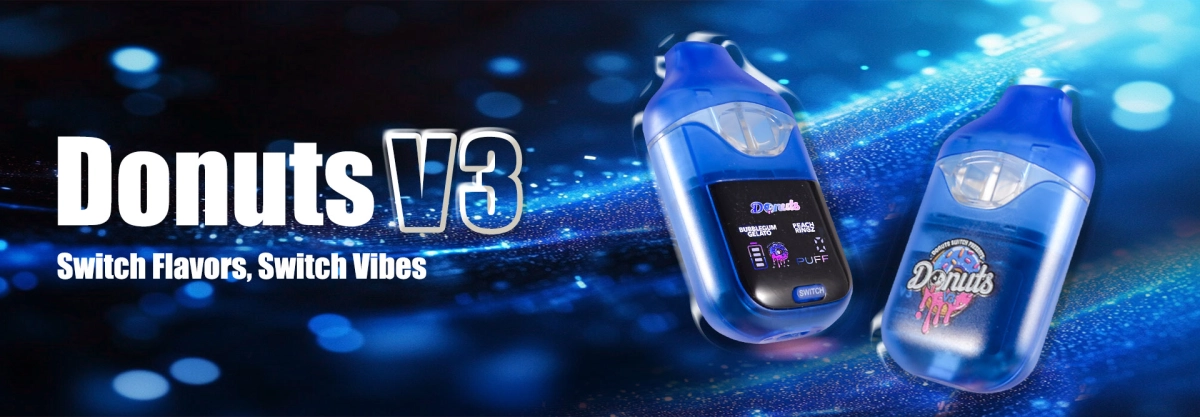
2 Gram Disposable — Structured Answers: Key Facts, Myths & Buyer Checklist
We strengthened authority and depth by adding accredited-lab verification steps, a COA sample checklist with red-flags, and a cross-state compliance snapshot (beyond California). Where specs differ by batch, rely on batch-specific COAs hosted by competent labs.
Key Facts (Verifiable)
| Topic | What to know |
|---|---|
| “2 g” meaning | The label refers to oil mass (~2 grams), not volume. Density varies by formulation; do not equate g with ml. |
| Device class | Pre-filled, sealed all-in-one disposables (AIO). Not user-refillable; opening can damage hardware or contaminate oil. |
| Rechargeability | Recharge helps finish remaining oil when the battery depletes; it does not imply higher potency or safety. |
| Risk backdrop | CDC associated the 2019 EVALI outbreak primarily with vitamin E acetate in some illicit THC products and advised avoiding informal sources. |
Myths → Evidence-Based Answers
“2 g disposables are FDA-approved.”
No. FDA marketing authorization applies to nicotine ENDS products and does not equate to blanket approvals for cannabinoid disposables.
“Bigger fill size means safer/stronger.”
No. Safety/strength depend on batch COA, contaminants, authentic hardware, and lawful sourcing—not on fill mass alone.
“A QR code guarantees authenticity.”
No. QR labels can be spoofed. Confirm the COA is lab-hosted, batch-matched, and the lab is properly accredited.
COA & Laboratory Verification (Step-by-Step)
COA essentials (what a valid report shows)
- Sample metadata: product name, matrix, batch/lot, collection/receipt dates, customer info, chain of custody ID.
- Methods & scope: test methods (e.g., cannabinoid profile), LOQ/LOD, units, and uncertainty (if provided).
- Contaminant panels: heavy metals, residual solvents, pesticides, mycotoxins (panel names & results clearly listed).
- Accreditation mark: lab’s ISO/IEC 17025 accreditation symbol/number and scope reference.
- Lab hosting: report is hosted by the lab (not a random drive link) with QR deep-link to your exact batch.
How to verify the lab (accreditation)
- Find the accreditation body on the COA mark (e.g., ANAB, PJLA).
- Open that body’s directory; search the lab name and confirm active ISO/IEC 17025 status.
- Open the lab’s scope document; ensure it covers the actual analyses on your COA (e.g., cannabinoid profile, heavy metals).
- Cross-check that the COA’s address and lab certificate holder match the directory listing.
COA red flags (quick screen)
- Generic “sample” COA reused across different batches/SKUs;QR leads to a non-lab site or a mismatched lot.
- Panels missing (no metals/solvents/pesticides/mycotoxins) or results above limits with no corrective action.
- Typos in lot IDs, absent method names, or a lab name that cannot be found in an accreditation directory.
U.S. Compliance Snapshot (Cross-State Examples)
| Jurisdiction | What to check | Regulator / Entry point |
|---|---|---|
| Federal baseline | 2018 Farm Bill “hemp” ≤ 0.3% Δ-9 THC (dry weight); non-compliant material subject to enforcement & disposal. | USDA/AMS hemp enforcement portal |
| California (CA) | Pre-sale batch testing by licensed labs; sampling procedures and result panels defined in regulation. | CA DCC testing & 4 CCR §15708 |
| Colorado (CO) | MED rules for testing/labeling; check current bulletins for hemp-derived intoxicants and retail controls. | Colorado MED (Marijuana Enforcement Division) |
| New York (NY) | OCM guidance for cannabinoid hemp products, including testing & packaging/labeling updates. | NY OCM (Office of Cannabis Management) |
| Oregon (OR) | OLCC testing/labeling & rules for adult-use; monitor temporary rules on hemp-derived intoxicants. | Oregon OLCC |
| Washington (WA) | LCB testing/labeling & product approval scope; verify lab licensing and panel coverage. | WA LCB (Liquor & Cannabis Board) |
Buyer Checklist (Do-This Steps)
| Step | Action | Why it matters |
|---|---|---|
| 1) Scan & Match | Scan the QR → confirm the COA is lab-hosted and lot-matched (IDs match box & device). | Blocks generic or spoofed reports. |
| 2) Panels & Methods | Verify cannabinoid profile + metals/solvents/pesticides/mycotoxins with methods & LOQ/LOD visible. | Confirms coverage and sensitivity. |
| 3) Accreditation | Locate the accreditor (ANAB/PJLA etc.) on the COA → check active 17025 status & scope in the directory. | Establishes competence & method scope. |
| 4) Authenticity | Match tamper seals, packaging features, and distributor information; keep receipts/screenshots. | Supports recalls and dispute resolution. |
| 5) Local Rules | Check your state regulator (DCC/MED/OCM/OLCC/LCB etc.) before purchase/possession/shipment. | Avoids non-compliance and seizure. |
FAQ (≤90 words each)
Is a 2 g disposable refillable?
No. These are sealed, pre-filled AIOs. Opening/refilling can damage the heating element and bypass quality controls.
Does a QR code equal safety?
No. Treat QR as a starting point. Verify the COA is lab-hosted, batch-matched, lists panels/methods/LOQ, and the lab is 17025-accredited with scope coverage.
What if my COA shows high metals?
Do not use the product; contact the retailer/manufacturer and your state regulator. Keep the device and packaging for potential investigation.
References (Authoritative)
- CDC — EVALI & vitamin E acetate linkage; avoid informal sources (MMWR 2020): MMWR
- USDA/AMS — 2018 Farm Bill hemp definition & enforcement: AMS portal
- ILAC — About ILAC & MRA; understanding accredited labs: ILAC
- ISO — ISO/IEC 17025 overview (testing & calibration labs): ISO
- California DCC — Licensed testing laboratories & batch testing: DCC | Sampling: 4 CCR §15708
- Colorado MED — Rules & bulletins (entry): MED
- New York OCM — Cannabinoid hemp guidance (entry): NY OCM
- Oregon OLCC — Testing/labeling (entry): OLCC
- Washington LCB — Product & lab rules (entry): WA LCB
- Google Search Central — Creating helpful, people-first content (editorial standard only): Guidance
0 Comments